
Jacks and Pompanos
Also known as
- Amberjack
- Amberjacks
- Blue Runner
- Blue runner
- Butter Fish
- Butterfish
- California Yellowtail
- California yellowtail
- Cigar Fish
- Cigarfish
- Crevalles
- Creville
- Harvestfish
- Horse Mackerel
- Jack Mackerel
- Jack mackerel
- Jacks
- Leatherback
- Lookdown
- Mackerel
- Moon Fish
- Moonfish
- Moonfishes
- Pacific Pompano
- Palometa
- Permit
- Pompano
- Pompanos
- Rainbow Runner
- Rainbow runner
- Runner
- Scad
- Scads
- Selar Species
- Uluas
- Yellowtail
- cigarfish
- lae
- palometas
- permits
- uluas
- yellowtails
About Jacks and Pompanos
Jacks and Pompanos (Family Charangidae) Including: Pompanos, palometas, and permits (Trachionotus species); Amberjacks and yellowtails (Seriola species); California yellowtail (Seriola dorsalls); Scads and cigarfish (Decapterus species, Selar species, Trachurus species); Jack mackerel or horse mackerel (Trachurus symmetricus); Jacks and uluas (Caranx species, Carangoides species); Crevalles (Caranx species); Blue runner (Caranx crysos); Rainbow runner (Elagatis bipinnulata); Moonfishes (Vomer species); Lookdown (Selene vomer); Leatherback or lae (Scomberoides sanctipetri); BUT NOT INCLUDING: LEATHERJACKET (Oligoplites saurus).
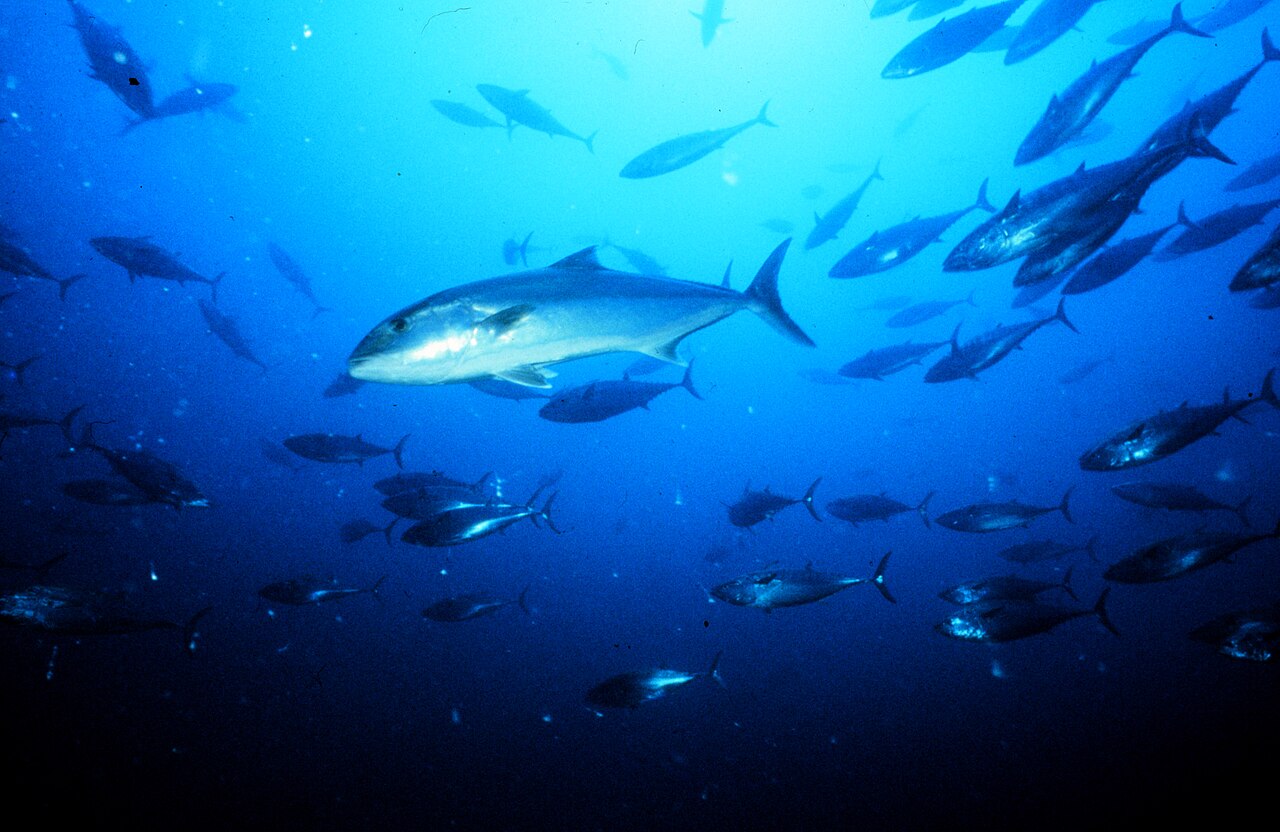
Amberjacks are Atlantic and Pacific fish in the genus Seriola of the family Carangidae. They are widely consumed across the world in various cultures, most notably for Pacific amberjacks in Japanese cuisine; they are most often found in the warmer parts of the oceans. The many species of amberjack include greater amberjack (Atlantic), lesser amberjack (Atlantic), Almaco jack (Pacific), yellowtail (Pacific), and banded rudderfish (Atlantic). Though most of the Seriola species are considered “amberjacks”, the species Seriola hippos (samson fish) is not.
Amberjacks are Atlantic and Pacific fish in the genus Seriola of the family Carangidae. They are widely consumed across the world in various cultures, most notably for Pacific amberjacks in Japanese cuisine; they are most often found in the warmer parts of the oceans. The many species of amberjack include greater amberjack (Atlantic), lesser amberjack (Atlantic), Almaco jack (Pacific), yellowtail (Pacific), and banded rudderfish (Atlantic). Though most of the Seriola species are considered “amberjacks”, the species Seriola hippos (samson fish) is not. Species Greater amberjacks Greater amberjacks, S. dumerili, are the largest of the jacks. They usually have dark stripes extending from nose to in front of their dorsal fins. They have no scutes and soft dorsal bases less than twice the length of the anal fin bases. They are usually 18 kg (40 pounds) or less and are found associated with rocky reefs, debris, and wrecks, typically in 20 to 75 m (10 to 40 fathoms). Greater amberjacks are also found in the Pacific. Lesser amberjacks Lesser amberjacks, S. fasciata, have proportionately larger eyes and deeper bodies than greater amberjacks. They are olive green or brownish…
Image: Photo by Credit: A. Hulbert, OAR/National Undersea Research Program (NURP); University of North Carolina at Wilmington · licensed Public domain · Wikimedia Commons
