
Wolffish
Anarhichas lupus
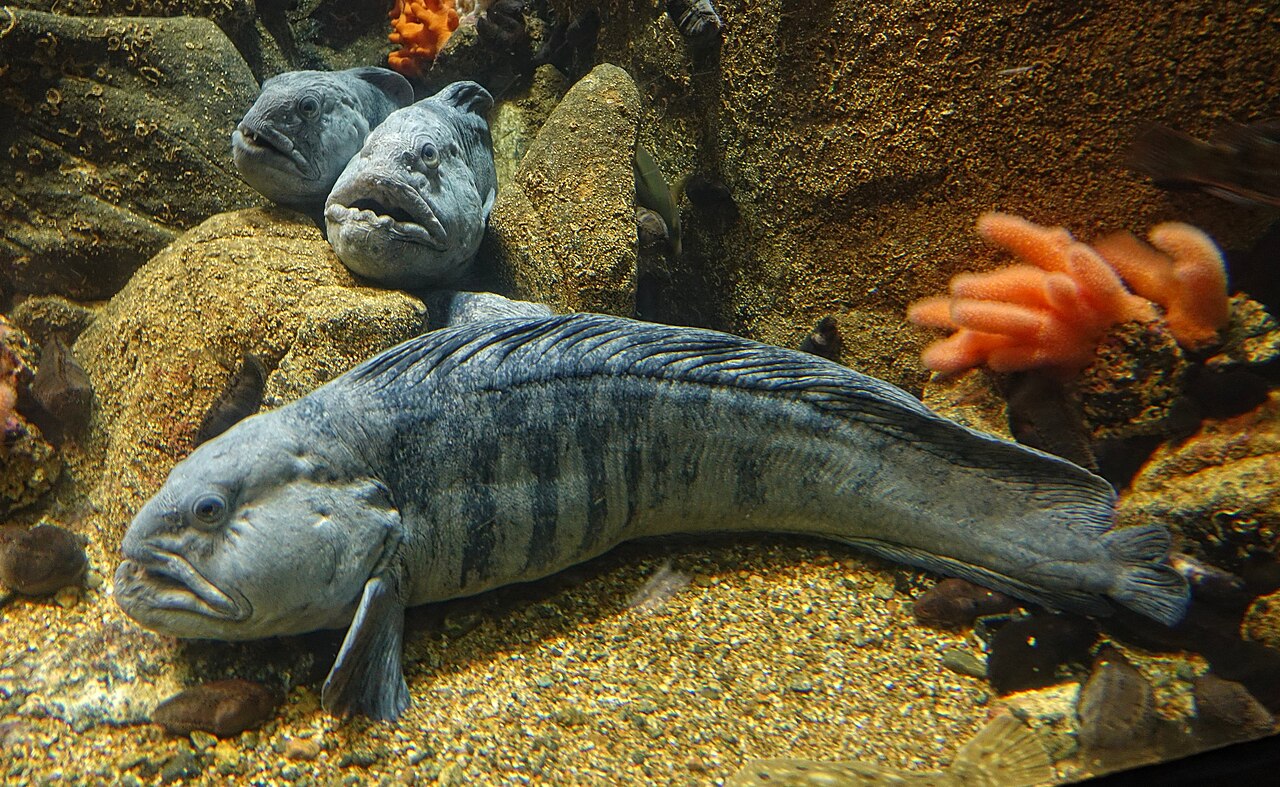
The Atlantic wolffish, also known as the seawolf, Atlantic catfish, ocean catfish, devil fish, wolf eel, woof or sea cat, is a marine fish of the wolffish family Anarhichadidae, native to the North Atlantic Ocean. The numbers of the Atlantic wolffish in US waters are rapidly being depleted, most likely due to.
Atlantic wolffish is eaten fresh and preserved, and in Britain it's a common fish-and-chips ingredient.
Wolffish live on hard ocean floor in the North Atlantic, on both coasts. In the west they range from Greenland and Newfoundland south to Cape Cod, densest on Georges Bank and in the Gulf of Maine. In the east they run from Russia's White Sea through the Nordic countries and British Isles to the Bay of Biscay, at depths of 20 to 500 meters.
Also known as
- Wolf fish
- Sea wolf
- Atlantic wolffish
- Ocean catfish
- Loup
- Seawolf
- Atlantic catfish
- Devil fish
- Wolf eel
- Woof
- Sea cat
- Scotch halibut
- Steinbit
Wolffish in foreign languages
| Scientific | Anarhichas lupus |
| Hebrew | דג זאב אטלנטי |
| Arabic | عريك أطلسي |
| French | loup de mer |
| German | Seewolf |
| Russian | Полосатая зубатка |
| Chinese | 大西洋狼魚 |
Gallery

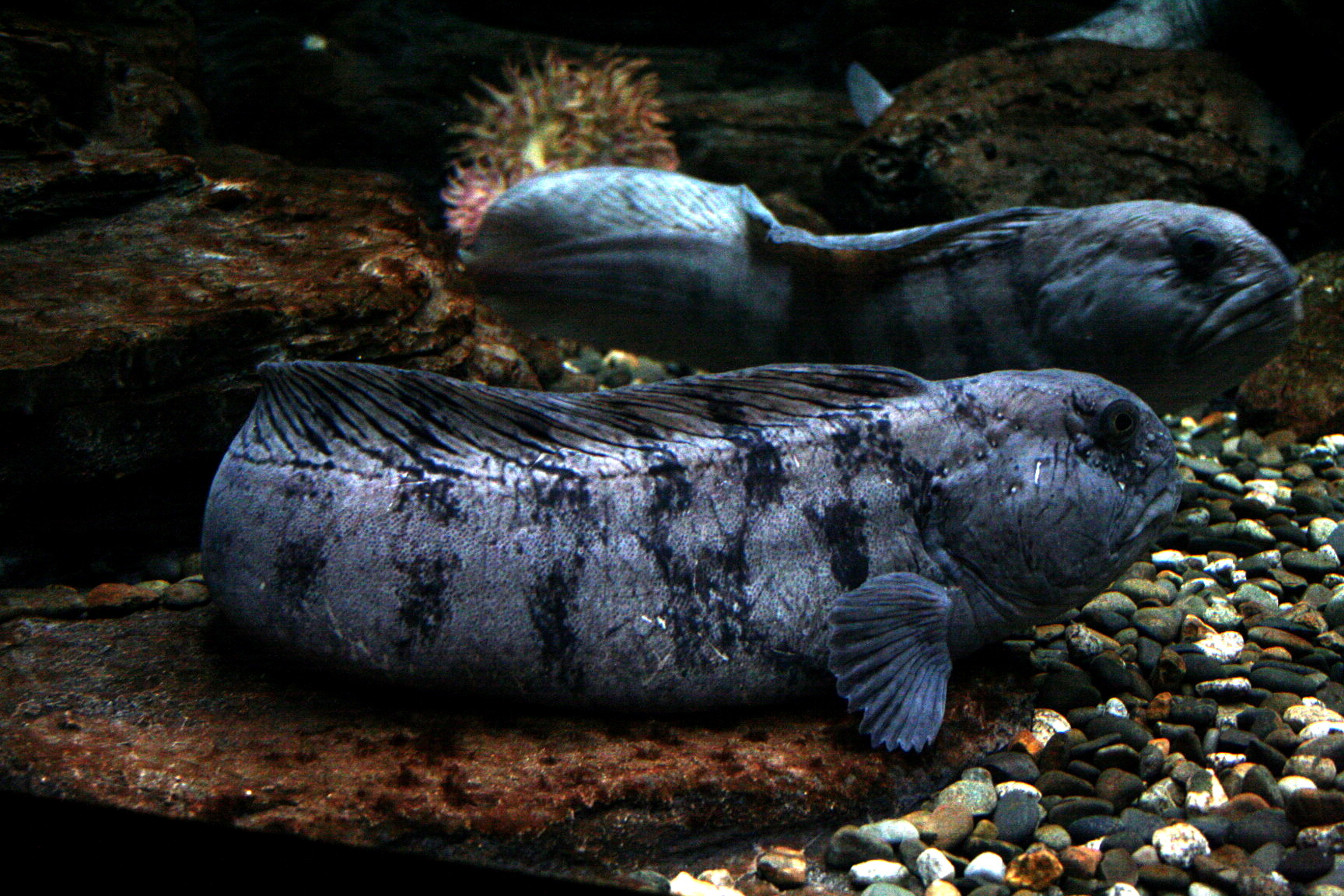

- Its scales are rudimentary and embedded almost invisibly in smooth, slippery skin, so it doesn't meet the kosher standard of removable scales.
- Sold under market names like ocean catfish, Scotch halibut, and Scarborough woof. None of those names make it kosher.
- In Iceland and Norway it goes by steinbitur or steinbit, meaning stone biter.