Amberjack
Seriola dumerili
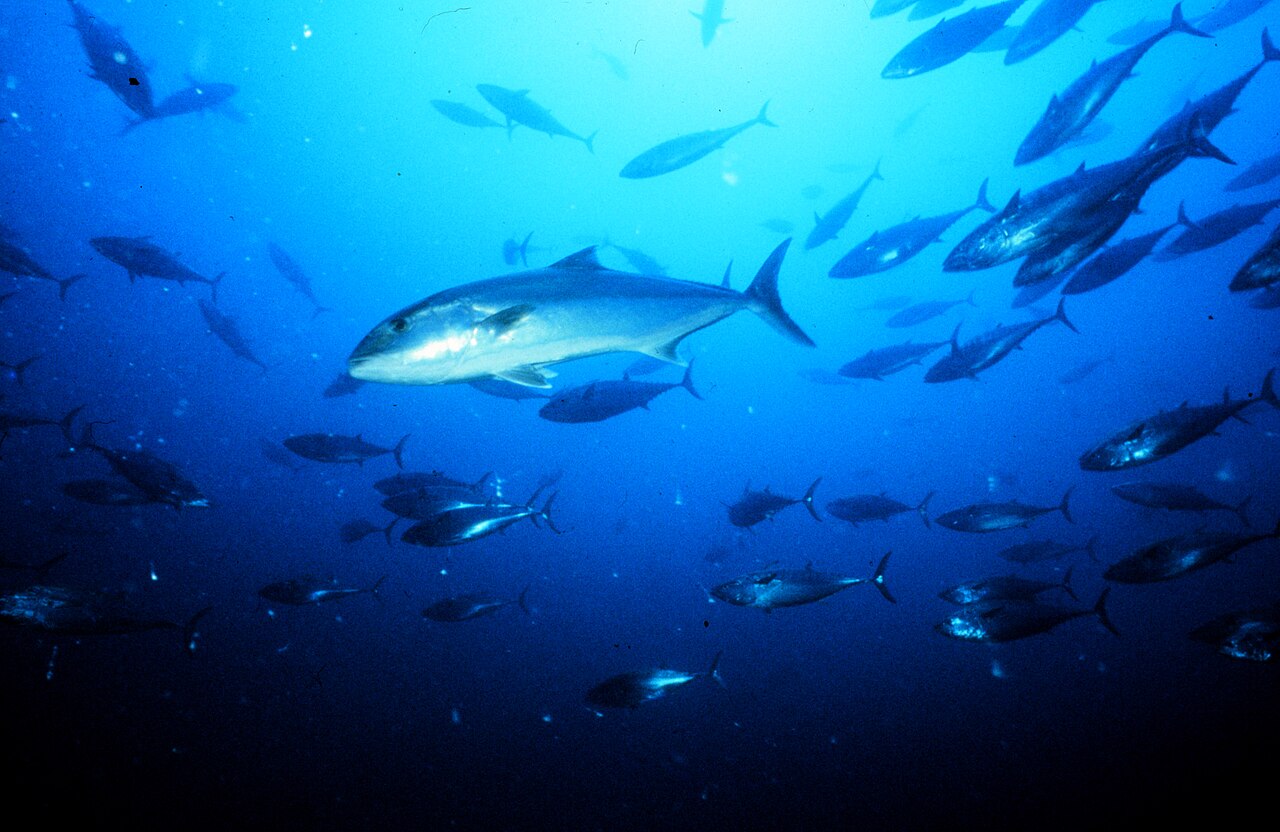
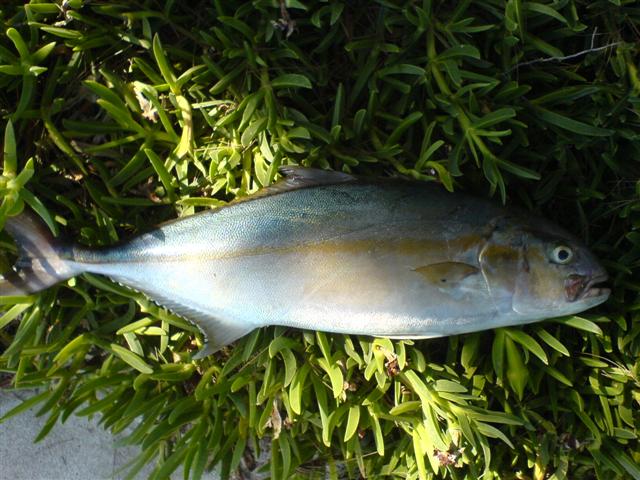
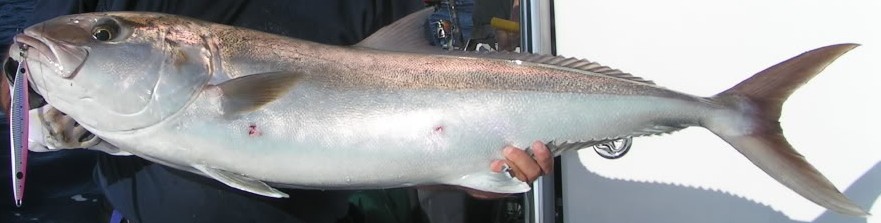
The greater amberjack, also known as the allied kingfish, great amberfish, greater yellowtail, jenny lind, sea donkey, purplish amberjack, reef donkey, rock salmon, sailors choice, yellowtail, and yellow trevally, is a species of predatory ray-finned fish in the family Carangidae, the jacks and pompanos. It is found.
Amberjack is sold fresh and frozen, and the firm meat takes well to grilling, broiling, baking, or pan-frying. Larger fish are best avoided for raw dishes because of ciguatera risk.
The greater amberjack lives in warm waters of the Atlantic, Mediterranean, and Indo-Pacific, usually around reefs, wrecks, and rocky bottoms from the surface down to a few hundred feet. It's a popular sport and food fish caught by anglers and commercial fleets in the Gulf of Mexico and off the southeastern United States.
Also known as
- Greater Amberjack
- AJ
- Reef Donkey
- Coronado
Kosher Amberjack in foreign languages
| Scientific | Seriola dumerili |
| Hebrew | סריול אטלנטי |
| Arabic | سريولة المتوسط |
| Spanish | Atún Medregal |
| French | Amber Couvailli |
| Italian | Ricciola |
| German | Große Bernsteinmakrele |
| Greek | Μαγιάτικο |
| Russian | Высокотелая лакедра |
| Turkish | Sarıkuyruk |
| Chinese | 杜氏鰤 |
| Japanese | カンパチ |
| Korean | 잿방어 |
| Vietnamese | Cá cam |
Gallery


- Has fins and scales, so it is kosher.
- Large amberjacks are apex predators and can carry ciguatera toxin, which cooking does not remove.
- Like other big predatory fish, it can accumulate mercury, a concern for pregnant women and young children.