Skip to content

Is Gar kosher?

No — Gar is not kosher under Jewish dietary law.

Not kosher. Gar have ganoid scales — interlocking diamond-shaped plates that do not meet the halachic definition of removable scales. Same family of disqualification as sturgeon and paddlefish.

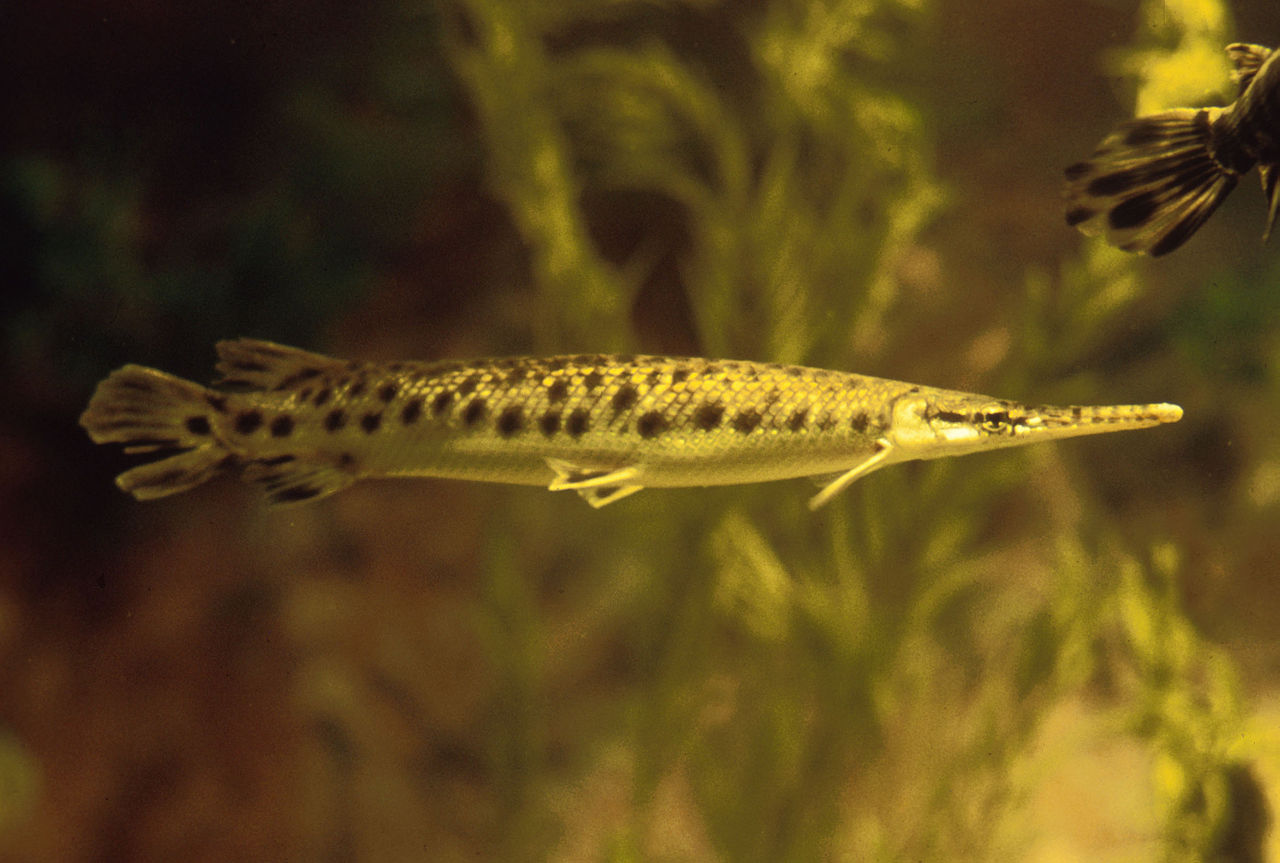
Gar (Lepisosteidae)

Image: · licensed Public domain · source

Scientific name
Lepisosteidae
Also known as
Alligator gar, Longnose gar, Spotted gar, Gar pike, Garfish
Category
scaleless
Fins & scales
Fins ✓ , no scales ✗
Kosher status
Not kosher

About Gar

Long, primitive freshwater fish with elongated bodies and beak-like snouts lined with sharp teeth. Gars are an ancient group of ray-finned fish in the family Lepisosteidae. They comprise seven living species of fish in two genera that inhabit fresh, brackish, and occasionally marine waters of eastern North America, Central America and Cuba in the Caribbean, though extinct members of the family were more widespread. They are the only surviving members of the Ginglymodi, a clade of fish which first appeared during the Triassic period, over 240 million years ago, and are one of only two surviving groups of holosteian fish, alongside the bowfins, which have a similar distribution. Gars have elongated bodies that are heavily armored with ganoid scales, and fronted by similarly elongated jaws filled with long, sharp teeth. Gars are sometimes referred to as "garpike", but are not closely related to pike, which are in the fish family Esocidae. All of the gars are relatively large fish, but the alligator gar (Atractosteus spatula) is the largest; the alligator gar often grows to a length over 2 m (6.5 ft) and a weight over 45 kg (100 lb), and specimens of up to 3 m (9.8 ft) in length have been reported. Unusually, their vascularised swim bladders can function as lungs, and most gars surface periodically to take a gulp of air. Gar flesh is edible and the hard skin and scales of gars are used by humans, but gar eggs are highly toxic. Gars are an ancient group of ray-finned fish in the family Lepisosteidae. They comprise seven living species of fish in two genera that inhabit fresh, brackish, and occasionally marine waters of eastern North America, Central America and Cuba in the Caribbean, though extinct members of the family were more widespread. They are the only surviving members of the Ginglymodi, a clade of fish which first appeared during the Triassic period, over 240 million years ago, and are one of only two surviving groups of holosteian fish, alongside the bowfins, which have a similar distribution. Gars have elongated bodies that are heavily armored with ganoid scales, and fronted by similarly elongated jaws filled with long, sharp teeth. Gars are sometimes referred to as "garpike", but are not closely related to pike, which are in the fish family Esocidae. All of the gars are relatively large fish, but the alligator gar (Atractosteus spatula) is the largest; the alligator gar often grows to a length over 2 m (6.5 ft) and a weight over 45 kg (100 lb), and specimens of up to 3 m (9.8 ft) in length have been reported. Unusually, their vascularised swim bladders can function as lungs, and most gars surface...

Kosher ruling

Not kosher. Gar have ganoid scales — interlocking diamond-shaped plates that do not meet the halachic definition of removable scales. Same family of disqualification as sturgeon and paddlefish.

Source: Orthodox Union, Chabad; Wikipedia (CC BY-SA 3.0); Wikipedia (CC BY-SA 3.0)

Look up another fish