
Skip to content

Is Goatfishes kosher?

Yes — Goatfishes is kosher under Jewish dietary law.

Goatfishes has fins and scales, which are the two requirements for kosher fish under Jewish dietary law (Leviticus 11:9-12).

Goatfishes

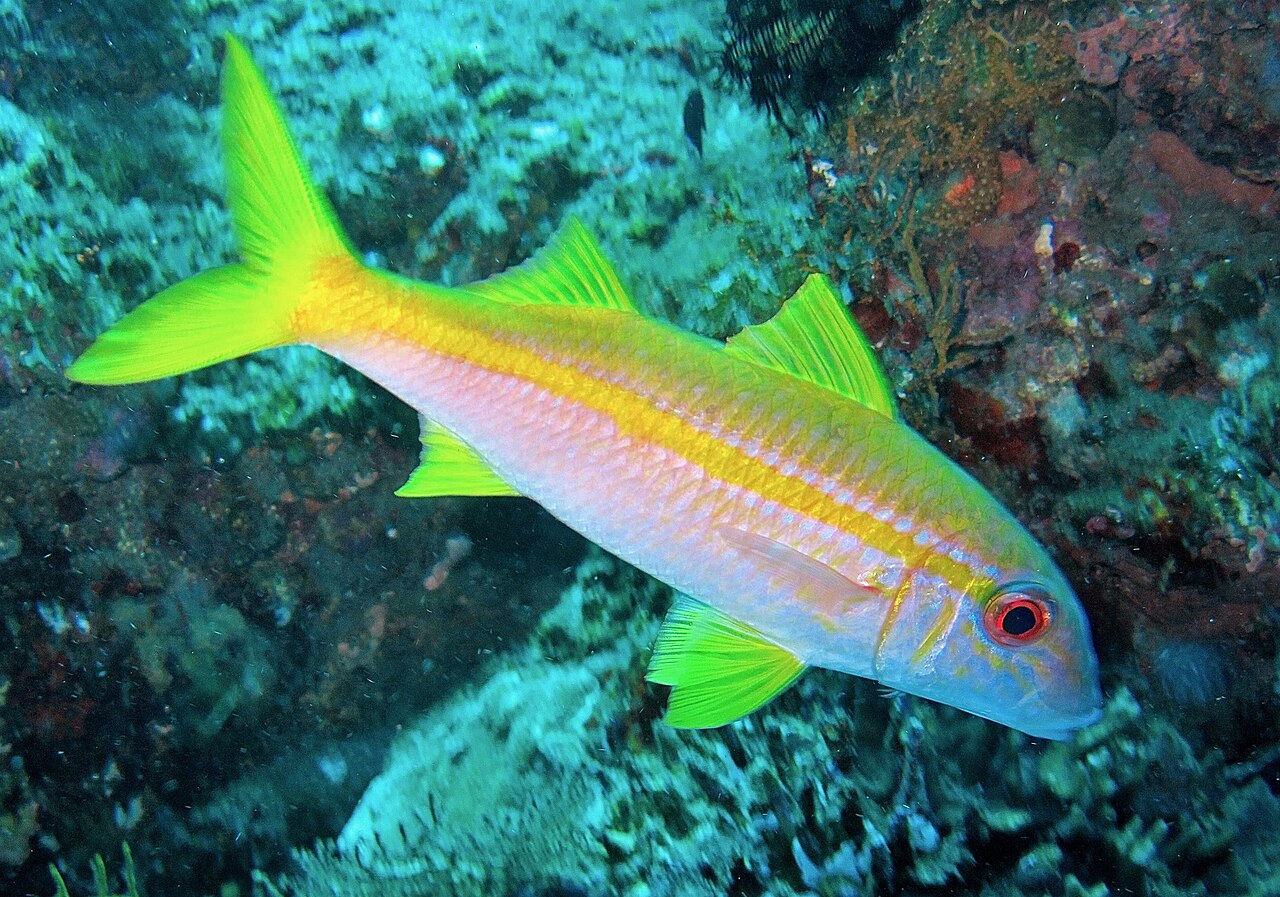
Image: Photo by (c) Bernard DUPONT, some rights reserved (CC BY-SA) · licensed CC BY-SA 4.0 · source

Also known as
Goat Fish, Goatfish, Kumu, Mullet, Red Mullet, Red mullet, Surmullet, Wekes
Kosher status
Kosher

About Goatfishes

or surmullets (Family Mullidae). Including: Goatfishes (Mullus species, Pseudupeneus species); Wekes or goatfishes (Mulloidichthys species, Upeneus species); Kumu (Parupeneus species); Red mullet (Mullus surmuletus). The goatfishes, or mullets, are ray-finned fish of the family Mullidae, the only family in the suborder Mulloidei of the order Syngnathiformes. The family is also sometimes referred to as the red mullets, which also refers more narrowly to the genus Mullus. The family name and the English common name mullet derived from Latin mullus, the red mullet; other than the red mullet and the striped red mullet or surmullet, the English word "mullet" generally refers to a different family of fish, the Mugilidae or gray mullets. The goatfishes, or mullets, are ray-finned fish of the family Mullidae, the only family in the suborder Mulloidei of the order Syngnathiformes. The family is also sometimes referred to as the red mullets, which also refers more narrowly to the genus Mullus. The family name and the English common name mullet derived from Latin mullus, the red mullet; other than the red mullet and the striped red mullet or surmullet, the English word "mullet" generally refers to a different family of fish, the Mugilidae or gray mullets. Taxonomy Evolution Due to their relatively nondescript body plan, the phylogenetic affinities of goatfishes have long been uncertain, outside of their being percomorphs. In the past, they were placed in an expanded treatment of Perciformes, which is now known to be paraphyletic. More recent studies incorporating phylogenetics have found them to belong to the order Syngnathiformes, which also contains seahorses, pipefish, and flying gurnards. Specifically, they belong to a "benthic clade" also containing gurnards, seamoths, and dragonets, with the dragonets being their closest relatives. This divergence likely occurred during a rapid but ancient radiation of...

Source: kosherfish.co/kosher-fish-list (snapshot 2025-12-19); legacy csv; Wikipedia (CC BY-SA 3.0); Wikipedia (CC BY-SA 3.0)

Look up another fish