Skip to content

Is Horseshoe crab kosher?

No — Horseshoe crab is not kosher under Jewish dietary law.

Not kosher. Despite the "crab" name, horseshoe crabs are arachnid relatives — not true crustaceans, but still a shellfish-type creature without fins or scales. Eaten in parts of Southeast Asia.

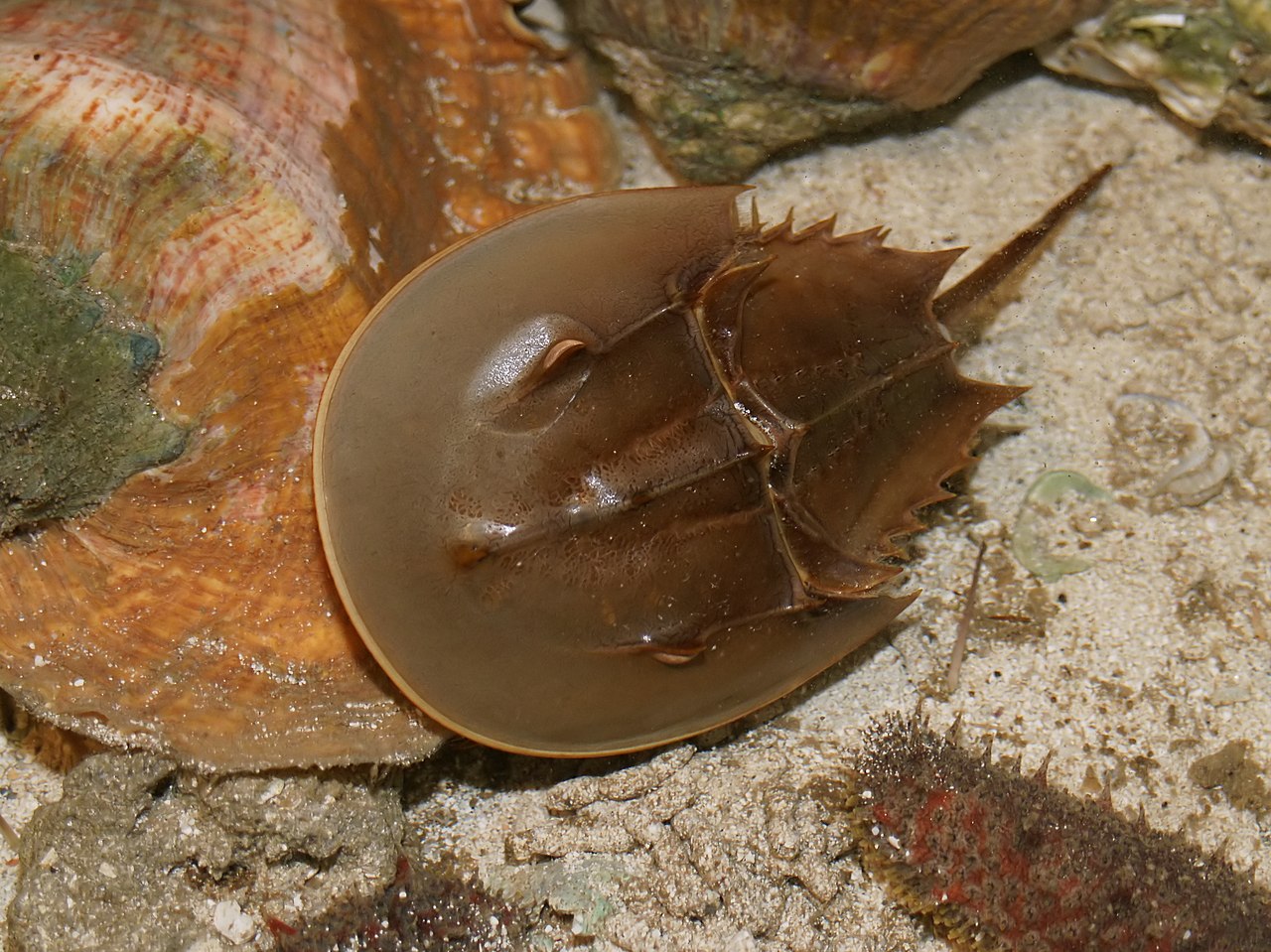
Horseshoe crab (Limulus polyphemus)

Image: Photo by Hans Hillewaert · licensed CC BY-SA 4.0 · source

Scientific name
Limulus polyphemus
Also known as
Atlantic horseshoe crab, King crab (Asian markets)
Category
shellfish
Fins & scales
No fins ✗ , no scales ✗
Kosher status
Not kosher

About Horseshoe crab

Ancient marine arthropods more closely related to spiders than to true crabs; largely unchanged for 450 million years. The Atlantic horseshoe crab (Limulus polyphemus), also known as the American horseshoe crab, is a species of horseshoe crab, a kind of marine and brackish chelicerate arthropod. It is found in the Gulf of Mexico and along the Atlantic coast of North America. The main area of annual migration is Delaware Bay along the South Jersey Delaware Bayshore. Their eggs were eaten by Native Americans, but today Atlantic horseshoe crabs are caught for use as fishing bait, in biomedicine (especially for Limulus amebocyte lysate) and science. They play a major role in the local ecosystems, with their eggs providing an important food source for shorebirds, and the juveniles and adults being eaten by sea turtles. The other three extant (living) species in the family Limulidae are also called horseshoe crabs, but they are restricted to Asia. Despite the name, horseshoe crabs are more closely related to arachnids like spiders and scorpions than they are to crabs or other crustaceans. The Atlantic horseshoe crab (Limulus polyphemus), also known as the American horseshoe crab, is a species of horseshoe crab, a kind of marine and brackish chelicerate arthropod. It is found in the Gulf of Mexico and along the Atlantic coast of North America. The main area of annual migration is Delaware Bay along the South Jersey Delaware Bayshore. Their eggs were eaten by Native Americans, but today Atlantic horseshoe crabs are caught for use as fishing bait, in biomedicine (especially for Limulus amebocyte lysate) and science. They play a major role in the local ecosystems, with their eggs providing an important food source for shorebirds, and the juveniles and adults being eaten by sea turtles. The other three extant (living) species in the family Limulidae are also called horseshoe crabs, but they are restricted to Asia. Despite the name, horseshoe crabs are more closely related to arachnids like spiders and scorpions than they are to crabs or other crustaceans. Names and classification This group of animals is also known as horsefoot, or saucepan. Some people call the horseshoe crab a "helmet crab", but this common name is more frequently applied to a true crab, a malacostracan...

Kosher ruling

Not kosher. Despite the "crab" name, horseshoe crabs are arachnid relatives — not true crustaceans, but still a shellfish-type creature without fins or scales. Eaten in parts of Southeast Asia.

Source: Orthodox Union; Wikipedia (CC BY-SA 3.0); Wikipedia (CC BY-SA 3.0)

Look up another fish