John Dory
Zeus faber
Kosher
Has fins and scales
Fins
Yes
Scales
Yes
Description
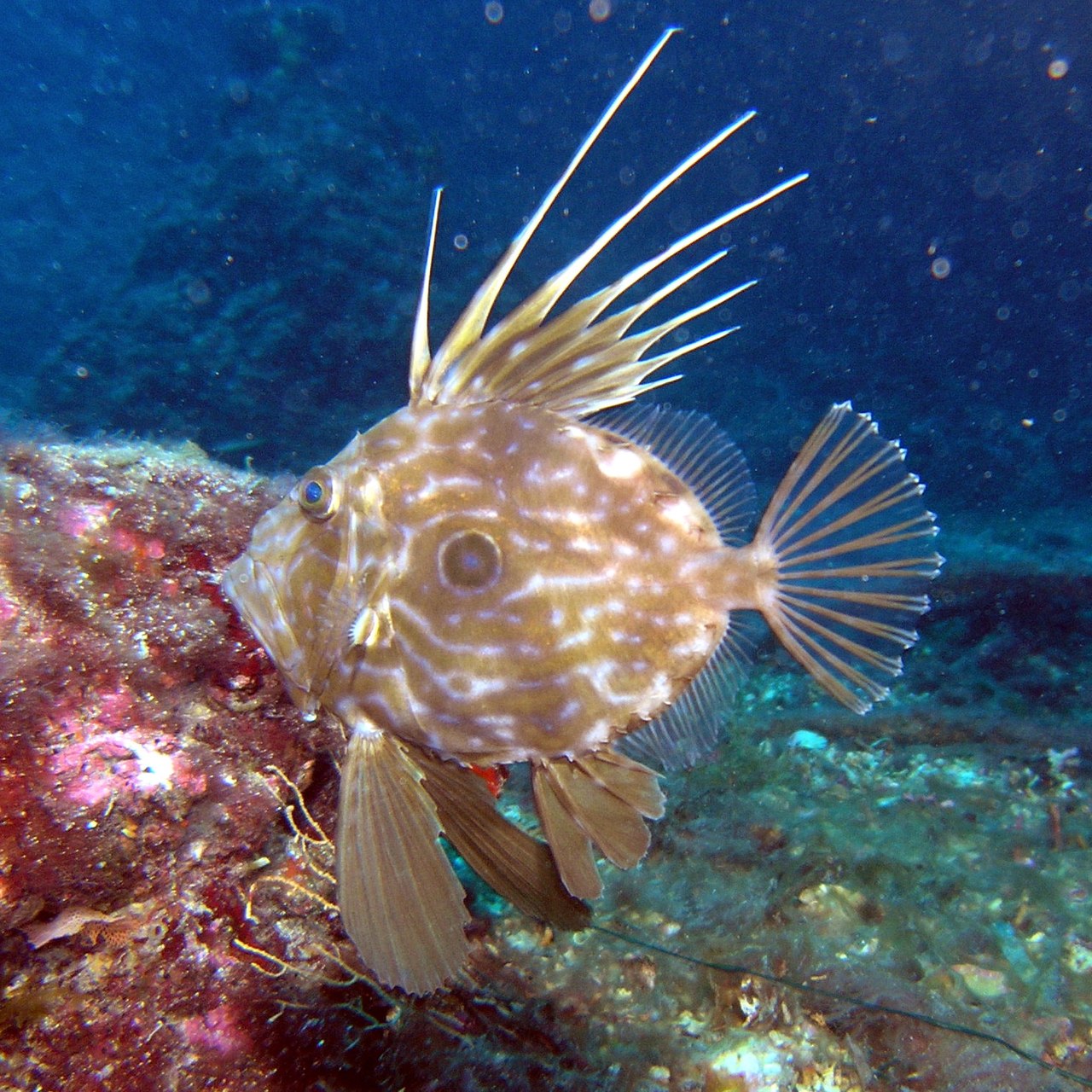
John Dory, St Pierre, or Peter's fish, refers to fish of the genus Zeus, especially Zeus faber, of widespread distribution. It is an edible demersal coastal marine fish with a laterally compressed olive-yellow body which has a large dark spot, and long spines on the dorsal fin.
John Dory is prized by chefs, and some call it one of the best fish on the table. It's best baked gently so the flesh doesn't dry out. It rarely shows up in supermarkets since it's usually caught as bycatch.
John Dory lives near the seabed off the coasts of Africa, Southeast Asia, Japan, Europe, Australia, and New Zealand, at depths from about 5 to 360 meters. It's usually solitary, and in New Zealand it's more common around the warmer North Island.
Also known as
- St Pierre
- Peter's fish
- Kuparu
- San Martiño
Kosher John Dory in foreign languages
| Scientific | Zeus faber |
| Hebrew | מוריגן הכתם |
| Arabic | ضوري مذهب |
| Spanish | Gall |
| Portuguese | peixe-galo |
| French | Doré |
| Italian | pesce San Pietro |
| German | Petersfisch |
| Greek | Χριστόψαρο |
| Russian | Обыкновенный солнечник |
| Turkish | Dülger balığı |
| Chinese | 日本的鯛 |
| Japanese | マトウダイ |
| Korean | 달고기 |
| Vietnamese | Cá dây Nhật Bản |
Gallery


Warnings & Kosher Issues
- Kosher. John Dory has fins and scales.