
Is Krill kosher?
No — Krill is not kosher under Jewish dietary law.
Not kosher. Krill are small shrimp-like crustaceans. Krill oil supplements derive from them and require the same scrutiny as any shellfish-derived product.
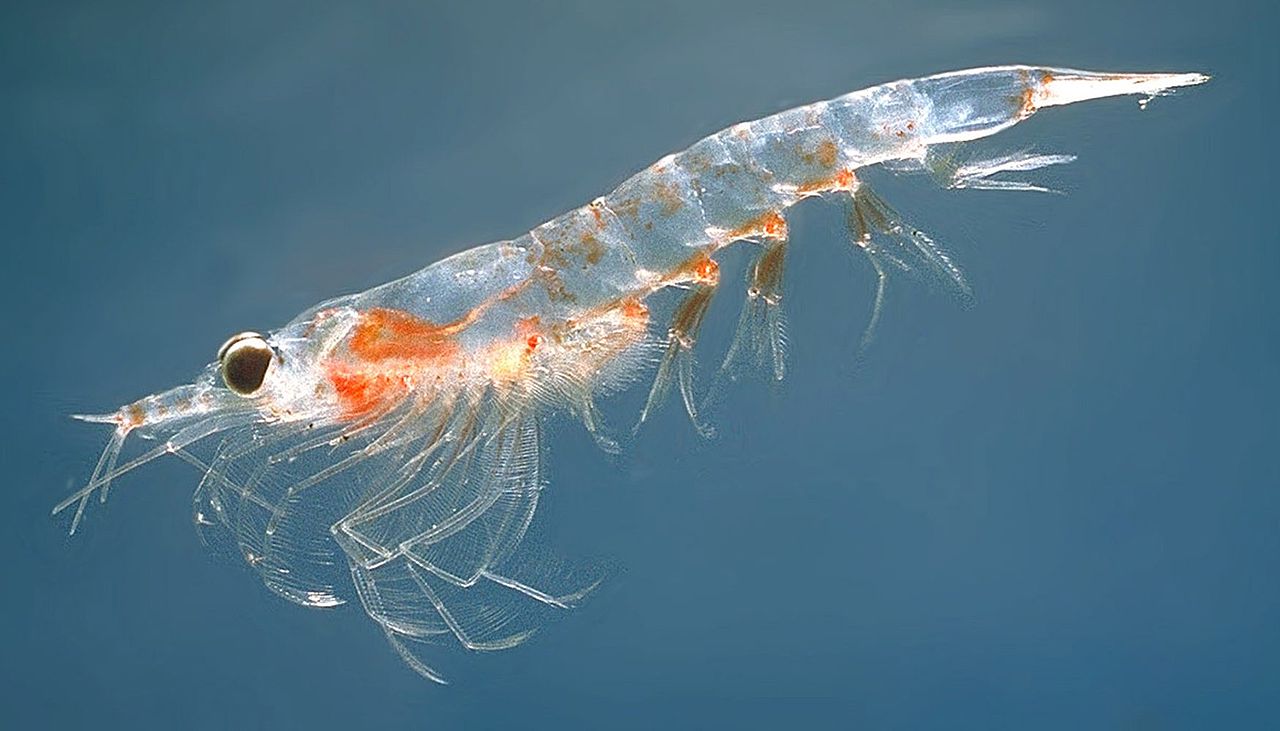
Image: Photo by Øystein Paulsen · licensed CC BY-SA 3.0 · source
About Krill
Tiny crustaceans that form the base of much of the marine food chain. Increasingly used in supplements and animal feed. Krill (Euphausiids) (sg.: krill) are small and exclusively marine crustaceans of the order Euphausiacea, found in all of the world's oceans. The name "krill" comes from the Norwegian word krill, meaning "small fry of fish", which is also often attributed to species of fish. Krill are considered an important trophic level connection near the bottom of the food chain. They feed on phytoplankton and, to a lesser extent, zooplankton, and are also the main source of food for many larger animals. In the Southern Ocean, one species, the Antarctic krill, makes up an estimated biomass of around 379 million tonnes (418 million tons), making it among the species with the largest total biomass. Over half of this biomass is eaten by whales, seals, penguins, seabirds, squid, and fish each year. Most krill species display large daily vertical migrations, providing food for predators near the surface at night and in deeper waters during the day. Krill are fished commercially in the Southern Ocean and in the waters around Japan. The total global harvest amounts to 150,000 to 200,000 tonnes (170,000 to 220,000 tons) annually, mostly from the Scotia Sea. Most krill catch is used for aquaculture and aquarium feeds, as bait in sport fishing, or in the pharmaceutical industry. Krill are also used for human consumption in several countries. They are known as okiami (オキアミ) in Japan and as camarones in Spain and the Philippines. In the Philippines, they are also called alamang and are used to make a salty paste called bagoong. Krill are also the main food for baleen whales, including the blue whale. Krill (Euphausiids) (sg.: krill) are small and exclusively marine crustaceans of the order Euphausiacea, found in all of the world's oceans. The name "krill" comes from the Norwegian word krill, meaning "small fry of fish", which is also often attributed to species of fish. Krill are considered an important trophic level connection near the bottom of the food chain. They feed on phytoplankton and, to a lesser extent, zooplankton, and are also the main source of food for many larger animals. In the Southern Ocean, one species, the Antarctic krill, makes up an estimated biomass of around 379 million tonnes (418 million tons), making it among the species with the largest total biomass. Over half of this biomass is eaten by whales, seals, penguins, seabirds, squid, and fish each year. Most krill species display large daily vertical migrations, providing food for predators near the surface at night and in deeper waters during the day. Krill are fished commercially in the Southern Ocean and in the waters around Japan. The total global harvest amounts to 150,000 to 200,000 tonnes (170,000 to 220,000 tons) annually, mostly from the Scotia Sea. Most krill catch is used for aquaculture and aquarium...
Kosher ruling
Source: Orthodox Union; Wikipedia (CC BY-SA 3.0); Wikipedia (CC BY-SA 3.0)
Look up another fish
Related species
Not Kosher Abalone
HaliotisPaua, Ormer
Not Kosher Barnacle
CirripediaGooseneck barnacle, Percebes, Acorn barnacle
Not Kosher Clam
BivalviaQuahog, Littleneck, Cherrystone
Not Kosher Conch
StrombidaeQueen conch, Horse conch
Not Kosher Crab
BrachyuraDungeness crab, Blue crab, King crab
Not Kosher Crayfish
AstacoideaCrawfish, Crawdad, Mudbug