Is Largemouth bass kosher?
Yes — Largemouth bass is kosher under Jewish dietary law.
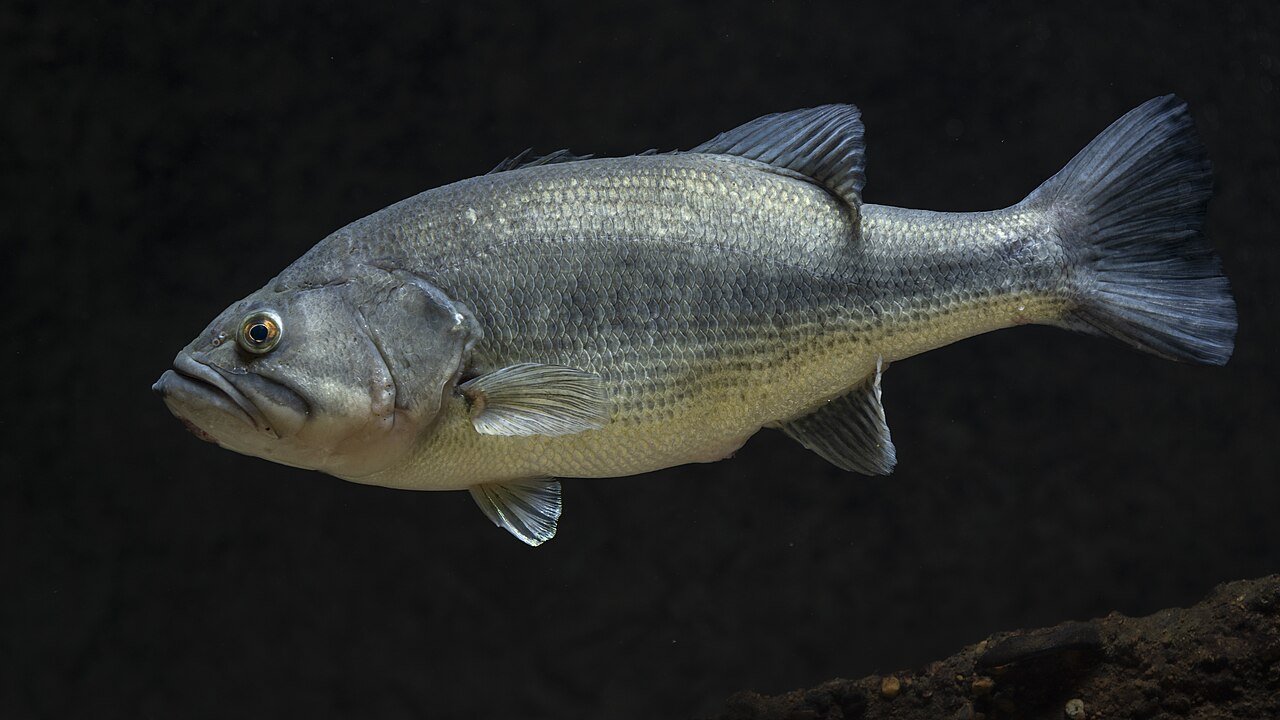
Largemouth bass has fins and scales, which are the two requirements for kosher fish under Jewish dietary law (Leviticus 11:9-12).
Image: Photo by USFWS Mountain Prairie · licensed Public domain · source
About Largemouth bass
See: Sunfishes The largemouth bass (Micropterus nigricans) is a carnivorous, freshwater, ray-finned fish in the Centrarchidae (sunfish) family, native to the eastern and central United States, southeastern Canada and northern Mexico. It is known by a variety of regional names, such as the widemouth bass, bigmouth bass, black bass, largie, potter's fish, Florida bass or Florida largemouth, green bass, bucketmouth bass, green trout, growler, Gilsdorf bass, Oswego bass, southern largemouth, northern largemouth, Alabama bass or Alabama largemouth, marsh bass, and swamp bass. The largemouth bass, as it is known today, was first described by French naturalist Georges Cuvier in 1828. A 2022 study concluded that the correct scientific name for the Florida bass is Micropterus salmoides, while the largemouth bass is Micropterus nigricans. It is the largest species of the black bass, with a maximum recorded length of 29.5 inches (75 cm) and an unofficial weight of 25 pounds 1 ounce (11.4 kg). Reports from Cuba speculate bass as large as 13.5 kg (30 lb), where invasive largemouth thrive. The largemouth bass is the state fish of Georgia and Mississippi, and the state freshwater fish of Florida and Alabama. It is a highly prized sport fish among anglers for their vigorous resistance when caught, and have been introduced to many regions due to their popularity in bass fishing and tolerance to urban streams. However, they have become an invasive species in some areas, causing the decline, displacement or extinction of native species through predation and competition. The largemouth bass (Micropterus nigricans) is a carnivorous, freshwater, ray-finned fish in the Centrarchidae (sunfish) family, native to the eastern and central United States, southeastern Canada and northern Mexico. It is known by a variety of regional names, such as the widemouth bass, bigmouth bass, black bass, largie, potter's fish, Florida bass or Florida largemouth, green bass, bucketmouth bass, green trout, growler, Gilsdorf bass, Oswego bass, southern largemouth, northern largemouth, Alabama bass or Alabama largemouth, marsh bass, and swamp bass. The largemouth bass, as it is known today, was first described by French naturalist Georges Cuvier in 1828. A 2022 study concluded that the correct scientific name for the Florida bass is Micropterus salmoides, while the largemouth bass is Micropterus nigricans. It is the largest species of the black bass, with a maximum recorded length of 29.5 inches (75 cm) and an unofficial weight of 25 pounds 1 ounce (11.4 kg). Reports from Cuba speculate bass as large as 13.5 kg (30 lb), where invasive largemouth thrive. The largemouth bass is the state fish of Georgia and Mississippi, and the state freshwater fish of Florida and Alabama. It...
Source: kosherfish.co/kosher-fish-list (snapshot 2025-12-19); Wikipedia (CC BY-SA 3.0); Wikipedia (CC BY-SA 3.0)