Skip to content

Is Sea urchin kosher?

No — Sea urchin is not kosher under Jewish dietary law.

Not kosher. Echinoderm. The roe (uni) served in sushi is not kosher.

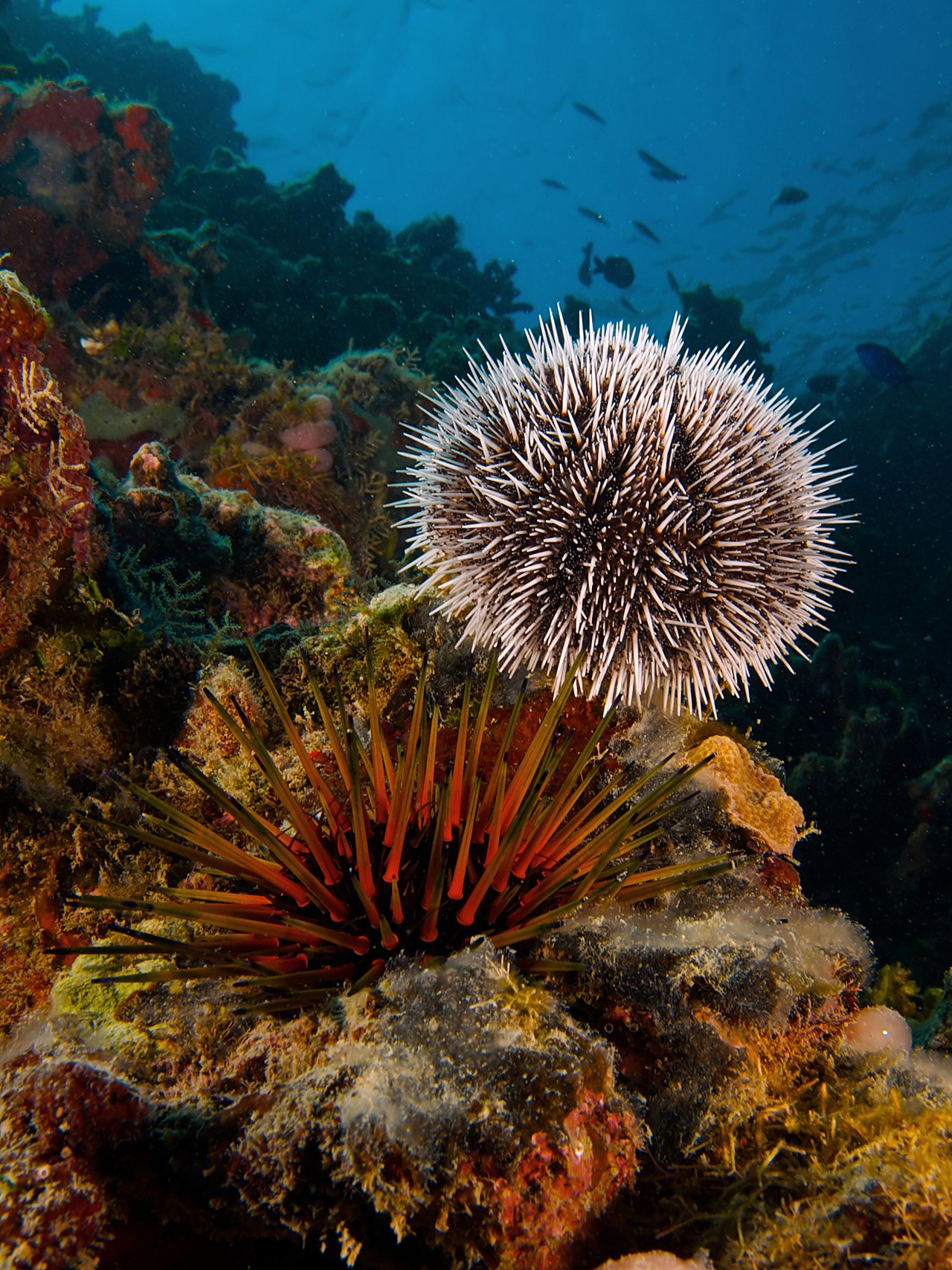
Sea urchin (Echinoidea)

Image: Photo by Nhobgood ( talk ) Nick Hobgood · licensed CC BY-SA 3.0 · source

Scientific name
Echinoidea
Also known as
Uni
Category
shellfish
Fins & scales
No fins ✗ , no scales ✗
Kosher status
Not kosher

About Sea urchin

Spiny, globular echinoderms. The edible part is the gonads, served as "uni" in Japanese cuisine. Sea urchins or urchins () are the class Echinoidea within the echinoderms. Approximately 950 species live on the seabed, inhabiting all oceans and depth zones from the intertidal zone which actually is not a fixed number but varies greatly, usually defined by the range between the highest and lowest tide, to deep seas of 5,000 m (16,000 ft). They typically have a globular body covered by spiny protective tests (hard shells), typically from 3 to 10 cm (1 to 4 in) across. Sea urchins move slowly, crawling with their tube feet, and sometimes pushing themselves with their spines. They feed primarily on algae but also eat slow-moving or sessile animals such as crinoids and sponges. Their predators include sharks, sea otters, starfish, wolf eels, triggerfish, and humans. When unchecked by predators, urchins can create urchin barrens, damaged environments devoid of large algae and the animals associated with them. Like all echinoderms, adult sea urchins have pentagonal symmetry with their pluteus larvae featuring bilateral (mirror) symmetry; The latter indicates that they belong to the Bilateria, along with chordates, arthropods, annelids and molluscs. Sea urchins are found in every ocean and in every climate, from the tropics to the polar regions, and inhabit marine benthic (sea bed) habitats, from rocky shores to hadal zone depths. The fossil record of the echinoids dates from the Ordovician period, some 450 million years ago. The closest echinoderm relatives of the sea urchin are the sea cucumbers (Holothuroidea), which like them are deuterostomes, a clade that includes the chordates. The animals have been studied since the 19th century as model organisms in developmental biology, as their embryos were easy to observe. Sea urchins or urchins () are the class Echinoidea within the echinoderms. Approximately 950 species live on the seabed, inhabiting all oceans and depth zones from the intertidal zone which actually is not a fixed number but varies greatly, usually defined by the range between the highest and lowest tide, to deep seas of 5,000 m (16,000 ft). They typically have a globular body covered by spiny protective tests (hard shells), typically from 3 to 10 cm (1 to 4 in) across. Sea urchins move slowly, crawling with their tube feet, and sometimes pushing themselves with their spines. They feed primarily on algae but also eat slow-moving or sessile animals such as crinoids and sponges. Their predators include sharks, sea otters, starfish, wolf eels, triggerfish, and humans. When unchecked by predators, urchins can create urchin barrens, damaged environments devoid of large algae and the animals associated with them. Like all echinoderms, adult sea urchins have pentagonal symmetry with their pluteus larvae featuring bilateral (mirror) symmetry; The latter indicates that they belong to the Bilateria, along with chordates, arthropods, annelids and molluscs. Sea urchins are found in every ocean...

Kosher ruling

Not kosher. Echinoderm. The roe (uni) served in sushi is not kosher.

Source: Orthodox Union; Wikipedia (CC BY-SA 3.0); Wikipedia (CC BY-SA 3.0)

Look up another fish