
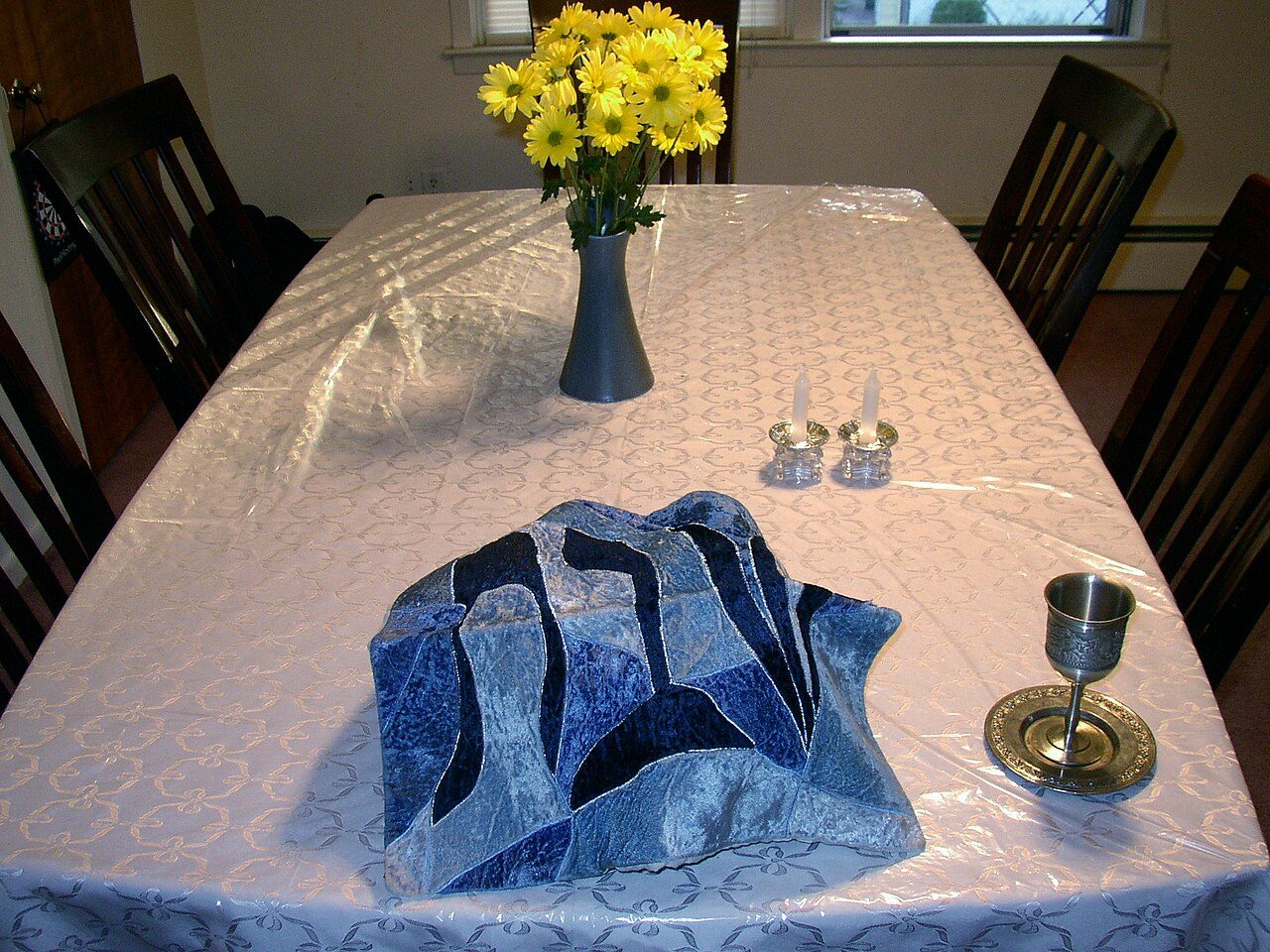
Kosher for Shabbat isn’t a separate diet. It’s the rules you keep every other day, kosher meat, kosher fish, kosher wine, no mixing meat and dairy, plus one big change. You can’t cook once Shabbat begins. Every hot dish has to be fully cooked before sundown Friday, then kept warm without adding new heat until Shabbat ends Saturday night. That one rule shapes the whole traditional Shabbat table, from the stew simmering overnight to the two loaves of challah on the cloth. If fish is part of your menu, look up any species on KosherFish before you buy it.
Why You Can’t Cook on Shabbat
Cooking, called bishul in Hebrew, is one of 39 categories of forbidden work on Shabbat, called the melachot. The Mishnah lists them in Mishnah Shabbat 7:2 (Talmud Shabbat 73a). The rabbis trace the whole list back to the labor used to build the Mishkan, the portable sanctuary described starting in Exodus 35:1. The Mishnah calls the cooking category ofeh, baking, because the first eleven melachot on the list follow the order of turning a field into a loaf of bread.
Kindling a fire gets its own, more direct mention. Exodus 35:3 states plainly, “You shall not kindle fire in any of your dwelling places on the Shabbat day.” Kindling and extinguishing a flame count as separate violations from cooking itself. That’s per Chabad.org’s guide to the 39 melachot and its entry on kindling. A stove still burning when Shabbat starts is a different problem from food that’s still raw.
How Food Stays Hot Without Cooking: The Blech
Food that’s already fully cooked and completely dry before Shabbat begins isn’t food you’re still “cooking.” Keeping it warm doesn’t break the Torah-level rule. But the rabbis didn’t want anyone sliding a pot back onto a lit burner and calling it reheating. So they built rules around the loophole.
The traditional tool is the blech, a thin metal sheet laid over the stove’s burners before Shabbat begins. A pot resting on a blech isn’t sitting on an open flame. That removes the concern, called shehiya, that someone will adjust the burner and end up actually cooking. Chabad.org’s guide to warming food on Shabbat describes three zones on a blech-covered stove. Directly over the flame, you can’t place cold food at all. At or above yad soledet bo (roughly 110°F, the point where a liquid is too hot to touch comfortably), adding food is also off-limits. On the cooler far edge, warming already-cooked food is fine. Food also has to pass a simple dryness test, no visible surface moisture, before it goes on the blech.
A second rule trips people up. Hatmana, fully insulating or wrapping food to hold in heat, is forbidden on Shabbat even when it doesn’t add a single degree. OU Kosher’s guide to warming food on Shabbos notes that submerging a bottle in a hot-water bath, or burying a pot under blankets, counts as hatmana. It’s a stricter rule than the cooking prohibition itself.
Cholent: The Dish Built Around the Rule
Cholent, called chamin in many Sephardic homes, is the classic answer to eating a hot meal without cooking on Shabbat. It’s a stew, usually beef, beans, and potatoes, that goes into a slow cooker or a low oven before Shabbat begins. It simmers untouched until Shabbat lunch the next day, fully cooked well before anyone lights a match.
The dish is old. The Ohr Zarua, a 13th-century halachic work by Rabbi Yitzchak of Vienna, already mentions cholent by name in the mid-1200s, per Ohr Somayach’s history of the dish. A rationale traced to the Ba’al Hamaor, a 12th-century commentator, treats a hot cooked dish as a mark of proper Shabbat observance in its own right. It was instituted in part to counter the Karaites, a medieval sect that read Exodus 35:3 to forbid warm food of any kind on Shabbat, not just active cooking. Rabbinic Judaism’s answer was to make eating hot food, prepared correctly in advance, the standard rather than a violation of it.
Kiddush Wine: Does It Need to Be Kosher?
Yes. The wine or grape juice used for Kiddush, the blessing that opens the Shabbat meal, needs the same reliable kosher certification as any other wine you’d drink. Not sure what makes a wine kosher in the first place? That’s worth checking before Shabbat, not during it.
One detail trips people up. Kiddush wine doesn’t need to be mevushal (boiled). Mevushal status answers a different question: whether a bottle can be handled by someone who isn’t Jewish without losing its kosher status, a rule rooted in older concerns about wine used in idol worship. Per Chabad.org’s explanation of mevushal, boiling the wine lifts that restriction, which is why mevushal wine can pass through more hands. Regular, non-mevushal kosher wine has to stay in Jewish hands from production through an opened bottle. Neither rule decides whether the wine is fit for Kiddush itself.
Fresh grape juice works too. The Shulchan Aruch (Orach Chaim 272:2) permits squeezing grapes and reciting Kiddush over the juice, per OU Kosher’s halacha on grape juice for Kiddush. In practice, almost all grape juice sold today is pasteurized. It’s technically cooked even when the label says “non-mevushal,” since that label refers to a higher heating threshold tied to the handling rule above, not to pasteurization. There’s also a narrower dispute worth knowing. The Shulchan Aruch (Orach Chaim 272:8) notes that Rambam held cooked wine shouldn’t be used for Kiddush at all, while the Rema rules that accepted custom is to be lenient. If your household follows a specific practice here, ask your rabbi or check with a reliable kosher certification agency.
Challah: The Bread and the Blessing Behind It
Two things get called “challah” on a Shabbat table, related but distinct. The first is the mitzvah of hafrashat challah, separating a small piece of dough from a large batch of bread before it’s baked. The Torah source is Numbers 15:18-21, which commands giving a portion of the first dough as an offering. In Temple times that piece went to the Cohanim. Today it’s set aside and burned instead, with a blessing recited at the moment of separation. Per OU Kosher’s halachos of hafrashas challah, the obligation applies to dough made with roughly 60 ounces, about eight cups, or more of flour from one of five grains: wheat, barley, oat, spelt, or rye. It was strictly a Torah-level requirement only in the land of Israel. The sages extended it to bakers everywhere so the practice wouldn’t be forgotten in the diaspora.
The second is lechem mishneh, the custom of setting two whole loaves on the table at the start of every Shabbat meal. The source is Exodus 16:22, describing how the Israelites gathered a double portion of manna every Friday in the desert so they wouldn’t have to gather food on Shabbat itself. The Talmud, Shabbat 117b, ties the two loaves directly to that verse. The custom has stuck ever since as a small, edible reminder of the miracle.
Kosher for Shabbat at a Glance
| Shabbat activity | Allowed? | Why |
|---|---|---|
| Cooking raw or partly-cooked food | ❌ No | Bishul is a Torah-level melacha (Mishnah Shabbat 7:2) |
| Reheating fully-cooked, dry food on a blech | ✅ Yes | Not bishul once the food is already cooked and dry |
| Insulating food to hold in heat (hatmana) | ❌ No | Forbidden by rabbinic decree, even without adding heat |
| Cooking or reheating using “Sabbath Mode” | ❌ No | The feature changes electrical behavior, not the cooking rule |
| Kiddush over certified kosher wine or grape juice | ✅ Yes | Needs kosher certification, not necessarily mevushal status |
| Eating cholent made before Shabbat began | ✅ Yes | Fully cooked in advance, kept warm within the blech rules |
Sabbath Mode Appliances: A Melacha Fix, Not a Kashrut One
Ovens and hot plates sold with a “Sabbath Mode” setting don’t solve the cooking problem above, and they’re not really trying to. Chabad.org’s guide to warming food on Shabbat states it plainly: no food, cooked or raw, may be placed in an oven on Shabbat to cook or reheat, even with Sabbath Mode engaged. The feature mainly addresses certain Yom Tov (holiday) situations, not Shabbat itself. Star-K has noted the branding is arguably backwards: “Yom Tov Mode” would describe it more accurately.
It’s worth being direct about what Sabbath Mode actually changes, since it’s easy to mistake the feature for a kashrut mechanism. What it touches is electrical: which lights and displays turn off, whether a preset temperature holds without new button presses, whether the appliance can run on a timer set before Shabbat. Those are questions about operating electronics on Shabbat, not about what’s fit to eat. A kosher-for-Shabbat kitchen still runs on the blech-and-cholent framework above for the food itself. Sabbath Mode is a separate, appliance-level workaround for a separate problem.
Check Any Fish with KosherFish
Fish is a regular part of the Shabbat table. It’s pareve, so it sits comfortably next to either a meat or a dairy course. A fresh whole fish with its fins and scales intact is also one of the easier foods to verify yourself. Kosher Fish for Jewish Holidays covers the species that show up most at Shabbat and holiday meals. Before you shop, look up any of KosherFish’s 291 species on the full kosher fish list or search a single fish on the homepage. The iOS and Android apps put the same lookup in your pocket at the fish counter.
Frequently Asked Questions
What does kosher for Shabbat mean?
It means the dietary laws that apply every other day, kosher meat and fish, no mixing meat and dairy, kosher-certified wine, still apply on Shabbat. What changes is timing. You can’t cook once Shabbat begins, so hot food has to be fully prepared beforehand and kept warm with rules like the blech, not actively cooked during the day itself.
Why can’t you cook on Shabbat?
Cooking (bishul) is one of 39 categories of forbidden work, called melachot, listed in Mishnah Shabbat 7:2. Kindling a fire is separately and explicitly forbidden in Exodus 35:3. Both count as Torah-level prohibitions, not customs, which is why observant households plan hot meals around cooking everything before Shabbat starts.
Can you reheat food on Shabbat?
Yes, but only food that’s already fully cooked and completely dry, kept warm on a blech rather than placed directly on an open flame. A blech is a metal sheet covering the stove. Partially cooked, moist, or raw food can’t be reheated this way, since bringing it up to temperature would count as actual cooking, a Torah-level violation.
What is a blech?
A blech is a thin metal sheet placed over stove burners before Shabbat begins, used to keep already-cooked food warm without violating the cooking prohibition. Covering the flame removes the concern that someone will adjust the burner and end up actively cooking. That lets a household keep food like cholent hot through the Shabbat meal.
Does Kiddush wine need to be kosher?
Yes, wine used for Kiddush needs the same reliable kosher certification as any wine you’d drink. It doesn’t need to be mevushal (boiled). That status only matters for whether someone who isn’t Jewish can handle the bottle without affecting its kosher status. Fresh or pasteurized grape juice is also a valid, common substitute for Kiddush.
What is cholent?
Cholent (chamin in Sephardic homes) is a slow-cooked stew, typically beef, beans, and potatoes, put into a slow cooker or low oven before Shabbat begins and left to simmer until the next day’s meal. Because it finishes cooking before Shabbat starts, keeping it warm through the meal doesn’t violate the prohibition on cooking.
Does a Sabbath Mode oven let you cook on Shabbat?
No. Sabbath Mode changes electrical behavior, like display lights and preset timers, but it doesn’t make it permissible to cook or reheat food in the oven on Shabbat. Chabad.org notes the feature mainly addresses certain Yom Tov (holiday) situations rather than Shabbat, and the name is widely considered misleading.
Do you need two loaves of challah on Shabbat?
The custom, called lechem mishneh, is to set two whole loaves on the table at the start of each Shabbat meal. It commemorates the double portion of manna the Israelites gathered on Fridays in the desert, described in Exodus 16:22, so they wouldn’t need to gather food on Shabbat. The Talmud, Shabbat 117b, ties the practice directly to that verse.
The Bottom Line
Kosher for Shabbat doesn’t change what’s kosher. It changes when you can prepare it. Cook everything hot before sundown Friday. Keep it warm with a blech instead of an open flame, skip the hatmana shortcuts and the Sabbath Mode workaround, and pour certified kosher wine or grape juice for Kiddush. Set out two loaves of challah. If your household follows a specific custom on any of this, ask your rabbi or check with a reliable kosher certification agency.
For the fish course, browse the full kosher fish list or look up a single species on the homepage before you shop. Read How to Keep Kosher for the everyday rules Shabbat builds on, or Kosher Symbols Explained to double-check a hechsher on a Shabbat product. Download the iOS or Android app to keep the lookup with you at the store.