
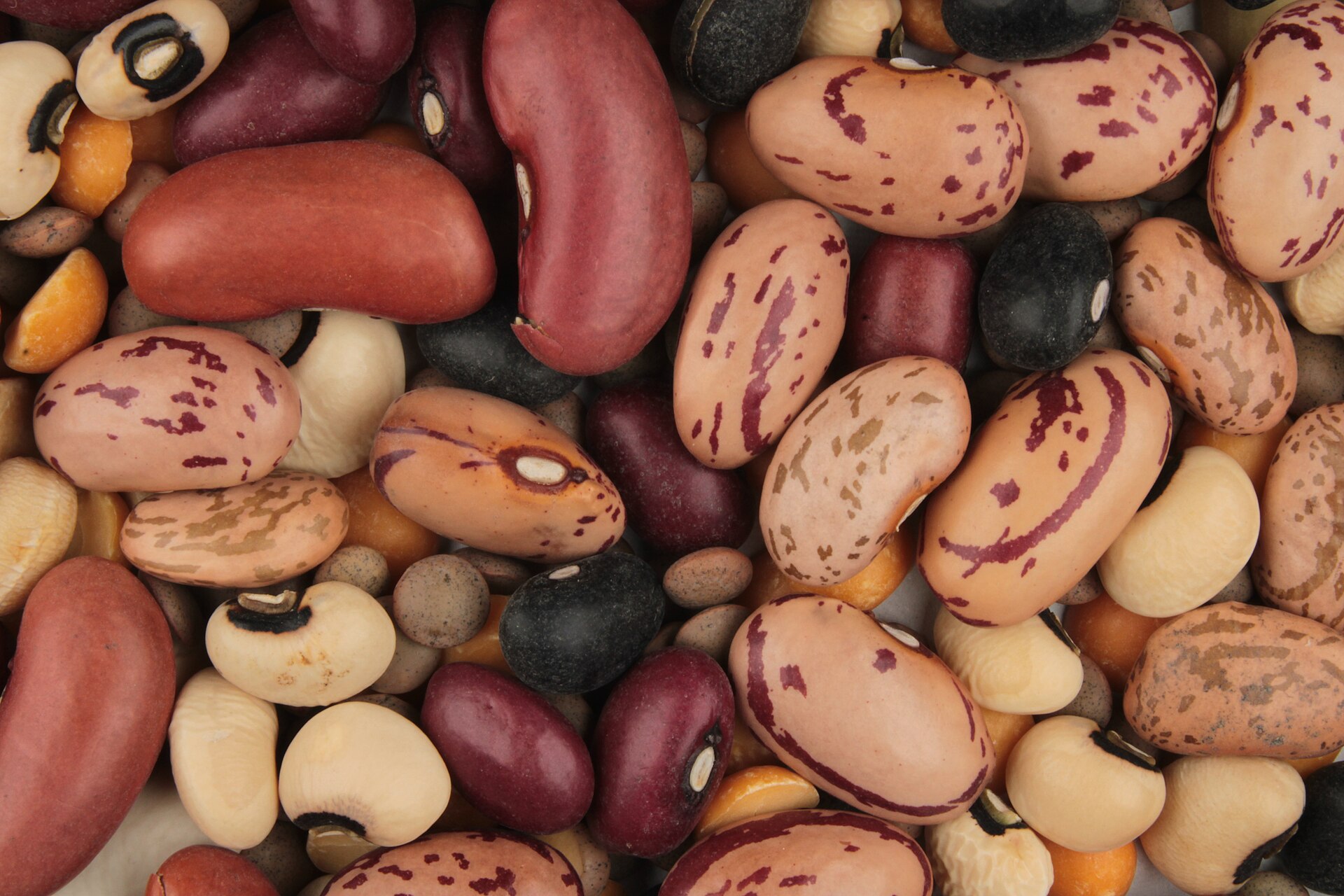
What is kitniyot? It’s the category of legumes, rice, corn, and seeds that Ashkenazi Jews avoid on Passover by custom, not by Torah law. Kitniyot isn’t chametz, and Sephardi communities traditionally eat kitniyot. Whether your household skips it depends on your family’s tradition and your rabbi. If you also plan a fish course for the seder, you can settle that half of the menu with the full kosher fish list.
Below, you’ll find where the custom comes from, which foods the OU puts on its kitniyot list, the gray areas like quinoa, peanuts, and canola oil, and who may eat kitniyot. We also cover how to read the kitniyot labels you’ll see in the Passover aisle every spring.
What Is Kitniyot?
Kitniyot (also spelled kitniyos or kitniot) is an Ashkenazic custom, not a Torah prohibition. OU Kosher describes it as an Ashkenazic minhag, a custom that developed in the Middle Ages, to avoid certain foods on Passover. The Torah forbids chametz, the leavened product of wheat, barley, rye, oats, and spelt. Kitniyot sits in a separate category. You can’t make chametz from rice or lentils, but Ashkenazi communities fenced them off anyway.
Chabad.org puts it the same way: kitniyot are “a class of foods that many Ashkenazim and some Sefardim do not eat on Passover.” The word is Hebrew, and the usual translation is “legumes,” though the category reaches well past legumes. Rice and corn are both on the list, and neither is a legume. Star-K’s Rabbi Tzvi Rosen notes that kitniyos are “popularly defined as legumes,” which is why the plain translation misleads.
Why Do Ashkenazi Jews Avoid Kitniyot on Passover?
Ashkenazi Jews avoid kitniyot because medieval rabbis worried it could lead to eating chametz. OU Kosher traces the custom to at least the Maharil, who died in 1427, and says every Ashkenazic community now keeps the custom. OU Kosher cites three reasons from the Mishnah Berurah (453:6 and 464:5):
- Farmers harvest and process kitniyot the way they process the five grains.
- Bakers can grind kitniyot into flour and bake loaves that look like chametz bread.
- Chametz grains can slip into a bag of kitniyot.
For its part, Star-K cites the second and third reasons from the Mishnah Berurah. Star-K also quotes the Shulchan Aruch’s definition (Orach Chaim 453): kitniyos are products you can cook and bake much like chametz grains, though halachically they aren’t chametz. Chabad.org adds that people might conflate kitniyot with bread and other chametz products.
Which Foods Count as Kitniyot?
On its kitniyot list, the OU names beans, buckwheat, chickpeas, corn, lentils, millet, mustard, peas, rice, sesame seeds, soybeans, sunflower seeds, and poppy seeds, along with caraway, cardamom, fennel seeds, fenugreek, flaxseed, hemp seeds, rapeseed, sorghum, and teff. Most questions start in the gray areas. We sorted the common foods in this table by what the OU, Star-K, and Chabad.org say.
| Food | Kitniyot? | What the authorities say |
|---|---|---|
| Rice, corn, lentils, beans, and chickpeas | Yes | The OU lists every one as kitniyot. Ashkenazi custom skips all of these. |
| Sesame, mustard, sunflower, and poppy seeds | Yes | The OU lists all four seeds as kitniyot. |
| Canola (rapeseed) oil | Yes | OU Kosher and Chabad.org both treat canola oil as kitniyot. |
| Hemp seeds | Yes | The OU lists hemp seeds as kitniyot. |
| Quinoa | No, with Passover certification | The OU decided in 2014 that it can certify quinoa for Passover, but only with OU-P supervision. Star-K calls it kosher l’Pesach with reliable certification. |
| Peanuts | Unclear | The OU list files peanuts under “may be kitniyot, and are therefore not used.” Rav Moshe Feinstein assumed they aren’t kitniyot, but some communities are strict. |
| Chia, coriander, cumin, and saffron | No, but check for chametz | The OU list says they aren’t kitniyot but may need special checking for chametz. |
| Potatoes, coffee, garlic, nuts, and olives | No | OU Kosher lists them as foods outside the original custom. |
Two details matter here. First, Ashkenazim avoid only the seeds, not the whole plant. Star-K says the roots and greens of these plants aren’t kitniyos. Second, chametz grains can still get into a food that isn’t kitniyot, so the OU flags chia, coriander, and cumin for special checking.
Do Sephardi Jews Eat Kitniyot on Passover?
Many Sephardi Jews do eat kitniyot on Passover. Star-K explains the split by the two great codes: the Beis Yosef (Rabbi Yosef Karo) permits kitniyos, while the Rema, the Ashkenazi gloss on the Shulchan Aruch, forbids kitniyos. In its words, “Sephardim consume kitniyos on Pesach while Ashkenazim follow the Rama’s psak.”
Practice still varies. Chabad.org notes that some Sephardim avoid kitniyot too, and it tells Sephardim to ask their rabbi about their family and community tradition. Star-K adds that Sephardim check kitniyot grains three times for stray chametz grains before they use them on Pesach.
Who May Eat Kitniyot on Passover?
Children, people who are ill, and people on a restricted diet may eat kitniyot after consulting a rabbi, according to OU Kosher. The OU adds that you should prepare those foods in special utensils that you don’t wash with the Passover dishes, and that the chametz rules stay as strict as ever. Baby formula and nutrition supplements often contain kitniyot, so the question comes up for families with infants.
Ashkenazim who keep the custom avoid eating kitniyot, not owning kitniyot. Chabad.org says you have no obligation to destroy or sell kitniyot products before Passover. The OU makes the same point with examples: you can keep cans of sweet corn in the pantry or feed millet to a parrot. Star-K exempts medications from the restriction, so you may take a pill with corn starch as a binder.
Some Conservative rabbis took a different view. In 2015, Rabbis Amy Levin and Avram Reisner wrote a teshuvah arguing that Ashkenazim may eat kitniyot on Passover, and Rabbi David Golinkin wrote another that urged the same change in Israel and the Diaspora. Five Conservative rabbis answered with a 2016 dissent that calls the Ashkenazi custom “relevant and compelling” and says it “remains in force.” Exploring Judaism summarizes all three papers. Orthodox Ashkenazi communities keep the custom, so ask your own rabbi which path your household follows.
What About Kitniyot Oils, Quinoa, and Packaged Foods?
Oil is where kitniyot gets technical. According to OU Kosher, earlier authorities including the Rema forbid oil pressed from kitniyot. Some later authorities are more lenient, but the OU says it’s “generally accepted to follow the stricter opinion.” Corn and soybean oil stay off the Passover table, and olive, palm, coconut, and walnut oil work fine. Star-K reports that Rav Moshe Feinstein permitted peanut oil, though most reputable US and Israeli agencies leave peanut oil out.
Quinoa has its own history. In March 2014, after a multiyear investigation, the OU announced that it can certify quinoa for Passover under special supervision and the OU-P symbol. The OU’s poskim noted that people didn’t traditionally use quinoa like grain to bake bread, and the OU says it cares mainly about a food’s traditional uses. Star-K also calls quinoa kosher l’Pesach, with a warning. Star-K found that quinoa may grow near certain grains or go through facilities that compromise its Passover status, so buy only quinoa with a reliable Passover certification.
Accidental kitniyot gets more lenient treatment. OU Kosher permits a Passover food that picks up a small amount of kitniyot, as long as non-kitniyot ingredients make up the majority and no recognizable pieces remain. It cites the Rema (453:1) and the Mishnah Berurah (453:9). A strict household still shouldn’t cook with kitniyot on purpose, and a rabbi can sort out any specific case.
Kitniyot eaters used to rely on guesswork instead of certification. On February 28, 2013, the OU introduced an “OU Kitniyot” symbol that reads “Acceptable for those who consume kitniyot on Passover.” OU chief operating officer Rabbi Moshe Elefant said the OU presents the symbol “so as to avoid any confusion.” Star-K marks products made for kitniyot eaters with a STAR-S P. If your household avoids kitniyot, treat those symbols as a warning, not a Passover hechsher. For more on reading marks, see our guide to kosher symbols, and for the full Passover picture, read what makes food kosher for Passover.
Is Fish Kitniyot? Check Any Fish with KosherFish
Fish isn’t kitniyot, because fish is neither a grain nor a legume. The risk lies in what goes with the fish. Processors can add corn, soy, or chametz through breading, sauces, and oils, so look for a Passover hechsher on any processed fish. We cover the seder fish question in our guide to kosher fish for Passover, and our best kosher fish for Shabbat dinner guide works for Passover Shabbat too.
To check whether a fish is kosher at all, you can look up any species on the KosherFish lookup tool and read the verdict in seconds. You’ll find 290+ species there, each with the fins-and-scales reasoning behind the verdict. At the store, you can check on the go with the iOS app or the Android app.
Frequently Asked Questions
What is kitniyot?
Kitniyot is the category of legumes, rice, corn, and seeds that Ashkenazi Jews avoid on Passover by custom. It isn’t chametz and it isn’t a Torah prohibition. OU Kosher calls kitniyot an Ashkenazic minhag from the Middle Ages, and Sephardi communities generally don’t follow that custom.
Why can’t you eat rice on Passover?
Ashkenazi Jews don’t eat rice on Passover because rice is kitniyot, a custom the Rema supports. OU Kosher cites the Mishnah Berurah’s reasons: farmers harvest and grind kitniyot like chametz, and chametz grains can slip into a batch. Rice isn’t chametz, and Sephardi Jews generally eat rice on Passover. Ask your rabbi about your family tradition.
Is quinoa kitniyot?
No, according to the OU, which decided in 2014 that it can certify quinoa for Passover under OU-P supervision. Star-K also calls quinoa kosher l’Pesach. Star-K warns that quinoa may grow near grains or go through facilities that compromise its Passover status, so buy only quinoa that carries a reliable Passover certification.
Are peanuts kitniyot?
Peanuts are an open question. OU Kosher says Rav Moshe Feinstein assumed they aren’t kitniyot, but some people are strict, and the OU lists peanuts as possible kitniyot that Ashkenazim don’t use. Star-K calls it a question as well. Follow your family custom or ask your rabbi.
Is canola oil kitniyot?
Yes, according to OU Kosher and Chabad.org, which both treat canola (rapeseed) oil as kitniyot. Ashkenazi households that avoid kitniyot skip it on Passover. Olive, palm, coconut, and walnut oils are acceptable, per OU Kosher. Check the label for a Passover hechsher.
Can Sephardi Jews eat kitniyot on Passover?
Many do. The Beis Yosef permits kitniyos, and Star-K notes that Sephardim follow that ruling while Ashkenazim follow the Rema’s ruling against kitniyos. Practice still varies by community, so Sephardim should ask a rabbi about their own tradition. Star-K adds that Sephardim check kitniyot grains three times for stray chametz grains.
Do you have to get rid of kitniyot before Passover?
No. Chabad.org says you have no obligation to destroy or sell kitniyot products before Passover. Ashkenazim avoid eating kitniyot, but they may still own kitniyot. OU Kosher says you can keep cans of corn in the pantry. Star-K says you may also use kitniyot for non-eating purposes, such as pet food.
What does OU Kitniyot mean on a label?
It means the product suits people who eat kitniyot on Passover. The OU introduced the symbol in 2013 with the wording “Acceptable for those who consume kitniyot on Passover.” Households that avoid kitniyot should not buy products with that symbol. The label is not a general kosher for Passover mark.
The Bottom Line
What is kitniyot? It’s the Ashkenazic Passover custom of avoiding rice, corn, beans, lentils, seeds, and their oils. Kitniyot isn’t chametz, Sephardim generally eat kitniyot, and children and the ill may eat kitniyot after asking a rabbi. Read the kosher for Passover guide for the chametz side, then see our guide to the hechsher so you can read a Passover label with confidence.
When fish is on the menu, look up the species on the KosherFish lookup tool or browse the kosher fish list. You can also download the iOS app or the Android app and check a fish at the counter. For your own household’s kitniyot practice, ask your rabbi.