
Is herring kosher? Yes, herring is a kosher fish, because it has the fins and removable scales that the Torah requires in Leviticus 11:9-12. The catch is the form it comes in. Fresh herring with its skin and scales intact is kosher on sight, while pickled, smoked, and creamed herring need a reliable hechsher. You can look up any fish on KosherFish in seconds, or read the kosher fish list for the full set.
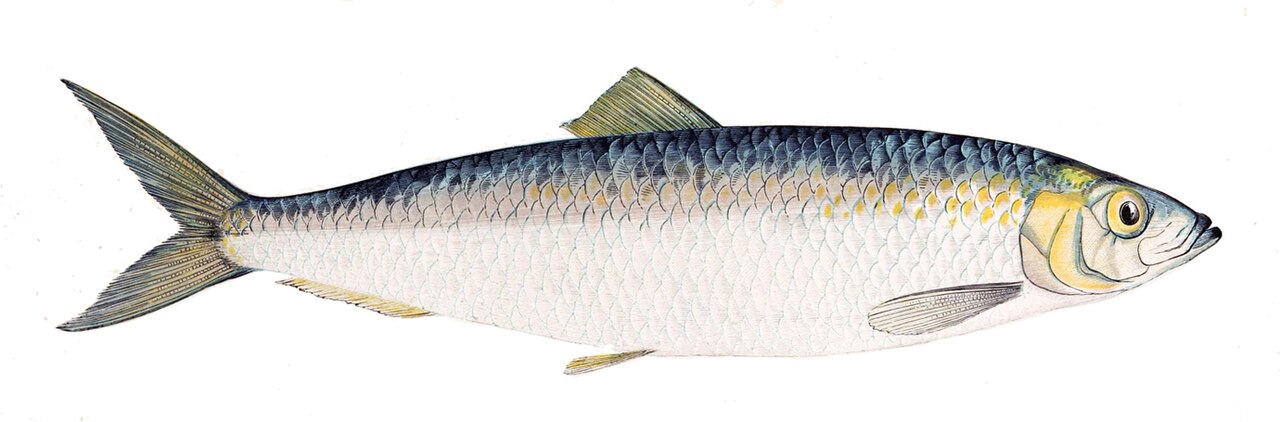
Is herring kosher? The Torah rule
Is herring kosher under the Torah’s two-part test for fish? Yes. Leviticus 11:9-12 permits anything in the water that has fins and scales and calls everything else in the water an abomination. Chabad.org’s staff article Is Herring Kosher? puts the rule this way: all fish with fins and scales are kosher, and herring as commercially sold falls into that category.
The scales are the part readers doubt. Kosher law counts a scale only if you can remove it by hand or with a knife without tearing the skin, a standard the OU Kosher staff attributes to the Ramban. Most herrings (family Clupeidae) have cycloid scales, which lift off cleanly, so they pass. Our herring species page lists the same verdict and notes that a few herring species are nearly scaleless and that none have scales on the head.
Sturgeon shows why the removable part matters. The OU says sturgeon has scales but is not kosher, since its ganoid scales can’t come off without tearing the skin. Herring has no such problem. For the full rule, read what makes a fish kosher.
What Atlantic herring actually is
Herring is a small, silvery schooling fish. NOAA Fisheries describes Atlantic herring (Clupea harengus) as silvery with a bluish or greenish-blue back, growing quickly to as much as 14 inches, and found from Labrador to Cape Hatteras, North Carolina, with a range on the eastern side of the North Atlantic too. The flesh of fresh herring is off-white.
Atlantic herring is one of nearly 200 herring species in the family Clupeidae, NOAA says, and our herring species page names the Atlantic, Baltic, and Pacific species as the big commercial ones. A female Atlantic herring can produce 30,000 to 200,000 eggs, according to NOAA.
The way crews catch herring explains the missing scales. The OU says fishing for herring happens at night, when the fish rise toward the ocean surface to feed, and a purse seine can wrap an entire school in one set. Most of the scales fall off as the crew pulls the fish from the water, and fishermen vacuum off most of the rest (they sell those scales to cosmetic companies). By the time the herring reaches the processing plant, the fish has almost no scales left.
Almost none of that reaches your plate as a whole fish. NOAA says fishermen sell herring frozen, salted, or canned as sardines, and that Americans eat most of their herring canned, either pickled or smoked. That detail drives the whole kosher question, because those forms hide the signs that make the fish kosher. The OU opens its herring article with the fish you see at a kiddush or at shalosh seudos, with no fins, no scales, and often no skin.
Herring is also an oily fish. NOAA says small fresh herring taste more delicate and larger herring have a fuller, oilier flavor. It calls Atlantic herring a great source of omega-3s (omega-3 fatty acids), vitamin B12, and iron, and its nutrition facts list 158 calories, 17.96 grams of protein, and 9.04 grams of total fat in a 100-gram raw serving. None of those health numbers changes the kosher verdict, which rests on fins and scales alone.
Is pickled herring kosher?
Pickled herring is kosher only with a reliable agency’s certification. Chabad.org states that all pickled or otherwise processed herring must carry certification from a reliable kosher agency. The OU Kosher staff article The Kashrus of Pickled Herring explains why, and the article names five problems.
- Identity. Herring loses its scales during harvesting, so the Torah’s signs of kosher fish become hard to check afterward. The OU says agencies that certify herring rely on the skin, citing the Darchei Teshuva, and that the preponderance of kashrut agencies accept a person who knows the fish identifying it by its skin.
- By-catch. Small sharks can come up in the same nets, so the OU says the certifying agency has to make sure plant workers remove all of the non-kosher by-catch.
- Skinless fillets. Once the skin comes off, the OU says, the fish becomes what the rabbis call kirvei dagim, which they prohibit out of concern that someone is passing off a non-kosher fish as kosher. Agencies handle that in different ways: continuous supervision from skin removal onward, treating the silver-blue flesh layer as a definitive identifier, or certifying a plant that handles only kosher fish while a mashgiach confirms it stays that way.
- Desalting equipment. After workers open the curing barrels, they dump the herring into steel tanks and wash off the brine, a step called desalting. The OU explains that herring before desalting is a davar charif, a sharp food that draws absorbed flavor out of a tank in minutes instead of the usual 24 hours. So plants must use those tanks for kosher fish only or kosher the tanks first.
- Wine and vinegar. Plants cure herring with salt, glacial acetic acid, and vinegar. The OU says salt and acetic acid raise no kashrut concern, but vinegar can come from non-kosher wine, so the agency has to secure a kosher vinegar source. The OU also calls the wine in wine sauce the most sensitive ingredient and says a hashgacha agency must make sure the plant uses only kosher wine.
The OU adds smaller supervision points, such as keeping the knives that cut onions under hashgacha and controlling kosher-symbol labels so they appear only on certified product. If you want the basics on the mark itself, we explain what a hechsher is in a separate guide.
Fresh, smoked, canned, and creamed: what each needs
Each form of herring raises a different question. We sorted them below using the Chabad.org and OU Kosher staff articles named above.
| Form | Kosher? | What to check |
|---|---|---|
| Fresh whole herring with skin and scales intact | Yes | You can see the fins and scales, and Chabad.org says fresh herring with its scales attached is a way to make sure you get kosher fish. |
| Fresh herring sold by the slice | Check | Chabad.org suggests buying from a store under rabbinic supervision and asking the employee to wipe the knife clean and cut on a fresh sheet of paper. |
| Pickled herring in a jar | Check | Look for a reliable hechsher. The OU flags wine sauce, vinegar, and desalting tanks. |
| Skinless herring fillets | Check | You can’t identify the fish once the skin is gone, so rely on supervision, not appearance. |
| Smoked or canned herring | Check | Chabad.org says all processed herring needs certification from a reliable kosher agency. |
| Sturgeon and burbot (not herring) | No | The OU says sturgeon’s ganoid scales won’t come off cleanly and burbot’s scales sit embedded in the skin. |
Is herring kosher by sight alone?
You can tell only while the skin stays on the fish. The OU Kosher staff makes the point with three fish that are kosher: halibut, whitefish, and carp. Even those, the article says, become impossible to identify once someone removes the skin.
So most agencies that certify herring identify the fish by its skin, a practice the OU traces to the Darchei Teshuva. A mashgiach who knows the fish can recognize it by its skin before processing. A shopper holding a skinless fillet can’t repeat that check, so the shopper relies on the agency that did.
Whole herring that lost most of its scales in the net can still show one. The OU lists a few places to look: behind the gills, behind the fins (especially the dorsal fin), and by the tail. The Rema adds another test, wrapping the fish in a cloth and checking the cloth for scales. Both checks work only while the skin stays on the fish.
A simple checklist before you buy herring
Run through these steps in order, and stop at the first one that fails.
- Step 1. Check whether the fish is whole with its skin and scales intact. If so, you can see the fins and scales yourself.
- Step 2. If it’s a fillet, a slice, or a jar, look for a hechsher from an agency you trust.
- Step 3. For pickled or creamed herring, check the label for wine, vinegar, and cream. The OU describes agency controls for all three ingredients.
- Step 4. If the store sells fish by the slice, ask the employee to wipe the knife clean and cut on a fresh sheet of paper, as Chabad.org advises.
- Step 5. When anything still looks unclear, ask your own rabbi before you buy.
How to buy kosher herring
Start with the label. A reliable hechsher on the jar or can settles the species and the processing questions that you can’t settle by looking. Not every symbol carries the same weight, and we give the longer answer in our guide on whether fish needs a hechsher.
At a fish counter, ask for whole fish with the skin on whenever you can. The OU says skinless fillets are only acceptable from stores under reliable rabbinic supervision, with exceptions for OU-accepted salmon and red trout fillets. It also warns that common names are unreliable and Latin names are more accurate, but the OU adds that fish sellers generally don’t know the correct Latin name. So don’t trust a sign that says “herring” alone. Ask the supervising rabbi or the store’s certifier.
Related names matter here too. Sardines, shad, and alewife belong to the same family, Clupeidae, and you’ll find all three among the common names on our herring species page. We explain canned sardines in our sardines guide. For a doubt about a specific jar, ask your own rabbi.
Check Any Fish with KosherFish
If you’re standing at the counter, you can look up any fish on the KosherFish homepage and get a verdict for herring and 290+ other species. You can scan every species on the kosher fish list at once, and read the biology behind the verdict on the herring species page.
You can run the same check on your phone with the iOS app or the Android app, which helps when you’re comparing two fillets and can’t remember the species name. KosherFish is an information tool, not a posek, so confirm any product with a reliable certification.
Is herring kosher? Frequently asked questions
Is herring kosher?
Yes, herring is kosher because it has fins and removable scales, which meets the Torah’s test in Leviticus 11:9-12. Chabad.org says herring as commercially sold falls under the rule that all fish with fins and scales are kosher. Processed herring, such as pickled, smoked, or creamed, needs certification from a reliable kosher agency.
Is pickled herring kosher?
Pickled herring is kosher only with a reliable hechsher. Chabad.org says a reliable kosher agency must certify all pickled or otherwise processed herring. The OU explains that agencies supervise the wine sauce, the vinegar, the desalting tanks, and the identity of the fish after workers remove the skin.
Is fresh herring kosher without a hechsher?
Fresh whole herring with the skin and scales still attached doesn’t need a hechsher, because you can see the signs of a kosher fish yourself. Chabad.org names fresh herring with the scales attached as one way to make sure you’re getting kosher fish. When you buy herring by the slice, Chabad.org suggests asking the employee to wipe the knife clean and cut on a fresh sheet of paper.
Why does herring need certification if it is a kosher fish?
Herring loses its scales during harvesting, so you can’t confirm the species from the flesh. The OU says agencies rely on the skin to identify herring, and skinless herring becomes a rabbinic concern called kirvei dagim. Wine sauce, vinegar, and shared desalting tanks add more reasons to require supervision.
Are herring scales kosher?
Yes, they are. Kosher scales are the kind you can remove by hand or with a knife without tearing the skin, a standard the OU Kosher staff attributes to the Ramban. Most herrings have cycloid scales that meet the standard. Sturgeon’s ganoid scales don’t, which is why sturgeon is not kosher.
Is herring kosher if you judge it by looks?
You can tell only while the skin stays on the fish. The OU says even kosher fish such as halibut, whitefish, and carp become impossible to identify once someone removes the skin. Whole herring with skin and scales shows its own signs. A skinless fillet or a jar depends on the supervising agency, so look for a reliable hechsher.
Is herring in cream sauce kosher?
Herring in cream sauce can be kosher, but only with a reliable hechsher. The OU treats it as a dairy product and says the plant must clean the capping machine before a pareve herring run that follows a dairy run. Look for the agency’s mark and a dairy designation on the label, and ask your rabbi about any doubt.
The Bottom Line
Herring is kosher, and your only job is checking the form you buy. Fresh whole fish shows its own signs. Anything pickled, smoked, canned, creamed, or skinless needs a reliable hechsher. Browse the kosher fish list, read the herring species page, or look up any fish before your next trip to the deli counter, and keep the iOS app or Android app handy. For more on the rules behind the verdict, read what makes a fish kosher, and then whether fish needs a hechsher.