
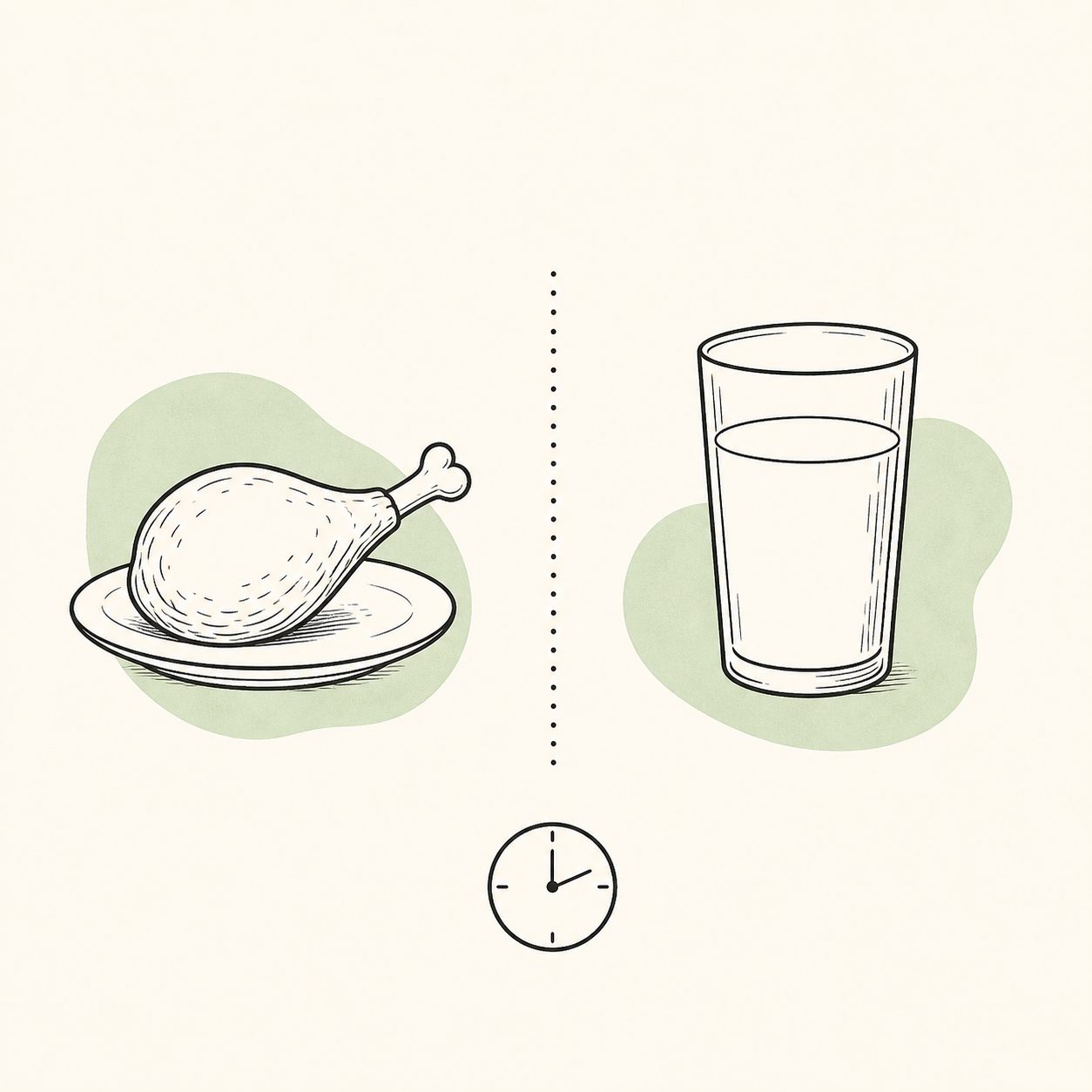
Can you eat meat and dairy together? No, not under Jewish dietary laws. Kosher rules keep meat and dairy fully separate. That covers the food itself, plus the pots, plates, and utensils that touch it. The rule traces to a single line the Torah repeats three times. Fish and eggs skip this rule entirely. They fall into a third category called pareve, which is why a piece of salmon can sit next to a glass of milk with no problem. It’s one of the most important and most recognized kosher laws people associate with keeping kosher, even people who don’t follow every dietary rule. Here is where the rule comes from, what counts as meat and dairy, how long you wait between the two, and where fish and the kosher fish list fit in.
The Torah Rule Behind Meat and Dairy
The whole separation rule comes from one command, repeated three separate times: “You shall not boil a kid in its mother’s milk” (Exodus 23:19, Exodus 34:26, and Deuteronomy 14:21). Three repetitions of the same short sentence is unusual for the Torah. The rabbis in the Talmud, tractate Chullin, read that repetition as deliberate. They derived three distinct prohibitions from it. You cannot cook meat and milk together. You cannot eat the mixture once it is cooked. And you cannot benefit from it any other way, such as selling it or feeding it to an animal.
That three-part reading, cooking, eating, and benefit, is why kosher dietary laws reach further than just what lands on your plate. They govern the kitchen itself. The Shulchan Aruch, the codified law most kosher practice follows today, lays out the details in Yoreh De’ah, siman 87 through 97. That section is still the reference kosher households and certifying agencies use.
What Actually Counts as Meat
Meat means the flesh of a kosher land animal. Beef and lamb are the clearest examples. It also covers anything made from that meat, like broth, gravy, or gelatin derived from kosher animals. Poultry, or fowl in the Torah’s own vocabulary, belongs in the meat category too. Chicken, turkey, and duck, common birds at a kosher table, all count, even though the Torah’s original verse is about a baby goat and its mother’s milk, an image that has nothing to do with a bird. That extension is rabbinic, not a direct Torah law.
The Orthodox Union’s kashrut education material explains why. The sages added poultry to the meat category as a protective fence, because meat and poultry look and cook alike, and someone could easily confuse the two at the table. The result is the same in practice. Chicken and dairy stay apart just like beef and dairy, even though the underlying Torah verse never mentions a bird.
What Actually Counts as Dairy
Dairy covers milk and anything made from it. Cheese, butter, cream, yogurt, and whey are all dairy products. A processed dairy product still counts even after it no longer looks or tastes like milk, hard cheese is the clearest example. A label marked “D” under a kosher symbol flags a dairy ingredient, sometimes in a small enough amount that the packaging is easy to miss, like the milk derivatives in some baked goods, chocolate, and margarine.
That single letter matters. A product marked pareve on one batch and D on another means the recipe or the equipment changed, not that someone made a labeling mistake. Reading that letter is part of following the meat and dairy separation, not a side note.
Where Fish and Eggs Fit: Pareve
Fish and eggs are neither meat nor dairy. Kosher law sorts every food into meat, dairy, or pareve, and those three categories are the backbone of the kashrut laws on separation. Fish and eggs land in pareve, the neutral category. Pareve food can be eaten with either meat or dairy without breaking the separation rule. That is why a kosher recipe can pair salmon with a butter sauce, or serve eggs at a meat breakfast, with no conflict. Pareve status is exactly why fish shows up on both meat and dairy tables at a kosher home. It’s also the reason our full explainer on fish and pareve status is worth reading if seafood is on your menu.
That said, most observant communities follow a separate custom against eating fish and meat at the same meal. The reason goes back to a Talmudic health concern, not the meat and dairy law. That is a different rule entirely, covered in our guide on eating fish and meat together. Fish and dairy have no such restriction. Any fish on the kosher fish list can sit next to a dairy dish with no issue at all.
How Long You Have to Wait Between Meat and Dairy
Once you eat meat, you cannot eat dairy right away. You need a waiting period first, and how long depends on your community’s custom. Most Ashkenazi households wait six hours after meat before eating dairy. Chabad.org ties that practice to the time it takes meat residue and taste to fully clear the mouth and digestive system. Some communities, largely those with roots in Germany and the Netherlands, follow a shorter custom of one or three hours instead. All of these customs stem from the same Talmudic requirement in tractate Chullin for a genuine gap between the two. The communities simply differ on how long that gap needs to be.
Going the other direction, from dairy to meat, is far less strict. Most authorities only require rinsing your mouth, eating a neutral food, and washing your hands before eating meat, no multi-hour wait. The one exception is hard, aged cheese. The Rema’s ruling in Yoreh De’ah 89 treats it like meat itself, requiring the same longer wait before a meat meal. Ask your rabbi or check a reliable kosher certification if you are unsure which custom your community follows. This is a case where practice genuinely varies.
Separate Dishes, Pots, and Kitchens
The “no benefit” piece of the Talmudic rule is why many Jews who keep a kosher kitchen run two full sets of dishes, pots, pans, and utensils, one for meat and one for dairy. Some add a third set reserved for pareve items when a household wants extra flexibility. A pot that cooked meat absorbs traces of it into the material itself. Using that same pot for a dairy dish would mix the two, even without any meat physically touching the milk, and tradition treats that mixture as forbidden no matter how small the amount involved.
Some kosher kitchens go further, with separate sinks, dishwashers, or color-coded dish towels, everyday practices that keep the two systems from crossing by accident. This is also where a hechsher, a kosher certification symbol, earns its keep beyond the ingredient list. Our guide to kosher symbols breaks down what each mark verifies, including whether a product and the equipment behind it are meat, dairy, or pareve.
| Food | Category | Can Mix With Dairy? |
|---|---|---|
| Beef, lamb, veal | Meat | ❌ No, Torah-level prohibition (Exodus 23:19) |
| Chicken, turkey, duck | Meat | ❌ No, rabbinic extension of the same law |
| Milk, cheese, butter, yogurt | Dairy | N/A, this is the dairy side of the rule |
| Fish (e.g. salmon, tuna, cod) | Pareve | ✅ Yes, no meat-dairy conflict either direction |
| Eggs | Pareve | ✅ Yes, neutral under kosher law |
| Fruits, vegetables, grains (unprocessed) | Pareve | ✅ Yes, unless processed on meat or dairy equipment |
Check Any Fish with KosherFish
Fish is the one protein that never runs into the meat and dairy problem. That makes it an easy choice once you know a species is kosher in the first place. KosherFish covers 291 species with a fins-and-scales verdict for each one, right on the homepage lookup tool. Browse the full kosher fish list, or check a fish right at the counter with the KosherFish app on iOS or Android. Settle the species question fast, then plan the rest of the plate around it.
Frequently Asked Questions
Can you eat meat and dairy together in kosher law?
No. Jewish dietary law forbids cooking, eating, or benefiting from meat and dairy mixed together. The rule comes from the Torah’s three-times-repeated command not to boil a young goat in its mother’s milk (Exodus 23:19, 34:26, Deuteronomy 14:21). The prohibition covers the food, the cooking, and the equipment used to prepare it.
Why can’t you eat chicken with dairy if the Torah verse is about a goat?
The sages extended the prohibition to poultry as a rabbinic safeguard, since meat and poultry look and cook alike and mixing them up at the table was an easy mistake. The Orthodox Union’s kashrut materials confirm this extension is rabbinic, not a direct Torah law. In practice, chicken and dairy stay separated exactly like beef and dairy.
How long do you have to wait between eating meat and dairy?
Most Ashkenazi communities wait six hours after meat before eating dairy. Some communities with German or Dutch roots follow a shorter one or three hour custom instead. Going from dairy to meat needs far less, typically just rinsing your mouth and washing your hands, except after hard, aged cheese, which many authorities treat like meat for waiting-period purposes.
Is fish considered meat or dairy under kosher law?
Neither. Fish is pareve, a neutral category that mixes freely with meat or dairy meals. Most observant communities do follow a separate custom against eating fish and meat at the same meal, but that rule has nothing to do with the meat and dairy law. It comes from a different Talmudic concern.
Can eggs be eaten with meat or dairy?
Yes. Eggs are pareve, the same neutral category as fish, so they can be served with either a meat meal or a dairy one without conflict.
Why do kosher kitchens have separate dishes for meat and dairy?
Cookware absorbs traces of what it cooks. A pot used for meat can transfer that residue into a dairy dish even without any direct contact between the two foods. The Talmudic prohibition on “benefit” from a meat-dairy mixture is why kosher kitchens keep separate meat and dairy dishes, pots, and utensils, and often a third pareve set as well.
Does a kosher symbol tell you if a product is meat, dairy, or pareve?
Yes, most kosher certifications mark this directly, often with a small D for dairy or M for meat next to the main symbol, with no letter usually meaning pareve. Certain products that contain even a trace dairy ingredient still need the D, since an otherwise permissible pareve item becomes non-kosher for a meat meal the moment dairy is added. Check the specific agency’s key, the exact marking style can vary. Our kosher symbols guide breaks down what to look for.
The Bottom Line
So, can you eat meat and dairy together? No. Kosher law keeps them fully apart, in the food, the cooking, and the equipment, based on the Torah’s repeated command and the Talmud’s three-part reading of it. Fish and eggs sidestep the whole question since they are pareve, which is exactly why fish is such a flexible choice at a kosher table. Check the fins-and-scales status of any species on the full kosher fish list or the homepage lookup tool. Read more on fish and pareve status and the separate fish-and-meat custom. Keep the answer with you at the store with the KosherFish app on iOS or Android. For anything specific to your own kitchen, a reliable hechsher or your own rabbi has the final word.