
Learning how to set up a kosher kitchen starts with one rule: keep meat and dairy completely apart, then build every other choice around it. You need two sets of dishes, pots, and utensils, a plan for your sink, stove, and oven, and food with kosher certification. If anything touched non-kosher food before you started, ask a rabbi to kasher it or replace it. If fish is on the menu, you can check the species on the KosherFish lookup tool before you cook.
Why a Kosher Kitchen Starts With Meat and Dairy
The Torah says three times not to cook a kid in its mother’s milk (Exodus 23:19, Exodus 34:26, and Deuteronomy 14:21). Rabbi Aryeh Citron of Chabad.org explains in Meat & Milk that kashrut, Jewish dietary law, derives the ban on mixing meat and dairy from that verse. That separation shapes the whole kosher kitchen. Rabbi Menachem Posner of Chabad.org states the rule in What Is a Kosher Kitchen?: you keep meat and dairy strictly separate.
That rule has a practical consequence. The same pot or ladle cannot serve both meat and dairy, so Chabad.org says you need at least two sets of utensils. Some kitchens add a third set for pareve food, which contains neither meat nor dairy. Most of the setup below follows from that one idea.
Our guide to eating meat and dairy together covers the rule at the table. This post covers the kitchen behind it. If you are new to all of this, start with how to keep kosher and come back.
How to Set Up a Kosher Kitchen Step by Step
Follow these steps in order. They draw on the OK Kosher Certification guide, Your Kosher Kitchen, and on Chabad.org’s Koshering Your Kitchen. Both say to involve a rabbi early.
Step 1: Buy only kosher-certified food and sort what you own
The OK guide opens with three moves. Buy only certified kosher foods, start separating meat and dairy, and remove questionable foods. It also says to discard foods prepared in the pre-kosher kitchen. Disposable plates and utensils work until your dishes are ready. Plan on some new purchases, too. OK lists dishes, extra pots, plastic drain boards, and basins for the sink.
Then sort your cookware into two piles: items you cannot kasher and items you can kasher with the right procedure. Chabad.org gives one example of the first pile. You cannot kasher porcelain, so a porcelain sink stays non-kosher.
Step 2: Buy separate dishes, pots, and utensils
The OK guide lists the sets you need: dishes, pots, silverware, serving dishes, bread trays, and salt shakers, each kept in its own cabinet. Draining boards, racks, scouring pads, dish towels, and tablecloths split the same way, so you scrub dairy dishes with dairy scrubbers and meat dishes with meat ones.
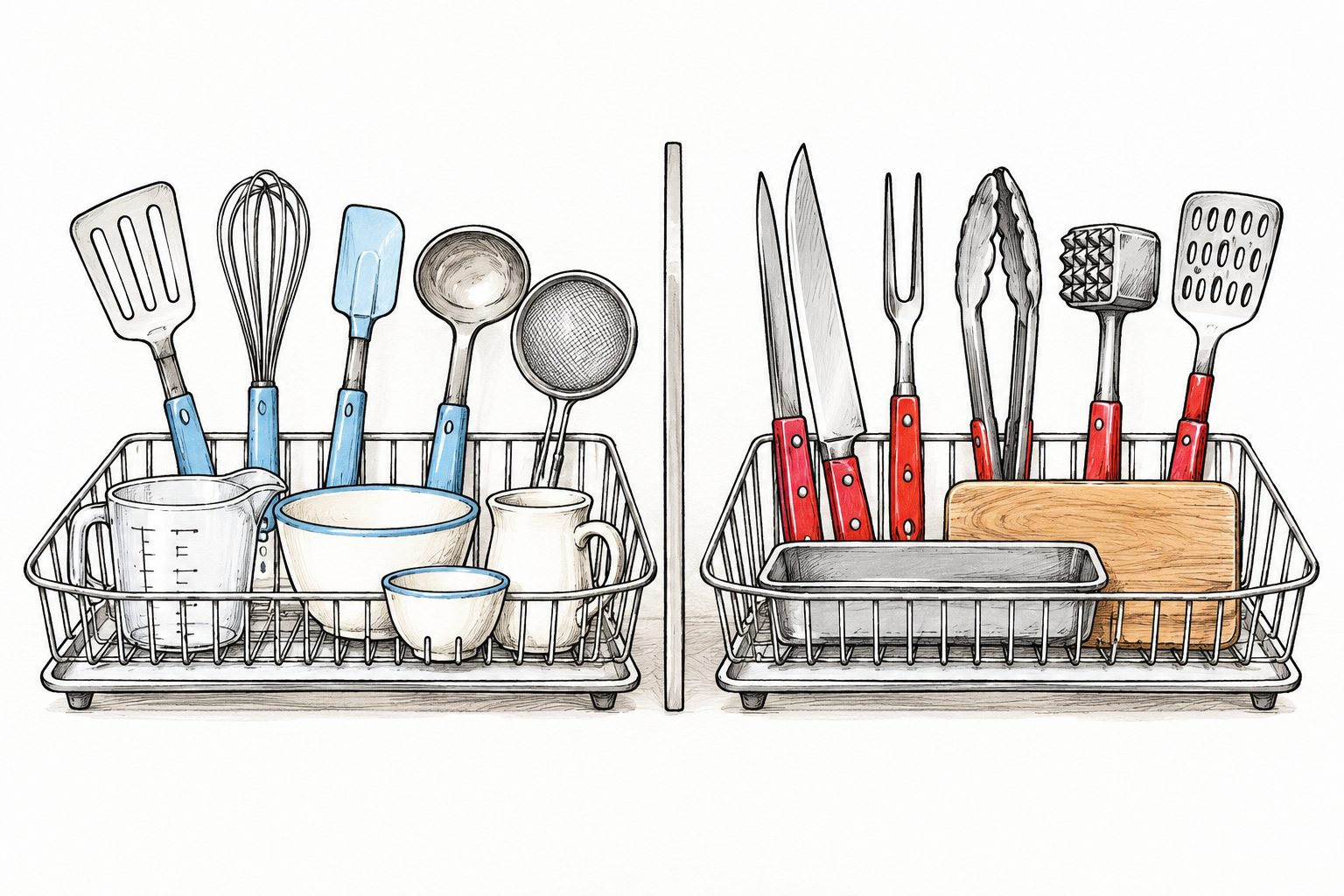
A color code keeps the system honest. OK suggests red for meat, blue for dairy, and white or yellow for pareve. Mark look-alikes such as knives, ladles, and wooden spoons, because those are the items people grab by mistake.
Cleaning supplies such as dish soap and cleanser do not need certification, according to the OK guide, but “it is a universal custom to use products that are certified kosher if they are available.”
Step 3: Immerse new vessels in a mikvah
Chabad.org says glass and metal utensils bought from non-Jewish sources need immersion in a mikvah before you use them. The OK guide agrees that many new dishes and utensils need this immersion, called tevilah. Ask your rabbi which of your purchases qualify.
Step 4: Split your sink and counters
OK and Chabad.org both recommend separate sinks for meat and dairy, with an effective barrier if the two sit side by side so nothing splashes across. A single sink works after a full cleaning, but both sources say you treat the inside as non-kosher. OK adds that you should keep food and dishes out of the non-kosher sink itself, so use separate dish pans and racks.
Counters follow the same logic. Designate one area for meat and one for dairy, or use separate coverings when a single surface serves both. A table can host either meal at different times if you change the tablecloth or placemats. For surfaces and appliances that held non-kosher food, OK tells you to ask your rabbi how to clean and kasher them.
Step 5: Plan your stove, oven, and small appliances
OK says the kosher laws on accidental mixing get much more complex once heat is involved, which is why the stove and oven carry the strictest rules. The ideal is two separate stoves. A full-size range for meat and a portable unit for dairy is the alternative OK and Chabad.org both name. With one stove, use separate burners and keep them very clean. Avoid cooking meat and dairy at the same time. When you cannot, keep lids tight and put an upright sheet of metal between the pots.
Ovens are stricter. Chabad.org says you can never bake or broil meat and dairy in one oven at the same time, even in separate bakeware. If you have one oven, use it for one category and keep a portable broiler or toaster oven for the other. If you want a pareve oven that serves meat and dairy at separate times, OK says to consult an Orthodox rabbi. Chabad.org adds that portable electric broilers must serve either meat or dairy because you cannot properly kasher them.
Small appliances can share a motor but need separate attachments, says OK. Wipe the machine down on all sides after each use.
Step 6: Decide on the dishwasher, microwave, and refrigerator
OK and Chabad.org both prefer a dishwasher that serves only meat or only dairy, and both tell you to ask a rabbi because many factors apply. On microwaves and self-cleaning ovens, Chabad.org gives no steps and says to consult a qualified rabbi.
The refrigerator is easier. OK says it can hold every kind of food as long as you set aside separate areas, such as a shelf or door, and line the dairy shelves with foil or plastic. Replace the liner if something drips on it, and avoid putting hot meat or hot dairy inside.
Where Pareve and Fish Fit In
Pareve food contains neither meat nor dairy, and Chabad.org says you can serve it with either kind of meal. Pareve utensils and work space stay separate from both, and pareve dishes should never touch meat or dairy directly. Our guide to what pareve means goes through the categories.
Kosher fish counts as pareve, which is why the question of whether fish is pareve comes up so often in a new kitchen. Many communities still avoid serving fish and meat together on the same plate. We explain the custom in our post on fish and meat together.
The Kitchen Setup at a Glance
| Kitchen item | What the sources recommend | Source |
|---|---|---|
| Dishes, pots, and utensils | Two full sets in separate cabinets, with a third pareve set if you want one | OK, Chabad.org |
| Sinks | Separate sinks with a barrier, or one sink treated as non-kosher inside with separate dish pans | OK, Chabad.org |
| Stove | Two stoves, or separate burners kept very clean, with metal between pots if you cook both at once | OK, Chabad.org |
| Oven | One category per oven, never meat and dairy together, ask a rabbi about sequential use | OK, Chabad.org |
| Dishwasher | One category per machine, ask a rabbi first | OK, Chabad.org |
| Microwave | No steps given, consult a rabbi | Chabad.org |
| Refrigerator | Shared, with separate shelves and lined dairy shelves | OK |
| New glass and metal vessels | Immerse in a mikvah if you bought them from non-Jewish sources | Chabad.org, OK |
Koshering a Kitchen That Was Not Kosher
When you kasher a utensil or appliance, you strip out the non-kosher residue it absorbed. Chabad.org gives the governing principle in What Is a Kosher Kitchen?: you remove residue the same way the utensil absorbed it. You rinse a cold glass that held wine. You leave a cooking pot alone for 24 hours and then cleanse it with boiling water, a method called hagalah. You hold a skillet directly over fire, called libun, or run it through a self-cleaning oven cycle.
Both sources name the same two methods in short form: immersing the item in boiling water or heating it with a blowtorch. The method depends on the utensil and how you used it. Kashering involves a thorough cleaning first. OK says to clean every part of the kitchen thoroughly and scrub utensils, then leave the stove, oven, and broilers off for 24 hours before koshering. Wipe down every surface you plan to use. Keep hot water out of the sink for the same 24 hours.
Chabad.org says to decide with your rabbi which utensils to kasher, then book a time for the rabbi to come. OK gives the same advice and notes that the rabbi’s wife or an experienced woman in the community can be especially helpful. This is the one step where you should not improvise.
Stocking the Kitchen: What Goes on the Shelves
For storage, keep the certified items in their own cabinet or shelf. Chabad.org says every ingredient must carry kosher certification unless you know it’s kosher without one, as with most fruits and vegetables. Look for a kosher symbol on packaged food, and read about what a mashgiach does if you cook for a crowd. Chabad.org’s rule of thumb is short: “When in doubt, say something.”
Check Any Fish with KosherFish
Once the kitchen is set, the next question is usually what to cook. Fish is the easiest pareve main for a new kosher home, but only if the species qualifies. You can look up any of 290+ fish on the KosherFish list, search by name on the lookup tool, or check at the counter with the iOS app or the Android app. For a common example, the page for salmon shows the verdict and the biology in one view.
Frequently Asked Questions
How do you set up a kosher kitchen?
Keep meat and dairy strictly separate. Buy two sets of dishes, pots, and utensils, split your sink, stove, and oven plans, and stock only certified kosher food. Immerse new glass and metal vessels from non-Jewish sources in a mikvah. Ask a rabbi to kasher anything that touched non-kosher food, per Chabad.org and OK Kosher.
Do you need two sinks for a kosher kitchen?
No, but both Chabad.org and OK Kosher recommend them. With one sink, you can use it after a full cleaning, but you treat the inside as non-kosher. OK says to keep food and dishes out of the basin and to use separate dish pans and racks for meat and dairy.
Can you use the same oven for meat and dairy?
Not at the same time. Chabad.org says you can never bake or broil meat and dairy in one oven together, even in separate bakeware. Using one oven for both at different times is a question for your rabbi, and OK suggests a portable broiler or toaster oven for the second category.
What does pareve mean in a kosher kitchen?
Pareve food contains neither meat nor dairy. Chabad.org says you can serve it with either kind of meal. Pareve utensils and work space stay separate from both, and pareve dishes should never touch meat or dairy directly. Many kitchens keep a third color-coded set for pareve cooking.
Do you have to kasher a kitchen to make it kosher?
Yes, if anyone cooked non-kosher food in it. Chabad.org explains that kashering removes non-kosher residue the same way the utensil absorbed it, so it applies to items you already used. New glass and metal vessels from non-Jewish sources still need a mikvah. OK and Chabad.org both say to decide with a rabbi which items to kasher and book a visit.
Can you keep meat and dairy in the same refrigerator?
Yes. OK says a refrigerator can hold all food types if you set aside separate shelves or doors and line the dairy shelves with foil or plastic. Replace the liner when something drips. OK also says to avoid putting hot meat or hot dairy in the refrigerator.
Is fish allowed in a kosher kitchen?
Yes, if the species has fins and scales under Leviticus 11:9-12. Kosher fish counts as pareve. Many communities avoid serving fish and meat on the same plate. Look up the species on the KosherFish list and ask your rabbi about anything you cannot confirm.
The Bottom Line
Knowing how to set up a kosher kitchen comes down to two sets of everything and, if the kitchen has a past, a rabbi’s visit. Separate your dishes, sinks, and cooking space, immerse new vessels, and buy certified food. Browse the kosher fish list when you plan the first meal, use the KosherFish lookup tool or the apps to check a species, and read our guides to kosher dietary laws and whether fish needs a hechsher next. Ask your own rabbi about anything in doubt. KosherFish gives you the sources, and your rabbi gives you the ruling.