Cuttlefish is not kosher. It’s a cephalopod mollusk with no fins and no scales at all, so it fails the Torah’s kosher-fish test before any other question comes up. You can check cuttlefish and 290 other species with the KosherFish lookup tool in seconds, but the short answer here doesn’t need much debate: cuttlefish sits in the same non-kosher category as squid and octopus.
Why Cuttlefish Isn’t Kosher: The Fins and Scales Rule
The Torah states one test for fish, twice: Leviticus 11:9-12 and Deuteronomy 14:9-10. A fish counts as kosher only if it has both fins and scales, and the scales have to be the kind you can peel off without tearing the skin underneath. Cuttlefish fails on both counts, and it isn’t really a fish to begin with. As a cephalopod, it belongs to the same class as squid and octopus, and its body is built around an internal shell called a cuttlebone rather than an outer skeleton of fins and scales.
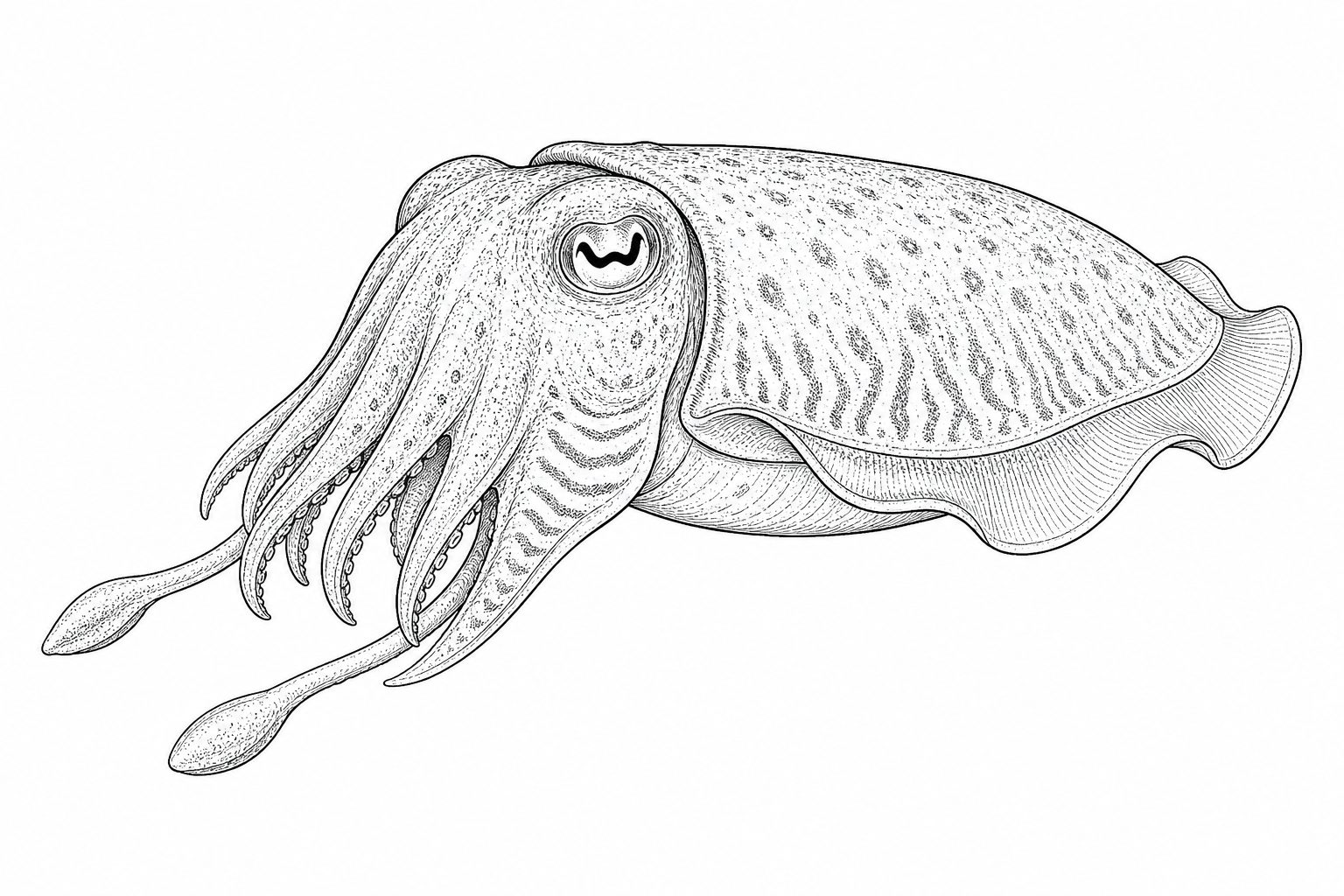
A cuttlefish moves by rippling a thin, skirt-like fin that runs along the sides of its mantle, not the kind of true fin the Torah’s rule has in mind. Its skin carries no scales of any kind, not even the embedded, non-kosher kind found on a shark or a sturgeon. Kosher status requires both fins and scales together, and cuttlefish has neither in the halachic sense, so it fails the test completely. Is cuttlefish kosher by any reading of that rule? Nothing about it is close, and there’s no borderline call to make.
Biologically, cuttlefish (family Sepiidae) are marine mollusks known for their W-shaped pupils, eight arms, and two longer feeding tentacles lined with suckers. They can also shift color and skin texture in an instant to blend into the seafloor. NOAA and marine biology sources classify them as invertebrates entirely outside the fish family, closer in structure to a clam or an octopus than to a haddock or a salmon. That classification alone settles most of the kosher question before you even reach the certifying agencies.
Jewish dietary laws judge sea creatures by this one pair of rules, separate from the rules for land animals (a split hoof and chewing the cud) and the separate list that governs birds. Unlike meat, fish needs no ritual slaughter, no special knife, and no blessing. Its status is fixed at the species level by fins and scales alone. According to that rule, common fish like tuna, salmon, and cod are considered kosher, while cuttlefish, like every other cephalopod, is not. Whether a given catch is accepted as kosher always comes down to which category it falls into, not how commonly it’s eaten or how it’s prepared. If a specific product or a genuinely close case leaves you unsure, ask a rabbi or check with a recognized certification agency.
What the OU and cRc Say About Cephalopods Like Cuttlefish
The fins-and-scales rule isn’t something you’re meant to apply on your own from biology alone. A recognized authority confirms the status case by case, and every major kosher agency treats mollusks and cephalopods the same way. The Orthodox Union (OU) and the Chicago Rabbinical Council (cRc) both classify squid, octopus, and cuttlefish as non-kosher seafood, in the same bucket as shrimp, crab, lobster, clams, oysters, and scallops. None of them have the fins and removable scales Leviticus 11:9-12 requires, so none of them qualify.
Unlike swordfish, which carries a documented historical dispute among poskim, cuttlefish isn’t a contested case. There’s no machloket to weigh here and no split ruling to track between agencies. Is cuttlefish kosher under any recognized certification? None of them treat it that way. Every reputable kosher authority agrees a cuttlefish is not a kosher food, and none treat it as a gray area.
Cuttlefish vs Squid, Octopus, and “Calamari”: Sorting Out the Names
Cuttlefish gets confused with its cephalopod relatives constantly, though the confusion never changes the kosher answer, since none of them are kosher. Squid and cuttlefish look alike on ice and on a plate, but they’re different animals. A squid carries a thin, flexible internal quill instead of a calcified cuttlebone, plus a longer, more torpedo-shaped body built for open water. Octopus has no internal shell structure at all, just eight arms and a soft, boneless mantle.
“Calamari” adds another layer of confusion, since it isn’t a species at all. It’s the Italian word for squid, and on most menus it means fried squid rings, though some kitchens use the term loosely for cuttlefish too. Ask what animal you’re actually being served if the menu just says “calamari,” but the honest answer doesn’t hinge on the name. Is cuttlefish kosher under any of these names, calamari, sumiika, or koika? None of them change the ruling. Squid, cuttlefish, and octopus stay non-kosher regardless of what a menu calls them.
Sushi menus add a third name to track. In Japanese cuisine, ika is the general word for squid, while cuttlefish specifically often appears as sumiika or koika. They both show up sliced thin for sashimi or nigiri, and look similar under a glass counter. None of that changes the kosher answer. Ika of any kind, cuttlefish or squid, is off the table for anyone keeping kosher, the same way shrimp tempura or an eel roll would be, no matter how the sushi chef labels it.
Cuttlefish Ink and Cuttlebone: What a Hechsher Can’t Fix
A hechsher, or kosher certification symbol, confirms that a product’s ingredients and equipment meet kosher standards. It can’t turn a non-kosher ingredient into a kosher one. That distinction matters here, because cuttlefish shows up in places you might not expect, like the black squid-ink pasta and risotto sold as nero di seppia, which gets its color and briny flavor from cuttlefish ink. A certification symbol on a dish like that would be misleading, since the core ingredient isn’t kosher no matter who processed it or on what equipment.
Cuttlebone, the internal shell, isn’t a food ingredient at all. It’s sold mostly as a calcium supplement for pet birds and reptiles, and historically as a casting material for jewelry molds. It doesn’t raise its own kashrut question, since nobody’s eating it. But if a packaged food lists “cuttlefish,” “sepia,” or “squid ink” among its ingredients, treat that label the same way you’d treat shrimp or crab on a label. Is cuttlefish kosher once it’s turned into ink, ground into a sauce, or hidden in a broth? No, processing never changes the underlying ruling.
| Species | Kosher? | Why |
|---|---|---|
| Cuttlefish | ❌ No | Cephalopod mollusk, no fins and no scales (OU and cRc list it non-kosher) |
| Squid | ❌ No | Same cephalopod class as cuttlefish, no fins or removable scales |
| Octopus | ❌ No | No internal shell, no scales, eight arms and no true fins |
| Shrimp | ❌ No | Crustacean, no fins or scales of any kind |
| Cod, Haddock, or Pollock | ✅ Yes | True fish with fins and easily removable scales, a common kosher stand-in for calamari-style dishes |
Check Any Fish with KosherFish
Is cuttlefish kosher? That question settles cleanly as a no, but a seafood counter or a menu rarely stops at one name. If you’re standing there wondering about squid, octopus, or whatever’s sitting next to the cuttlefish on ice, the KosherFish tool can help you look up any of the 291 species on the full kosher fish list or search a name directly on the KosherFish homepage. It also flags packaged products and processed foods worth double-checking. Want the answer without pulling out your phone at the market? The iOS app and the Android app put the same lookup in your pocket.
Frequently Asked Questions
Is cuttlefish kosher?
No, cuttlefish isn’t kosher. It’s a cephalopod mollusk with no fins and no scales, which fails the Torah’s test in Leviticus 11:9-12 and Deuteronomy 14:9-10. The Orthodox Union and the Chicago Rabbinical Council both classify cuttlefish as non-kosher seafood, in the same category as squid and octopus.
Is squid or calamari kosher?
No, squid isn’t kosher, and neither is calamari, since calamari is just the culinary name for squid, usually served fried. A squid is a cephalopod with no fins or removable scales, so it fails the same test as cuttlefish and octopus. Renaming it on a menu doesn’t change the kosher status.
Is squid ink or cuttlefish ink kosher?
Squid ink and cuttlefish ink both come directly from a non-kosher animal, so any dish that uses them, including black squid-ink pasta, isn’t kosher no matter how it’s prepared. Certification can confirm clean equipment and additives elsewhere in a kitchen, but it can’t make a non-kosher core ingredient kosher.
Why don’t cephalopods count as kosher fish?
Cephalopods like cuttlefish, squid, and octopus lack the two features the Torah requires: true fins and scales that lift off without tearing the skin. Their bodies are built around an internal shell or quill instead of an external skeleton of fins and scales, so they fail the fins-and-scales rule regardless of how they’re cooked or served.
What’s the difference between cuttlefish and squid?
Cuttlefish carry a broad, internal calcified shell called a cuttlebone and a wider, flatter body, while squid carry a thin, flexible internal quill and a longer, more torpedo-shaped body. They’re both cephalopods that lack fins and scales, and they’re both non-kosher for the identical reason.
Is there a kosher substitute for calamari-style dishes?
Firm, mild whitefish like cod, haddock, or pollock works as the common kosher stand-in in calamari-style recipes, sliced into rings and breaded the same way. The texture isn’t identical, but it keeps the dish’s shape and crunch with a fish that actually passes the fins-and-scales test.
Are all shellfish and mollusks non-kosher?
Shrimp, crab, lobster, clams, oysters, scallops, squid, octopus, and cuttlefish are all non-kosher, since none of them have true fins or removable scales under Leviticus 11:9-12. The Orthodox Union and the Chicago Rabbinical Council treat this as settled, with no contested cases among any of them.
The Bottom Line
Is cuttlefish kosher, in the end? Far from it. It has no fins and no scales, the two things Leviticus 11:9-12 requires, and it sits in the same non-kosher category as squid, octopus, shrimp, and crab. The OU and cRc agree cuttlefish isn’t kosher under any name or preparation, and no amount of certification changes that, since the animal itself fails the test before processing ever enters the picture.
Check the cuttlefish species page for the full biology, browse the kosher fish list for a species that actually passes, and read is seafood kosher for how the Torah’s test applies across every kind of seafood. For the fins-and-scales rule explained from the ground up, see what makes a fish kosher, and for cuttlefish’s shellfish neighbors, read is shrimp kosher. Or skip the reading and search any name on the KosherFish homepage or the iOS and Android apps.