Is monkfish kosher? No. Monkfish is not kosher, because it has fins but no scales, and the Torah allows only fish with both. You can check this fish and 290+ others on the KosherFish lookup tool.
Why monkfish is not kosher
The root rule sits in the Torah. Leviticus 11:9-12 permits water creatures that have fins and scales and calls everything in the water without them an abomination. Deuteronomy 14:9-10 repeats the test. Both fins and scales, every time.
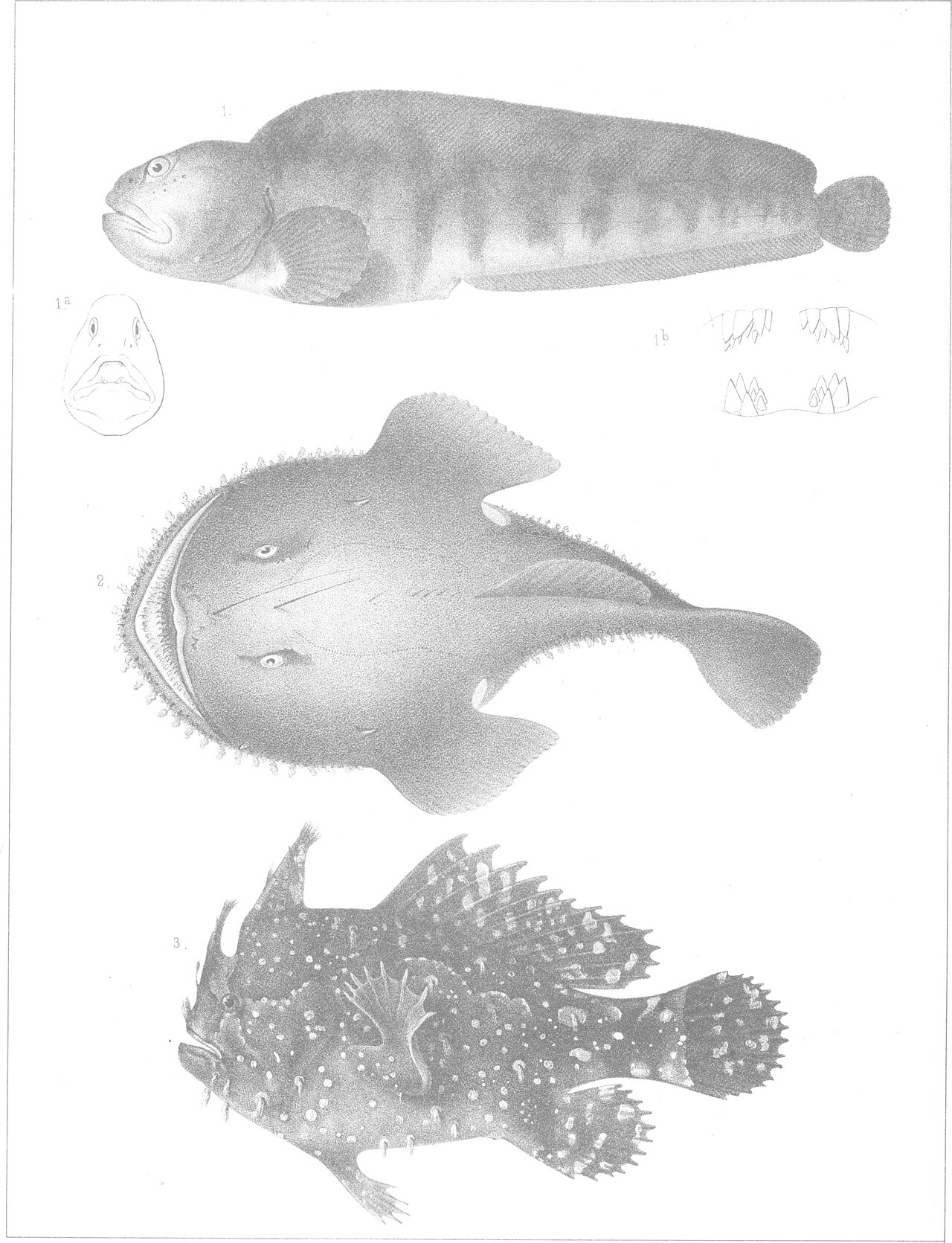
Monkfish fails on scales. The Chabad.org staff answer to the question says it in one line: monkfish are not kosher, because they do not have scales. NOAA Fisheries describes the American monkfish (Lophius americanus) as a fish with mottled dark brown to olive-green skin on top and whitish skin underneath, a broad head, a large mouth, and rows of back-pointing teeth. Its species profile never mentions a scale.
The OU adds the second half of the test. Its kosher fish Q&A says you must be able to remove the scales without tearing the fish’s skin, and it cites the Rema in Yoreh Deah 83:1. A fish with no scales at all has no chance against a test that even sturgeon’s embedded scutes fail.
What the OU list says about monkfish and goosefish
The old Orthodox Union list of non-kosher fish names this fish twice. Chabad.org hosts a copy, “reprinted with permission of the Orthodox Union,” and its entries include “Goosefishes or anglers (Lophius species)” and a separate “Monk fish” line that Rabbi Donneal Epstein added in consultation with Dr. Atz. The list’s “Angler” entry says only to see the goosefish entry.
The editor’s note on that page also explains how to read the list. It says a species missing from the list is “most likely not kosher.” Monkfish doesn’t need that fallback, since it appears by name.
Other monkfish names, same answer
No, and the market names are where people get confused. NOAA Fisheries lists other names for monkfish, including goosefish, monktails, angler, allmouth, molligut, abbot, sea-devil, and lotte.
The texture is the whole sales pitch. NOAA says the tail meat is firm, dense, and relatively boneless, with a texture similar to lobster meat. NOAA is comparing texture there, and texture has no bearing on kashrut. Lotte, goosefish, or a lobster stand-in, the fish on the plate is the same scaleless monkfish.
The OU list’s own editor’s note warns that common fish names “are very inaccurate” and that “species substitution is a very serious problem.” If a menu or label gives a name you don’t recognize, ask for the scientific name or skip the dish.
What about the liver?
Some diners know monkfish through its liver, which Japanese cooks serve as ankimo. The liver comes from the same non-kosher fish, so it isn’t kosher either. Leviticus 11:11 forbids the flesh of water creatures without fins and scales, and Maimonides rules that the Torah forbids even what a forbidden species produces, like the eggs of a non-kosher fish. The dish doesn’t change the rule for the animal.
Monkfish vs other non-kosher fish and shellfish
Monkfish sits in a group of fish that readers search for by name. You can compare where each one lands, and why, in the table below.
| Fish | Kosher? | Why |
|---|---|---|
| Monkfish (goosefish, anglerfish) | No | No scales. The OU’s non-kosher list names it as goosefish and as monk fish |
| Sturgeon | No | Its scutes sit in the skin, and you can’t remove them without tearing it (OU) |
| Shark | No | The OU says the fins-and-scales law leaves out shark |
| Catfish | No | The OU says the law leaves out catfish |
| Lobster | No | Shellfish. The OU says the law leaves out all shellfish |
We give the full reasoning on the others in our guides to sturgeon, shark, and catfish.
What counts as a scale? Why the type matters
Many readers assume any fish with visible plates passes. It doesn’t. The OU uses sturgeon as its example: sturgeon carries scutes that look like scales but sit embedded in the skin, so you can’t remove them without tearing it, and the OU concludes sturgeon is not kosher. Halacha sets the test, and biology alone doesn’t settle it.
Monkfish never reaches that debate, because its skin is soft and scaleless. That’s why this question has a clean answer, unlike a few borderline species where the authorities weigh scale type.
Where you’ll run into monkfish
The fish is common on the East Coast. NOAA says the species lives in the Northwest Atlantic from the Grand Banks and northern Gulf of St. Lawrence south to Cape Hatteras, North Carolina, and the US commercial fishery runs from Maine to North Carolina. Boats fish for it with trawl gear in northern waters and gillnets in southern waters, and NOAA lists it as available year-round, with peaks in the late fall and spring.
NOAA’s regulatory history records that fishing fleets had overfished European and Mediterranean monkfish species by 1989, and that the shortage drove up demand for US monkfish. Where the catch comes from doesn’t matter for kashrut. A monkfish from any sea has the same scaleless skin.
NOAA says cooks should trim a blue-gray membrane off raw monkfish before cooking. NOAA even links monkfish recipes for karaage and bisque from its species page. A kosher kitchen can’t use any of them. If you see a mild, dense, boneless tail with no skin, treat it as a warning sign, because you can’t verify the species once the skin is gone.
Does monkfish need a kosher certification?
A hechsher can’t fix it, because certification confirms a kosher fish and never creates one. If you ever see a kosher symbol on a package labeled monkfish, contact the certifying agency before you eat it.
Certification does matter for the kosher fish you might buy instead. The OU says to buy filleted or ground fish only with proper supervision, or with a skin tab of scales still attached to the fillet. We cover the rest in our guide to whether fish needs a hechsher.
A note on bottom-feeders
Monkfish live on the ocean floor, typically on sand, mud, and shell habitats, and NOAA says they range from inshore waters down to nearly 3,000 feet. Adults ambush their prey, using a modified spine on the head as a fishing pole and bait. You’ll sometimes read that bottom-feeding is the reason a fish isn’t kosher. The Chabad.org answer notes that Nachmanides saw many non-kosher fish living in the murky depths, but it says where a fish feeds is no reason to class it as kosher or not. Scales decide it.
How to check a fish at the store
Look for scales you can see. The OU says “the fish scales must be visible to the consumer in order to establish the kosher status of the fish.” It also calls buying fish in a non-kosher fish store “problematic,” even with the scales intact, and tells you to seek rabbinic guidance. With a scaleless, skinless fillet, you have nothing to check.
Ask for the fish by name, then confirm that name with a reliable source. Before you buy, get the common name, get the scientific name if the counter has it, and check both against the kosher fish list.
Check any fish with KosherFish
If you’re standing at a fish counter or reading a menu, you shouldn’t need a search engine and a Torah reference. You can look up monkfish and 290+ other species on the full kosher fish list, or open the monkfish page for the verdict, the other names, and the warnings. On your phone, get the iOS app or get the Android app.
Is monkfish kosher? Frequently asked questions
Is monkfish kosher?
No. Monkfish is not kosher because it has no scales, and the Torah requires both fins and scales (Leviticus 11:9-12). Chabad.org states that monkfish are not kosher because they do not have scales, and the Orthodox Union’s old non-kosher list names the goosefish and “Monk fish” directly.
Is monkfish the same as anglerfish?
For the American species, yes. NOAA Fisheries lists angler and goosefish among the other names for monkfish (Lophius americanus). The OU’s non-kosher list sends its “Angler” entry to “Goosefishes or anglers (Lophius species).” Whatever the label says, you’re buying a scaleless fish, and none of these names makes it kosher.
Is monkfish kosher if it tastes like lobster?
No. The lobster comparison is about texture. NOAA says monkfish tail meat has a texture similar to lobster meat, but it comes from a scaleless fish. The taste or look of a food never changes its status, and the OU says the fins-and-scales law excludes all shellfish, lobster included.
Why isn’t monkfish kosher when it has fins?
A fish needs both signs. Monkfish has fins but no scales, so it fails the second half of the test in Leviticus 11:9-12. The OU adds that you must be able to remove the scales without tearing the skin, a test that even sturgeon’s scale-like scutes fail.
Is monkfish liver kosher?
No. Monkfish liver, the Japanese dish ankimo, comes from the same scaleless fish. Leviticus 11:11 forbids eating the flesh of water creatures without fins and scales, and Maimonides rules that the Torah forbids even what a forbidden species produces, such as the eggs of a non-kosher fish. The liver is part of the fish itself.
Is monkfish kosher in Judaism, or only in some communities?
None of the sources we checked records a dispute. Chabad.org and the OU’s list both treat monkfish as non-kosher, and monkfish has no scales for anyone to debate. KosherFish is an information tool, not a posek, so if a label, a menu, or a family custom leaves you unsure, ask your own rabbi.
The Bottom Line
Monkfish is not kosher. It has fins but no scales, Chabad.org says so directly, and the OU’s list of non-kosher fish names the goosefish and monk fish. The lobster-like tail and the menu nicknames don’t change that.
Browse the kosher fish list, read the monkfish page, or look up any fish on your phone before your next order. For related answers, start with what makes a fish kosher and our non-kosher fish guide. And if a label or menu leaves you unsure, ask your rabbi or look for a reliable certification.