
What does pareve mean? Pareve (also spelled parve) refers to a kosher food that is neither meat nor dairy, so you can eat it alongside either one. The Orthodox Union (OU) calls it “the universal kosher category.” Fish, eggs, fruit, vegetables, and grains all qualify, and you can check whether a fish is kosher in the first place with the KosherFish lookup tool.
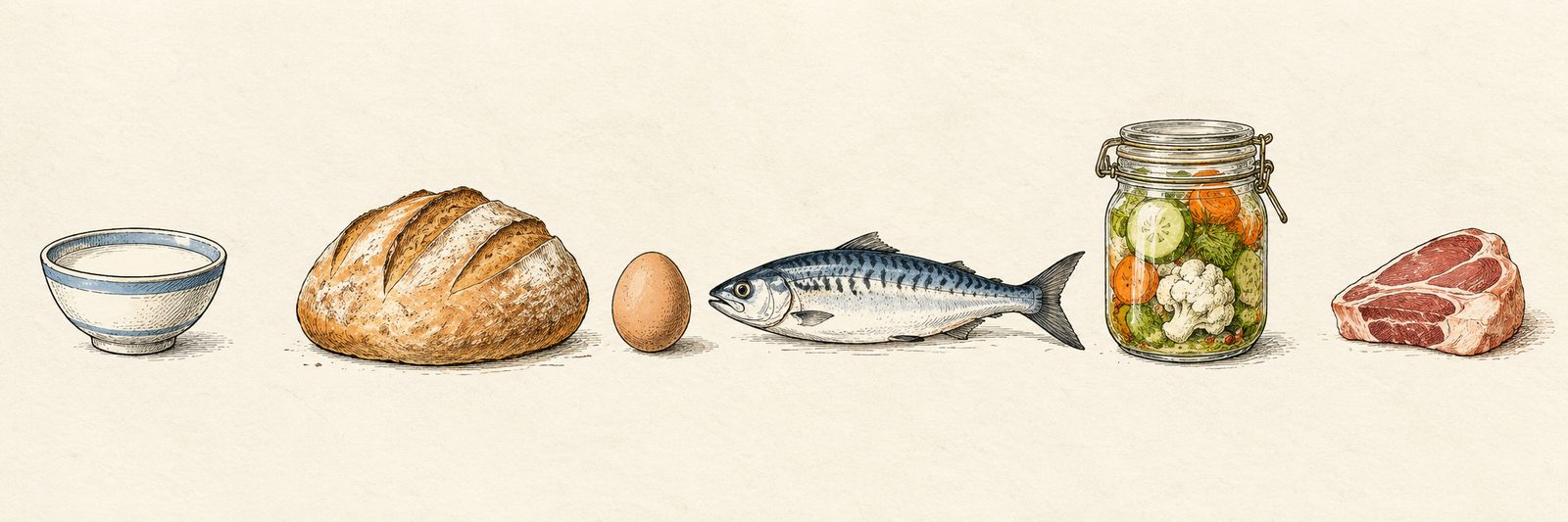
What Does Pareve Mean in Kosher Law?
Pareve means a food contains neither meat nor dairy, has no meat or dairy derivatives, and was not cooked or mixed with either. Chabad.org gives the same definition: foods that are “neither meat nor dairy are called pareve.” The word is Yiddish (some write it parve), and people use it as the everyday term for the neutral middle of Jewish dietary laws.
The category exists because kosher law keeps meat and dairy apart. The Torah says three times not to boil a kid in its mother’s milk (Exodus 23:19, Exodus 34:26, and Deuteronomy 14:21). Over the centuries the rabbis built that command into the halachic rule that you do not cook, serve, or eat meat and dairy together. Kashrut, the body of Jewish dietary laws, treats them as separate categories. Pareve foods sit outside that rule. They carry no meat or dairy status of their own, so they fit on either side of the line between the two.
A kosher kitchen sorts every food into one of three groups. Meat (fleishig in Yiddish) covers the flesh of kosher mammals and birds, plus anything produced from that animal. Dairy (milchig) covers milk and anything made from it. Pareve covers the rest. Because kosher fish falls in that last group, you can serve it at dairy meals, with the custom about fish and meat that we cover below.
Which Foods Are Pareve?
Most kosher foods in their natural state are pareve, including bread dough, nuts, beans, and plain oils. Chabad.org lists eggs and fish with fruits, vegetables, and grains as common pareve foods. The OU adds processed products such as bagels, salad dressings, sorbets, cookies, and baby nutrition items when they carry a pareve designation. Margarine is a common case, since some brands are considered pareve and others contain dairy products.
| Food | Category | Why |
|---|---|---|
| Fruits, vegetables, grains | ✅ Pareve | Natural foods with no meat or dairy ingredient |
| Eggs | ✅ Pareve | Chabad.org lists eggs as a common pareve food |
| Kosher fish (salmon, tuna, cod) | ✅ Pareve | Fish is not meat for kashrut purposes, and kosher fish needs fins and scales first |
| Chicken, beef, lamb | ❌ Meat | Flesh of kosher mammals and birds is meat |
| Milk, cheese, butter | ❌ Dairy | Made from milk |
| Packaged cookies or dressings | ⚠️ Check | Pareve only if the label says so, since dairy ingredients or dairy equipment can change the status |
| Shrimp, crab, lobster | ❌ Not kosher | Shellfish fail the fins-and-scales test, so pareve never comes up |
Pareve is a status for foods that are already kosher. A shrimp is not pareve, it is not kosher at all. If you are not sure a particular fish qualifies, the kosher fish list covers 290+ species with the fins-and-scales reasoning for each.
Is Fish Pareve?
Yes, kosher fish is pareve. The OU says pareve foods “can be consumed with all foods, whether meat, dairy or fish,” and that wording puts fish in its own neutral lane. Fish is not treated as meat under the rules that separate meat from dairy, so a bagel with lox and cream cheese is a standard kosher breakfast.
Fish and meat have their own rule. The OU says a fish product should not be eaten or cooked with meat, though you can eat it right before or right after a meat course. That separation is about fish and meat, and it does not make fish dairy or meat. Our guides to whether fish is pareve and eating fish and meat together go through it in detail.
How Does Pareve Change on the Label?
A pareve food can lose its status in the factory or the kitchen. Run it on dairy equipment or add a dairy ingredient, and it stops being plain kosher pareve. Chabad.org warns that pareve items may lose their status when processed on dairy equipment or mixed with additives, and recommends certified pareve products when you are unsure. Every kosher certification agency sets its own standards for how it marks that.
The OU symbols spell out the differences:
- OU alone means the product is kosher, contains no meat or dairy and no derivatives of either, and was not made on dairy or meat equipment.
- OU-D means the product is dairy, or it has been on dairy equipment, or it contains a dairy ingredient or derivative.
- OU-DE means the company produced it on dairy equipment.
- OU-Meat or OU-Glatt marks kosher meat, or a product with meat ingredients.
- OU-Fish means the product has fish ingredients.
- OU-P means the product is kosher for Passover and pareve.
Other agencies use their own pareve symbol and wording, so read the legend for the one on your package. Our guides on kosher symbols and what OU kosher means show the common ones side by side.
Why “Non-Dairy” Does Not Always Mean Pareve
A “non-dairy” label is not a pareve guarantee. Under FDA labeling rules, a food sold as “nondairy” can still contain caseinate, a milk protein, as long as the ingredient list names its source (21 CFR 101.4). A pareve classification, the OU says, is the only one that guarantees “absolutely no dairy ingredients, no dairy residue and no contact with dairy equipment.” That is why non-dairy creamers so often carry a dairy symbol, and why a person who keeps kosher looks for the hechsher and not the front-of-pack claim.
Consumers with dairy allergies sometimes lean on the same logic, though kosher certification is not an allergen label and cannot replace one. Allergies call for reading the ingredient list as well.
Using Pareve in a Kosher Kitchen
Pareve foods make meals flexible for religious and practical reasons alike. A pareve dessert lets a host finish a meat meal without breaking the meat and dairy separation, which is why pareve cakes, sorbets, and nondairy whipped toppings show up at Shabbat and holiday tables in Jewish homes. A pareve side dish serves a meat dinner and a dairy lunch equally well, with no mixing of meat and dairy dishes.
Pots and dishes matter too. The OU says pareve food may be cooked in any kosher pot, meat or dairy. Whether that potato can then go on a plate with cheese is where the rules get detailed, and practice varies. Observant households keep separate dishes and cookware for meat and dairy, and Chabad.org suggests some separate pareve utensils as well. For your own kitchen, ask your rabbi. For the wider rules, read our guide on eating meat and dairy together.
Check Any Fish with KosherFish
Knowing a fish is pareve only helps once you know it is kosher. You can look up any fish and 290+ others on the KosherFish list, type a name into the lookup tool, or check on the go with the iOS app or the Android app. Start with the species page for salmon if you want to see how an entry reads.
Frequently Asked Questions About Pareve
What does pareve mean?
Pareve means a kosher food is neither meat nor dairy. It has no meat or dairy ingredients or derivatives and was not cooked or mixed with either. The OU calls pareve the universal kosher category because pareve foods can be eaten with meat, dairy, or fish. Fruits, vegetables, grains, eggs, and kosher fish are common examples.
Is pareve the same as vegan?
No. Pareve is a kosher category and vegan is a diet. A pareve food can contain eggs or fish, which are not vegan. A vegan food can also fail to be pareve if the factory ran it on dairy equipment. Look for a pareve hechsher, such as OU-Pareve, instead of relying on a vegan label.
Is fish pareve?
Yes, kosher fish is pareve. The OU says pareve foods can be eaten with meat, dairy, or fish, and Chabad.org lists fish among common pareve foods. Kosher practice keeps fish and meat apart, but that is a separate rule and it does not change the fish’s pareve status.
Are eggs pareve?
Yes, eggs are pareve. Chabad.org lists eggs with fish, fruits, vegetables, and grains as common pareve foods. You still check a kosher egg for blood spots, and a pareve egg dish can lose its status if you cook it on meat or dairy equipment.
Does OU-D mean a food is dairy?
Yes. OU-D means the product is dairy, contains a dairy ingredient or derivative, or was made on dairy equipment, according to the OU. OU-DE is narrower and means the product was made on dairy equipment. Both marks tell you the food is not plain pareve.
Can pareve food be eaten with meat and dairy?
Yes, a pareve food can be served with meat or dairy because it has no meat or dairy status of its own. The OU says pareve foods can be eaten with all foods and may be cooked in meat or dairy pots. What happens when a pareve dish cooked in a meat pot meets dairy is more detailed, so ask your rabbi about specific cases.
Does non-dairy mean pareve?
No. FDA labeling rules let a food called nondairy contain caseinate, a protein that comes from milk, if the ingredient list says so. Only a pareve certification guarantees no dairy ingredients, no dairy residue, and no contact with dairy equipment. Check the hechsher, not the front-of-pack wording.
The Bottom Line
Pareve means neither meat nor dairy, and it is the category that lets fish, eggs, and produce go with any meal. The OU and Chabad.org agree on that, and both stress that processing and equipment can change a food’s status, so a hechsher matters. For more, see is fish pareve, kosher symbols explained, and does fish need a hechsher. You can browse the kosher fish list, use the lookup tool, or grab the iOS or Android app. For anything specific to your kitchen, ask your own rabbi or rely on a reliable kosher certification.