
Grouper is kosher. Jewish dietary law sets a specific, two-part requirement for fish: it must meet standards for both fins and scales, and the scales have to come off without tearing the skin. It meets both parts of that standard. Leviticus 11:9-12 lays out the requirement, and Chabad.org, citing Orthodox Union guidance, lists grouper among the kosher fish species. Confirming a fish’s kosher status isn’t always this simple, though, and understanding the label is often the harder part. “Grouper” covers several different species sold under one name, and it’s one of the most mislabeled fish in American seafood markets. You can look up grouper or any of 290+ other species before you buy, or browse the full kosher fish list.
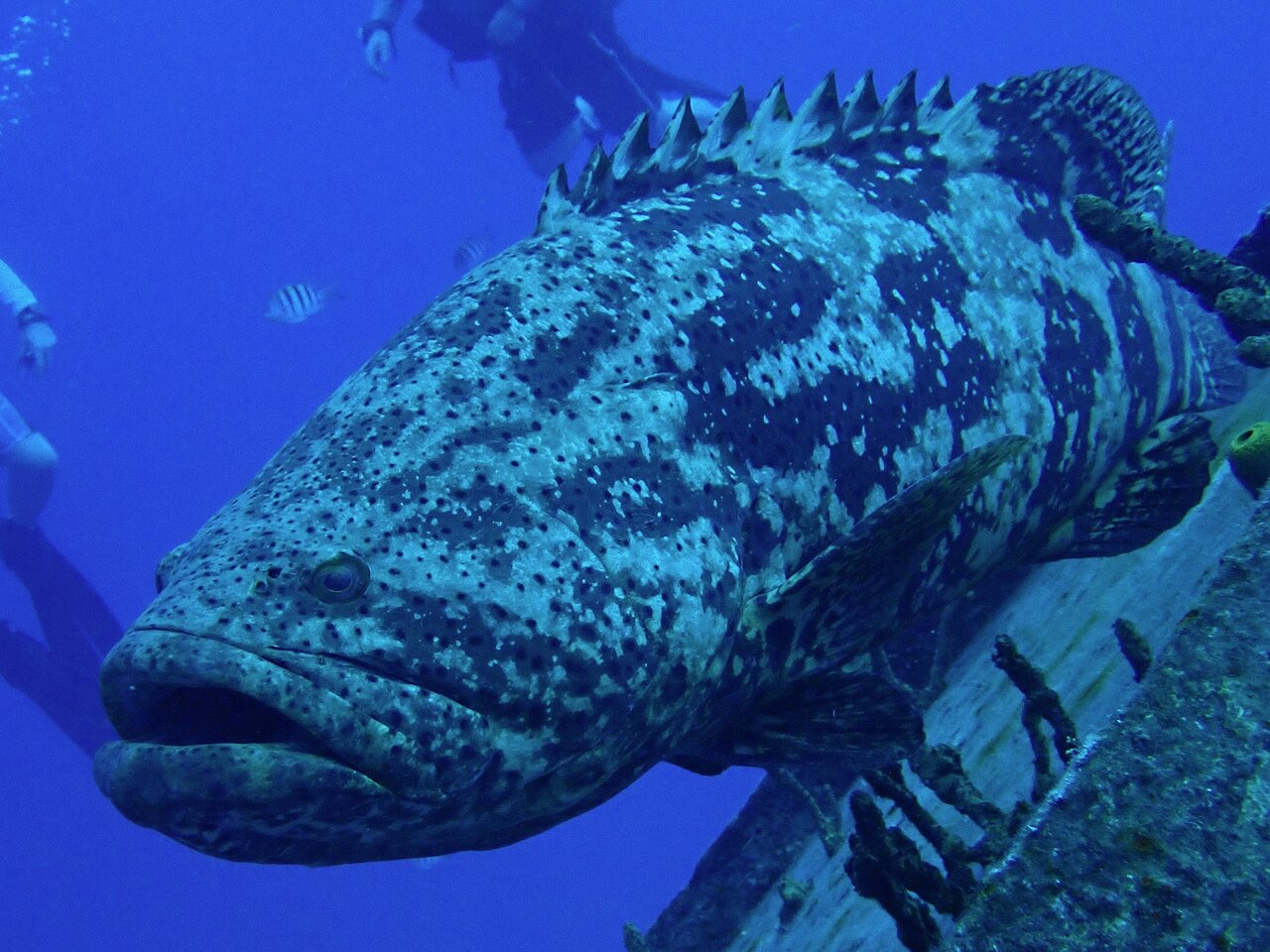
Why Grouper Passes the Fins-and-Scales Test
Two things decide a fish’s kosher status under Jewish law: fins, and scales you can peel off by hand or with a knife without tearing the skin. That’s the fins and scales requirement the Torah sets out in Leviticus 11:9-12 and repeats in Deuteronomy 14:9-10. The Hebrew term for scales is kaskeset. It refers to a specific kind of scale, not just any rough or bumpy skin, and certified agencies check for that physical feature directly.
This fish clears that bar without much debate. It belongs to the family Serranidae, the sea basses, in the genera Epinephelus and Mycteroperca. Its relative, sea bass, carries the same scale type, ctenoid scales, the comb-edged kind that lifts away cleanly. Salmon, tuna, and most varieties of fish on the kosher fish list share that specific scale structure, a physical feature reliable enough that supervision can confirm it by sight. Catfish, sturgeon, and sharks tell a different story. They either lack true scales entirely or carry scales embedded in the skin that won’t come off without tearing it, so they fail the same fins and scales test grouper passes.
What the Kosher Authorities Say
Every recognized authority points to the same fins and scales test when someone asks “is grouper kosher.” Chabad.org, drawing on guidance from the Orthodox Union, confirms grouper (species in the Epinephelus and Mycteroperca genera) as kosher. The cRc, Star-K, and OK Kosher all apply that identical Jewish law standard when they publish their own kosher fish references, so a second check with any of them lands on the same read for grouper’s specific scale type.
None of that guarantees every piece of grouper on a menu or in a case is automatically permissible to eat, since the primary risk with grouper was never the species. This species is kosher according to Jewish law, identified as such by every agency that has reviewed it. The fish in your hand might not be grouper at all, because that’s the real issue behind the kashrut question here, not the species itself.
Grouper Has a Mislabeling Problem, and That’s Where Certification Matters
So is grouper kosher? Yes, every time. Whether the fish in your hand is really grouper is the harder question, and it’s a bigger deal for keeping kosher than most people realize. “Grouper” isn’t one fish. It’s a market name that covers red grouper (Epinephelus morio), black grouper (Mycteroperca bonaci), gag grouper (Mycteroperca microlepis), and several other Serranidae species, all sold under the same word at the counter.
Two larger relatives, goliath grouper and Nassau grouper, are protected in U.S. waters. NOAA Fisheries has kept the goliath grouper fishery closed since 1990, and Nassau grouper is listed as threatened under the Endangered Species Act, with all U.S. harvest prohibited under those requirements. So the grouper you’re actually buying is almost always red, black, or gag grouper, not the giants.
Here’s the part that matters for your kitchen: grouper ranks among the most substituted fish in the country. Oceana’s nationwide DNA testing of seafood found grouper mislabeled in a wide share of the samples it checked, and follow-up testing in South Florida still found it swapped in roughly one of every six samples. The most common stand-in is pangasius, a cheap farmed fish also sold as basa or swai.
Pangasius is a catfish. Catfish lack valid kosher scales entirely, so pangasius isn’t permissible under the same Jewish dietary laws that make grouper kosher. A “grouper” fillet in front of you might actually be pangasius. Without certification, and without skin left to check, there’s no way to know you just ate a non-kosher fish.
Does Grouper Need a Hechsher?
Since the answer to “is grouper kosher” is yes, whole fresh grouper generally doesn’t need kosher certification if you can see the skin and the scales yourself and confirm them directly. That’s the standard the OU and other agencies apply to whole fish under Jewish law: you’re not trusting a label, you’re checking the fish for the presence of both fins and true scales.
Once grouper is filleted, skinned, breaded, or served at a restaurant, you’re trusting the label and whoever handled it, not the fish itself. Given how often grouper gets swapped for something else, a fillet without kosher certification carries real risk, not just a formality. A grouper sandwich or fish taco at a non-kosher restaurant, especially in Florida and along the Gulf Coast where grouper is a menu staple, is exactly the kind of order worth skipping unless the kitchen holds kosher certification. Buy kosher-certified grouper, shop at a kosher fish market, or ask your rabbi when you’re not sure. Understanding this distinction, whole fish versus processed fish, explains most of the confusion around which kosher species need a hechsher and which don’t, and it underlines the importance of asking before you assume.
Buying and Cooking Kosher Grouper
Ask to see grouper before it’s cut if you’re buying it whole or in a skin-on piece. Real scales that lift off cleanly are your confirmation of both fins and scales, the two-part standard behind every verdict on this site. Grouper itself is a firm, mild whitefish that holds up well to baking, grilling, and pan-searing, and it works as a Shabbat dinner main the same way cod or halibut does. Its pareve status, neither meat nor dairy, is standard for kosher fish, though many households still follow the custom of not serving fish and meat on the same plate.
| Fish sold as “grouper” | Kosher? | Why |
|---|---|---|
| Red grouper (Epinephelus morio) | ✅ Yes | Fins and ctenoid scales, the most common grouper at U.S. fish counters |
| Black grouper (Mycteroperca bonaci) | ✅ Yes | Same Serranidae family and valid scale type as red grouper |
| Gag grouper (Mycteroperca microlepis) | ✅ Yes | Also Serranidae, fins and removable scales confirmed |
| Goliath grouper (Epinephelus itajara) | ✅ Yes, but rare to find | Kosher by the same test, but harvest has been closed in U.S. waters since 1990 |
| Pangasius (basa / swai, sold as “grouper”) | ❌ No | A catfish, no valid kosher scales, one of the most common grouper substitutes per Oceana’s testing |
Check Any Fish with KosherFish
Grouper’s verdict is clean, but the label on the package isn’t always telling you the truth. Look up grouper and 290 other species on the KosherFish list, or check the grouper species page for the full biological detail behind this verdict. When you’re standing at a fish counter or scanning a menu and want a fast answer, the homepage lookup tool gets you there in seconds, and the iOS app or Android app puts the same lookup in your pocket.
Frequently Asked Questions
Is grouper kosher?
Grouper is kosher, with fins and ctenoid scales, the removable kind Jewish dietary law requires under Leviticus 11:9-12. Chabad.org, citing Orthodox Union guidance, lists grouper species in the Epinephelus and Mycteroperca genera as kosher. The species passes the test easily, but grouper is also one of the most mislabeled fish sold in the United States, so confirm what you’re actually buying.
Does grouper need a hechsher?
Whole fresh grouper you can inspect yourself, with the skin and scales visible, generally doesn’t need kosher certification. Once it’s filleted, breaded, or served at a restaurant, you’re trusting the label instead of the fish, and grouper gets substituted often enough that certification is worth requiring rather than assuming.
What fish gets sold as grouper that isn’t actually grouper?
Oceana’s DNA testing of U.S. seafood found grouper mislabeled at a high rate nationwide, most often replaced with pangasius, a cheap farmed fish also marketed as basa or swai. Pangasius is a catfish and lacks valid kosher scales, so it isn’t kosher. King mackerel has also turned up as a substitute in past testing.
Is goliath grouper kosher?
Goliath grouper (Epinephelus itajara) meets the same fins and scales test as other grouper species, so it’s kosher too. In practice you’re unlikely to find it for sale, since NOAA Fisheries has kept the U.S. goliath grouper fishery closed to harvest since 1990 to let the population recover.
Can I eat grouper sushi or sashimi?
Raw grouper carries the same kosher status as cooked grouper, since the fins and scales test doesn’t depend on preparation. The bigger risk stays the same either way. Without certification, you can’t confirm the fish on the plate is really grouper and not a non-kosher substitute.
Is grouper pareve?
Grouper is pareve, meaning it counts as neither meat nor dairy under Jewish dietary law, so you can serve it alongside dairy dishes. Many households still keep the custom of not eating fish and meat at the same meal on the same plate, so check your own family or community practice.
What’s the difference between red grouper and black grouper for kosher purposes?
Nothing halachic separates them, since both are considered kosher under the identical fins-and-scales requirements. Red grouper (Epinephelus morio) and black grouper (Mycteroperca bonaci) are both Serranidae with the same fins and removable ctenoid scales, so both count as kosher under the identical standard. Black grouper has a firmer texture, but that’s a cooking difference, not a kashrut one.
The Bottom Line
Grouper is kosher. Both fins and the removable scales the Torah calls for are present, and that holds for red, black, gag, and goliath grouper alike under the same Jewish dietary law standard. The real question isn’t “is grouper kosher,” it’s whether what’s labeled grouper actually is grouper, since it’s one of the most substituted fish in American seafood, often swapped for non-kosher pangasius. Buy whole and check the scales yourself, or look for kosher certification on anything filleted, breaded, or served to you.
Search the full kosher fish list for the next fish you’re unsure about, browse the grouper species page, or use the lookup tool on the KosherFish homepage. The iOS and Android apps handle the same check at the fish counter. Read what makes a fish kosher for more on the rule grouper just passed, compare it with Is Sea Bass Kosher?, or learn more about when fish needs a hechsher.