
What is a hechsher? A hechsher is kosher certification, and it’s also the symbol on a package that shows a rabbi or a certifying agency has supervised the product. Star-K defines it as “kosher certification of a product or ingredient by a rabbi or a kosher certifying agency.” If you’re checking a fish or a fish product, you can use the KosherFish lookup tool first and read the label second.
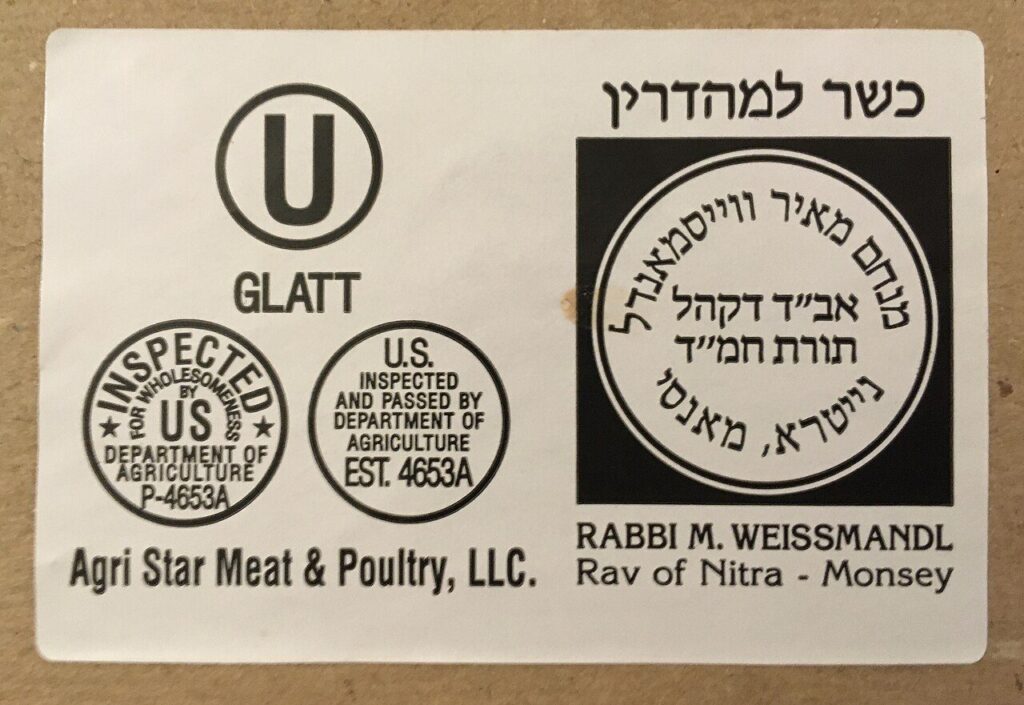

What Is a Hechsher in Plain English?
A hechsher is a kosher stamp of approval. In its glossary, Chabad.org defines it as “Kosher certification, and the actual symbol denoting that a given product is certified kosher.” So the word covers two things at once: the supervision, and the little logo you see on the box. OK Kosher notes that hechsher is Hebrew for “approval,” though most people use it for the trademarked symbol of the agency certifying a product.
Think of it as a signed guarantee. A rabbi or an agency checks the ingredients, the equipment, and the production, then lets the manufacturer print the agency’s mark. You can’t see kosher in a jar of sauce or a bag of crackers, so you’re trusting the agency that supervised the production.
The word you’ll hear alongside it is mashgiach. Star-K’s glossary describes a mashgiach as a person with the training to supervise kosher food production. The same glossary lists hashgacha, the Hebrew word for kosher supervision. The mashgiach does the checking, and the hechsher is the proof on the package. We cover that job in our guide to what a mashgiach does.
Who Gives a Hechsher?
Certifying agencies issue each hechsher. Some of the names you’ll meet on labels are the Orthodox Union (OU), OK Kosher, Star-K, Kof-K, and the Chicago Rabbinical Council (cRc). Each agency uses its own logo, which is why hechshers look different from one product to the next. OK Kosher says all reputable kosher certifiers follow a set of widely held Orthodox kosher standards. We’ve written agency-by-agency guides, including what the OU symbol means, Star-K, Kof-K, and the cRc.
One point in Chabad.org’s article on misconceptions stands out. Many rabbis work in kosher certification, and their job is to supervise production. Chabad.org adds that “there is no actual blessing required in the process.” A rabbi doesn’t bless a food to make it kosher, and the article says a blessing on non-kosher food wouldn’t change its status.
Which agencies you trust is a question for your own rabbi. Communities differ, and KosherFish isn’t a posek.
What the Letters Next to a Hechsher Mean
The logo is only half the message. OK Kosher explains that separating meat and dairy is a key principle of kosher law, so any reliable hechsher has to state the product’s kosher category. Read the letters or words beside it to learn what kind of kosher the product is. OK Kosher explains that its symbol with a D or the word “Dairy” means a kosher dairy product, while the plain symbol “represents a product that’s neither dairy nor meat.” The OU uses a similar system.
| Marking | What it means | Source |
|---|---|---|
| OU (no letters) | Neither dairy nor meat, and no dairy or meat derivatives | OU |
| OU-D | Dairy, or made on dairy equipment | OU |
| OU-DE | Made on dairy equipment | OU |
| OU-P | Kosher for Passover and pareve | OU |
| OU-Fish | Has fish ingredients, and isn’t necessarily kosher for Passover | OU |
| OK M | Kosher meat, or a product that contains kosher meat or poultry | OK Kosher |
| OK F | Contains fish-based ingredients | OK Kosher |
| OK with PY or Pas Yisroel | Meets the Pas Yisroel standard | OK Kosher |
| A plain K with no agency name | ⚠️ Check. It doesn’t name who supervised the food | OU |
Pareve means a product contains no meat or dairy. Star-K’s glossary says you can eat a pareve product with a meat, poultry, or dairy meal. For the full story, see our post on what pareve means. And our kosher symbols guide shows more of the logos side by side.
Is a Plain K the Same as a Hechsher?
Not always. You won’t find an agency name on a plain K, so you can’t tell who stands behind the food. The OU says that “a ‘K’ symbol is not a reliable guarantee of an enduring hechsher.” The OU also notes that in many states a manufacturer can legally print a K on a label “without any rabbinic supervision at all,” and that some states have laws restricting a K when the rabbi has died.
You can still find out who stands behind a K. The OU says you can generally establish that by calling or writing to the manufacturer and asking for a copy of the letter of certification. If a company won’t send one, you have your answer.
A named, trademarked agency logo works differently. The OU notes that a manufacturer can’t legally keep using a copyrighted kosher logo once the supervision ends, and the OU and many agencies write clauses into their contracts that require destroying labels at that point. That’s the practical difference between a logo and a letter.
Does Fish Need a Hechsher?
It depends on the form. The Torah sets the rule for the species in Leviticus 11:9-12 and Deuteronomy 14:9-10, and Chabad.org states it simply: “A water creature is kosher only if it has fins and scales.” Salmon, tuna, and herring qualify. Catfish, sturgeon, and shellfish don’t.
The same Chabad.org article says “all processed foods and eating establishments require certification by a reliable rabbi or kashrut supervision agency.” That’s why canned, smoked, and prepared fish products carry a hechsher. Once a fish becomes a loaf, a spread, or a sauce ingredient, you can no longer check its fins and scales yourself. We walk through the fresh-versus-processed question in does fish need a hechsher.
Fish also shows up as a hidden ingredient. Both the OU and OK Kosher mark products that contain fish ingredients, with OU-Fish and OK F. So you can learn from a hechsher that a product contains fish, even when the food doesn’t look like fish at all.
How to Read a Hechsher at the Store
Start with the logo. Find a mark that names an agency you recognize, and check that it sits on the product itself, not just on a shelf tag. Next, read the letters: D, M, P, F, or none. Then think about your own needs, such as a dairy meal, a Passover kitchen, or a fish-only plate.
If the mark is a plain K or an agency you don’t know, search for the agency or ask the manufacturer for its certification letter. When you’re still unsure, ask your rabbi. That’s the rule that never expires.
Do Restaurants Carry a Hechsher Too?
Restaurants follow the same rule. According to Chabad.org, “all processed foods and eating establishments require certification by a reliable rabbi or kashrut supervision agency.” Chabad.org tells readers to check “the kashrut certificates of restaurants and hotels for a copyrighted kashrut symbol,” the same way you’d check a package label.
That matters at sushi and seafood counters. You can’t learn from a menu who supervised the kitchen, but you can read the supervising agency’s name on the certificate. Our guide to kosher sushi covers what to look for before you order.
If a restaurant claims to be kosher and shows no certificate, ask the manager which agency supervises the kitchen. Then check that agency’s own website, or ask your rabbi.
Check Any Fish with KosherFish
You read a hechsher on products. For the fish itself, you need the species. You can look up salmon, tilapia, swordfish, and 290+ other fish in the KosherFish lookup tool, browse the whole kosher fish list, or check a fish at the counter with the iOS or Android app. You’ll find the kosher verdict on each species page, and the check is quick enough to do while you hold the package.
Frequently Asked Questions About Hechshers
What is a hechsher?
A hechsher is kosher certification, and it’s also the symbol on a package that shows the certification. Star-K defines it as certification of a product or ingredient by a rabbi or a kosher certifying agency. Chabad.org describes it as the actual symbol denoting that a given product is certified kosher.
What does hechsher mean on food?
On food, a hechsher means a rabbi or certifying agency supervised the product. Chabad.org says many rabbis supervise production in kosher certification, and no blessing is involved. The logo on the package is the proof, and the agency behind the logo stands behind the claim.
Is a K a hechsher?
A plain K isn’t a reliable hechsher by itself. The OU says a K is not a reliable guarantee of an enduring hechsher, and that in many states a manufacturer can legally print a K on a label without any rabbinic supervision. Ask the manufacturer for its letter of certification to learn who supervises the food.
What do the letters D, M, and P mean next to a hechsher?
They show the type of kosher. OK Kosher says D means a kosher dairy product, M means kosher meat, and P means kosher for Passover. A symbol with no letters means the product is neither dairy nor meat. The OU uses the same D and P letters.
Does fish need a hechsher?
Processed fish does. Chabad.org says all processed foods require certification by a reliable rabbi or supervision agency. That covers canned, smoked, and prepared fish. With a whole fish, you can check the fins and scales yourself. If you’re unsure about a specific product, ask your own rabbi.
Is a hechsher the same as a blessing from a rabbi?
No. Chabad.org says the certification process requires no actual blessing. Rabbis supervise the production instead. In Chabad.org’s words, a rabbi’s blessing on non-kosher food wouldn’t make it kosher. A hechsher means supervision, not a prayer.
Who can give a hechsher?
A rabbi or a kosher certifying agency gives it, according to Star-K’s definition. Agencies include the OU, OK Kosher, Star-K, Kof-K, and the cRc. Which agencies you accept depends on your community, so ask your own rabbi if you aren’t sure about a logo.
The Bottom Line
A hechsher is kosher certification and the symbol that proves the supervision. Check the logo and the letters beside the logo, and stay wary of a plain K until you know who supervises the food. For fish, the Torah test still comes first. Browse the kosher fish list, look up any species in the KosherFish lookup tool, or keep the iOS or Android app handy. For more background, read our kosher dietary laws guide and our post on how to keep kosher.