
Is mullet kosher? Yes, mullet is kosher, and so is red mullet. The Torah permits fish with fins and scales in Leviticus 11:9-12, and James Atz put both grey mullet and red mullet, a goatfish, on the kosher side of the fish list the Orthodox Union published. Two unrelated families share the name mullet, and that’s why people get confused. You can look up any fish on KosherFish in seconds, or browse the kosher fish list for the full set.
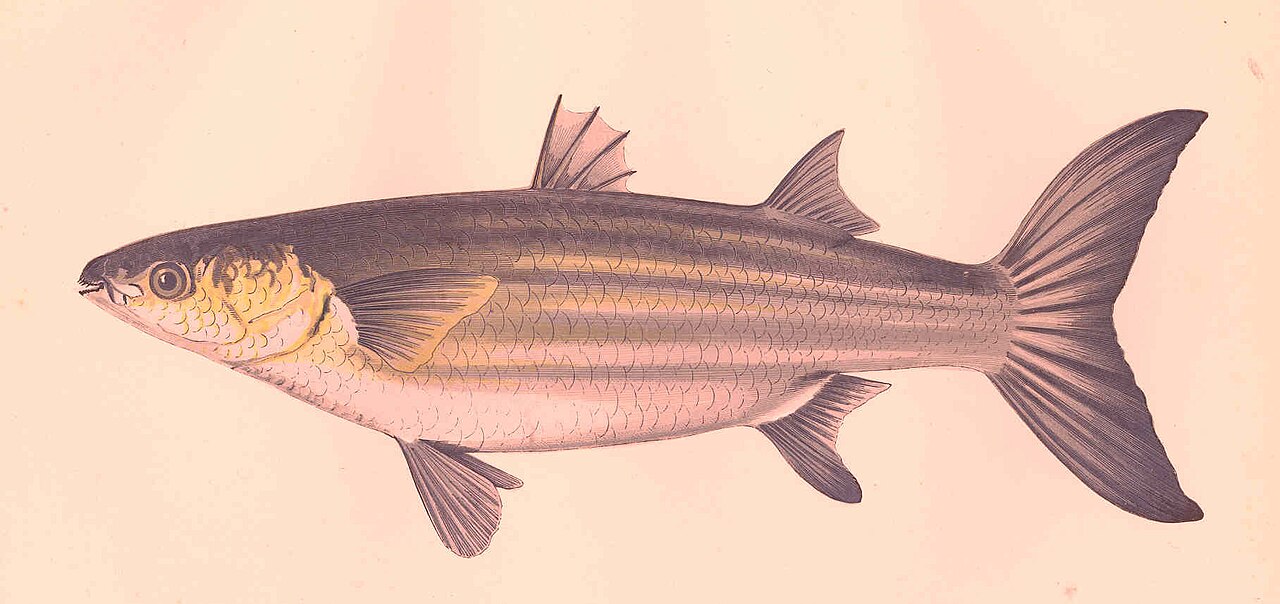
Is mullet kosher? The Torah rule
Is mullet kosher under the Torah’s two-part test? Yes. Leviticus 11:9-12 permits anything in the water that has fins and scales. Rabbi Chaim Goldberg of the OU writes in his kosher fish production Q&A that kosher law requires scales you can remove without ripping the skin before a fish can qualify, even in theory, for kosher certification.
Grey mullet passes. It is a scaled, finned fish, and we list striped mullet (Mugil cephalus) as kosher, with both signs present, on our mullet species page. Sturgeon fails the same test, which is why we sort the two on opposite sides of the line in our sturgeon guide. For the full rule, read what makes a fish kosher.
Who lists mullet as kosher
James Atz, an ichthyologist at the American Museum of Natural History, prepared the fish lists the Orthodox Union published in its 1991 Kosher Guide, one for kosher fish and one for non-kosher fish. Atz put “Mullets (Family Mugilidae),” including Mugil species, on the kosher side. Chabad.org reprints the list with the OU’s permission, and Kashrut.com carries a copy too.
Both publishers add cautions. Chabad.org’s editor writes that the common names of fish are very inaccurate and that, in practice, the list’s use is very limited. Kashrut.com’s editor adds that the page lists fish with fins and scales and is not a list of OU-certified fish. Once you know the species qualifies, you still need a hechsher or visible skin and scales to confirm that the package in your hand holds that fish.
What grey mullet actually is
Grey mullet is a coastal schooling fish. The Florida Museum describes the striped mullet as an elongated, grayish olive-brown fish that looks striped because of spots on the scales of its upper sides. The museum lists a maximum of 47.2 inches and 17.6 pounds, and notes that, unlike the white mullet, it has no scales on its soft dorsal and anal fins. You can use that difference to tell the two apart.
The range is wide. In the western Atlantic, striped mullet runs from Nova Scotia to Brazil, including the Gulf of Mexico, and it often enters estuaries and fresh water. Adults gather in large schools near the surface. They feed during the day on zooplankton, dead plant matter, and detritus, and they suck up the top layer of sediment to feed. For the kosher verdict, only the fins and scales matter.
The Florida Museum says striped mullet is an excellent food fish along Florida’s Gulf coast and is very important commercially in many other parts of the world. Sellers market it fresh, dried, salted, and frozen, and buyers prize the roe. According to the museum, freshwater-caught mullet often have a muddy or sulfide-like taste, and sellers often get more for mullet as bait than as food.
Red mullet is a different fish, and it is kosher too
Red mullet is not a grey mullet. FishBase places the red mullet or surmullet (Mullus surmuletus) in the family Mullidae, the goatfishes, while grey mullet belongs to Mugilidae. FishBase describes a smaller fish, up to 40 centimeters, with red and brown stripes along the body and barbels longer than the pectoral fin.
Atz treats the goatfishes as a separate entry. He lists “Goatfishes or surmullets (Family Mullidae),” including Mullus species and the red mullet, as kosher. We give the same verdict on our goatfish species page and note that the name mullet is misleading. So the shared name is a naming mix-up, not a kosher one. If you see “mullet” on a menu and don’t know which family you’re getting, Atz put both families on the kosher side. You still need to confirm the form you buy, which we cover below.
When you see only the market name on a label or menu, ask for the scientific name or the supplier’s certification.
Mullet and its look-alikes at a glance
| Fish | Family | Kosher? | Why |
|---|---|---|---|
| Grey or striped mullet (Mugil cephalus) | Mugilidae | Yes | Atz put the Mugilidae on the kosher side of the OU-published list, and the fish has fins and scales |
| Red mullet or surmullet (Mullus surmuletus) | Mullidae (goatfishes) | Yes | Atz put the goatfishes and the red mullet on the kosher side of the same list |
| Mullet fillet with no skin | Either | Check | The OU says scales must be visible to the consumer, so rely on supervision, not appearance |
| Salted or dried mullet roe products | Either | Check | We list them as cured products on our species page, so look for a reliable hechsher on the package |
| Sturgeon | Acipenseridae | No | The OU says you can’t remove sturgeon’s embedded scutes without tearing the skin |
Buying mullet: skin, scales, and certification
Fresh whole mullet with the skin on is the easy case, since you can see the scales. Rabbi Goldberg writes that consumers must be able to see the scales to establish kosher status, that you should skip filleted or ground fish without proper supervision, and that a fillet should have a skin tab with scales attached. He adds that the OU requires certified facilities to receive fish skin-on, to prevent species substitution, or under a kosher supervision with which the OU has reciprocity. He also calls buying fish in a non-kosher fish store problematic, even with the scales intact, and says to seek rabbinic guidance. You can read the full routine in how to buy kosher fish and whether fish needs a hechsher.
You can see how this works at home in a Sheilot.com question. An Ashkenazi reader who usually eats products certified by the Badatz Eida Chareidit, Landa, or Rubin bought mullet with a Beit Yosef certification by mistake and asked whether that was a problem. Rabbi Israel Cohen of Rav Amram Fried’s Beit Horaah answered in general terms on 8 February 2024, citing Shulchan Aruch, Yoreh De’ah 83, that fish without additives or color injections, with skin on and the scales visible, is not a concern. He said he doesn’t answer about specific certifications, so he spoke only of skin-on fish with visible scales and no additives. Your own rabbi decides how that applies in your home.
Mullet roe is its own question. On our mullet species page, we describe salted, dried, and pressed roe products such as bottarga, karasumi, and avgotaraho. We found no agency position on products like those, so check the package for a reliable hechsher. For the general fish-roe rules, read is caviar kosher.
Check Any Fish with KosherFish
If you’re standing at the counter, you can look up any fish on the KosherFish homepage and get a verdict for mullet and 290+ other species. You can scan every species on the kosher fish list at once, and read the details on the mullet species page, the mullets family page, and the goatfish page.
You can run the same check on your phone with the iOS app or the Android app, when you only know the market name from a menu. KosherFish is an information tool, not a posek, so confirm any product with a reliable certification or your own rabbi.
Is mullet kosher? Frequently asked questions
Is mullet kosher?
Yes, mullet is kosher. Grey mullet (family Mugilidae) has fins and scales, which meets the Torah’s test in Leviticus 11:9-12, and the fish list that James Atz prepared for the Orthodox Union names the Mugilidae as kosher. Buy it whole with the skin on, or with reliable supervision.
Is red mullet kosher?
Yes, red mullet is kosher. It is a goatfish (family Mullidae), not a grey mullet, and the OU-published Atz list names the goatfishes and the red mullet (Mullus surmuletus) as kosher. Chabad.org’s editor warns that common fish names are inaccurate, so confirm the species at purchase.
Is grey mullet the same as red mullet?
No. Grey mullet belongs to the family Mugilidae, while red mullet is a goatfish in the family Mullidae, according to FishBase. The two share a name but not a family. Atz put both families on the kosher side, so whichever fish you get, the verdict is the same.
Does mullet need a hechsher?
Whole mullet with the skin and scales on does not need one, since you can see the signs. The OU says consumers must be able to see the scales, and that you should buy fillets only with proper supervision or a skin tab with scales attached. Buy processed mullet products only with a reliable hechsher, and ask your rabbi before you buy at a non-kosher fish store.
Is mullet roe kosher?
We found no agency position on mullet roe products such as bottarga, so we don’t rule on those products. The fish is kosher, but you get no skin or scales to check on a salted, dried, or pressed roe product. Look for a reliable hechsher on the package, and ask your rabbi about any doubt.
Why is mullet kosher but sturgeon is not?
Atz put mullet on the kosher side. The OU says sturgeon has scutes, which are similar to scales but embedded, and you can’t remove them without tearing the skin, so sturgeon isn’t kosher. A fish needs both fins and removable scales to be kosher under Leviticus 11:9-12.
The Bottom Line
Mullet is kosher, and so is the red mullet that shares its name, as long as you can tell which fish and which form you’re buying. You can see the signs on whole skin-on fish, and you need supervision or a reliable hechsher for skinless fillets and roe products. Browse the kosher fish list, read the mullet species page, or look up any fish before your next trip to the fish counter, and keep the iOS app or Android app handy. For more on the rules behind the verdict, read what makes a fish kosher, the most common kosher fish, and whether sea bass is kosher.