
Is masago kosher? Yes, when a reliable agency certifies the product. Masago is the roe of the capelin, a kosher fish in the smelt family, so the eggs pass the Torah test in principle. Sellers also put the name on roe from other fish, though, and that makes the kosher symbol your proof. You can check capelin and its look-alikes on the KosherFish lookup tool.
What is masago, and how is it different from tobiko?
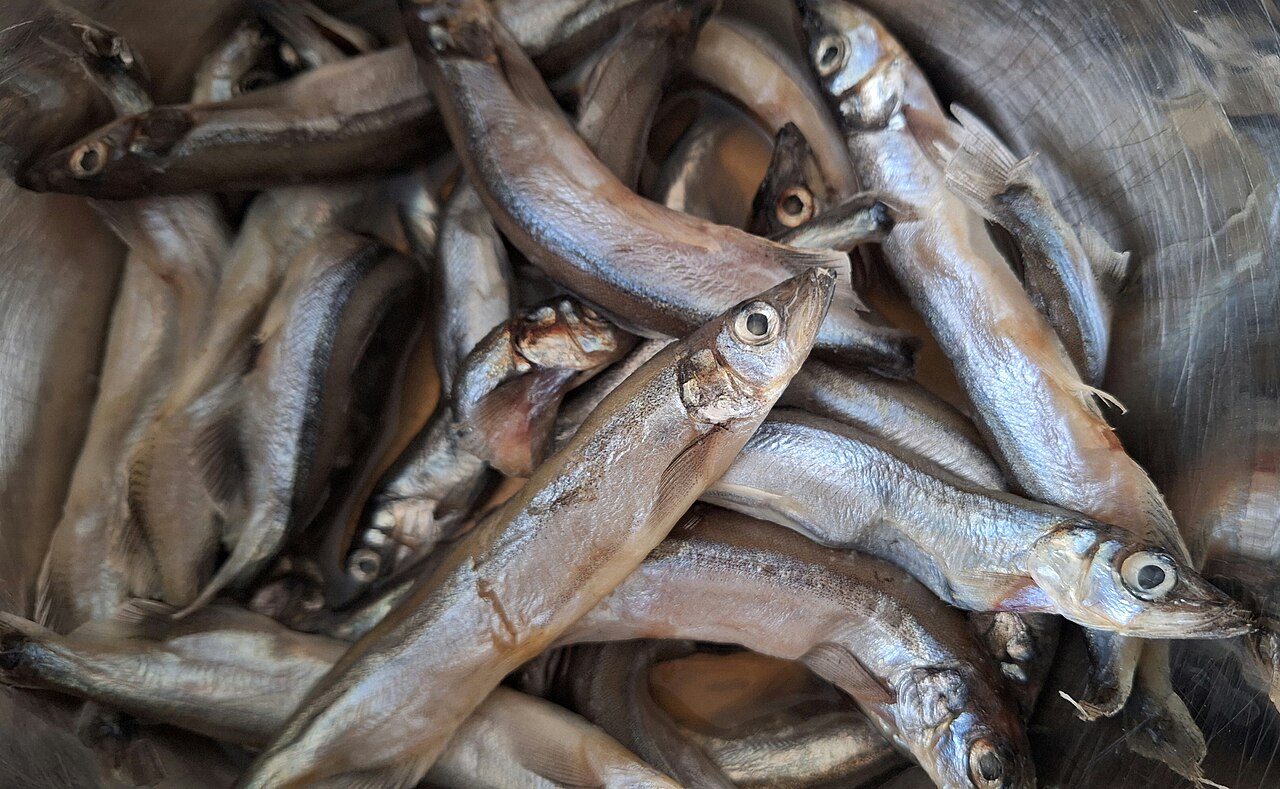
Masago is the tiny orange roe of the capelin, a small forage fish of the North Atlantic, North Pacific, and Arctic oceans. Our capelin page calls masago a high-value product in Japan and a common substitute for tobiko, the flying fish roe. You may also see the name spelled caplin.
On a sushi plate the two roes look similar. Up close, they differ in size, color, and price. According to the Japanese food site Just One Cookbook, tobiko is slightly larger and has a crunch masago lacks. Masago starts out a dull yellow, and producers often dye it for shine. The site calls tobiko the higher quality product, and it costs more, so many sushi bars use masago in its place to save money.
That swap matters for kosher diners. Just One Cookbook also warns that a menu line reading “flying fish eggs” may bring you tobiko or masago. So two different fish can hide behind one name, and only the certification settles which one you got.
Why is masago kosher in principle?
Kosher fish law starts in the Torah. Leviticus 11:9-12 permits water creatures with fins and scales, and Deuteronomy 14:9-10 repeats the test. A fish needs both signs. Eggs follow the fish they came from: roe from a kosher species is kosher, and roe from a non-kosher species is not.
Capelin passes. The Orthodox Union published its fish list, and Chabad.org reprints it with the OU’s permission. On that list you’ll find capelin (Mallotus villosus) under the smelts, family Osmeridae. We mark capelin kosher on our own species page, too. In their answer on masago, Chabad.org’s editors call capelin a kosher fish whose roe would be acceptable.
Why isn’t the word masago enough?
Sellers use the same name for other roe. Chabad.org’s editors write in that same answer that “the eggs of some non-kosher fish are also referred to as masago.” Looking at a spoonful of orange eggs, you can’t name the species. Nor can you tell from the package whether the maker added anything non-kosher during processing.
For those two reasons, Chabad.org concludes that “only roe with kosher certification is acceptable.” Jewish law treats wrong-species roe strictly. In the Mishneh Torah, Ma’achalot Assurot 3:7, Maimonides writes that eating the eggs found inside a non-kosher fish compares to eating the fish’s own insides. A pretty color or a familiar name can’t fix roe from the wrong species.
Masago, tobiko, caviar, and salmon roe compared
Sushi menus and deli cases sell several types of roe with names that sound alike. Each one sorts by its fish, as the table shows.
| Roe | Fish | Kosher? | Why |
|---|---|---|---|
| Masago | Capelin | Yes, if certified | Capelin is a kosher smelt. Chabad.org accepts only certified masago |
| Tobiko | Flying fish | Yes, if certified | The OU list includes flyingfishes. Buy only with a reliable symbol |
| Salmon roe (salmon caviar) | Salmon | Yes, if certified | Chabad.org requires a recognized agency’s certification |
| Sturgeon caviar | Sturgeon | No | The OU list marks sturgeon non-kosher |
| Lumpfish caviar | Lumpsucker | No | The OU list marks lumpsuckers non-kosher |
We cover the sturgeon case in full in our guide to whether caviar is kosher. Our sturgeon guide explains why sturgeon scales fail the Torah test.
Roe from any fish follows the same rule
Capelin is one example of a wider rule. Under caviar, the OU list carries a one-line note that it must come from a kosher fish, and the list names sturgeons and lumpsuckers as non-kosher. Apply that reasoning to every roe you meet at a counter or in a rice bowl.
Salmon roe works the same way. In their answer on caviar, Chabad.org’s editors write that caviar from salmon or other kosher fish “can very well be kosher,” provided a recognized kosher agency certifies the product. Black, orange, red, or yellow, the color of the eggs changes nothing. The fish decides, and the agency confirms what the jar holds.
Dyes, cures, and flavorings
Species is only the first question. Producers often dye masago, and Just One Cookbook describes flavored tobiko in black, green, red, and yellow. Makers color those varieties with squid ink, wasabi, yuzu, and beet juice, and they usually salt-cure tobiko with dashi, salt, mirin, and rice vinegar. Each added ingredient gives a kosher agency one more item to check, as with any processed foods.
No shopper can check those ingredients by looking at the eggs. The species, the cure, and every flavoring sit behind the label, so a recognized agency has to vouch for each one. Buy masago the way you buy any processed seafood: find a symbol you trust, then read the ingredient list.
How is masago used in Japanese cuisine?
Masago fills the same roles as tobiko at a lower price. Just One Cookbook suggests tobiko as a garnish for sushi rolls and other seafood dishes, or as the star of a tobiko sushi roll. The same writers describe the flavor of salt-cured tobiko as mildly sweet and salty, like seaweed.
Readers who watch their health ask about nutrition, too. Just One Cookbook says fish eggs like tobiko are high in protein, minerals, and omega-3 fatty acids and low in calories. The same writers note that tobiko carries high cholesterol and sodium, and they suggest eating roe in moderation. None of that changes the kosher answer. For a kosher kitchen, the certified jar comes first and the recipe second.
Can you eat masago at a sushi restaurant?
At a kosher-supervised restaurant, yes. There, the supervising agency covers the roe the kitchen buys. Without supervision, nobody can show you the species, the supplier, or the cure in the mix. We walk through that problem in our guide to sushi at a non-kosher restaurant and in the kosher sushi guide.
Without a symbol, skip the roe. Order a plain roll with a kosher fish and a certified filling instead, and you keep the meal simple.
How to check masago before you buy
Start with the package. Look for a reliable kosher symbol and read the letters beside it, because a plain K can mean anyone. We explain each mark in our guide to kosher symbols.
For whole fish, the OU leans on visible scales. In its fish Q&A, the OU says shoppers “should not” buy filleted or ground fish “unless properly supervised,” or unless a skin tab with scales stays attached. Roe gives you no skin at all to inspect. With masago, the certification is all the evidence you get. Our guide to whether fish needs a hechsher covers the cases where you can skip the symbol.
Check any fish with KosherFish
In a store aisle or at a sushi counter, you want the verdict fast. Look up capelin and 290+ other species on the full kosher fish list, or open the capelin page for the fish behind masago. On your phone, get the iOS app or get the Android app.
Is masago kosher? Frequently asked questions
Is masago kosher?
Yes, when it carries reliable kosher certification. Masago is capelin roe, and capelin is a kosher smelt with fins and scales. Chabad.org warns that sellers also call the eggs of some non-kosher fish masago, so its staff accept only certified roe. Look for a trusted symbol on the package before you eat masago, and ask your rabbi about any doubt.
What’s the difference between masago and tobiko?
Masago is capelin roe, and tobiko is flying fish roe. Just One Cookbook says tobiko is slightly larger, crunchier, and more expensive, while masago is naturally dull yellow and often dyed. Both come from fish on the OU’s kosher list, but each product still needs its own kosher symbol, since restaurants sometimes swap one for the other.
Does masago need a hechsher?
Yes. Capelin roe is kosher in principle, but Chabad.org notes that sellers use the name masago for some non-kosher roe, too. Nobody can confirm the species or the added ingredients by looking at the eggs. Treat uncertified masago as unverified, and buy jars or trays that carry a hechsher from an agency you trust.
Which fish produces masago?
Masago comes from the capelin (Mallotus villosus), a small forage fish of the North Atlantic, North Pacific, and Arctic oceans. The Orthodox Union’s kosher fish list, which Chabad.org reprints with permission, places capelin in the smelt family, Osmeridae. Capelin has fins and scales, so the fish meets the Torah’s test in Leviticus 11:9-12.
Can I eat masago at a non-kosher sushi restaurant?
Be careful, because most of the facts you need stay out of sight. Without supervision, nobody can show you the species, the supplier, or the cure the kitchen used, and the bright color proves nothing. Order at a kosher-supervised restaurant when you can, and ask your own rabbi before you rely on a non-kosher kitchen for any fish product.
What about sturgeon caviar?
Sturgeon caviar isn’t kosher. Chabad.org says authentic caviar is sturgeon roe, and sturgeon is not a kosher fish. The OU list adds lumpsuckers as a second non-kosher caviar source. Roe from kosher fish, such as salmon or capelin, can be kosher, but Chabad.org requires certification from a recognized kosher agency first.
The Bottom Line
Masago from capelin is kosher with reliable certification. Capelin passes the fins-and-scales test, but a label reading masago proves nothing about the species. Skip uncertified roe, and never judge it by its color or its price.
Browse the kosher fish list, read the capelin page, or look up any fish before your next order. For related answers, start with what makes a fish kosher and our kosher sushi guide. When a label or menu leaves you unsure, ask your rabbi.