
Is tuna kosher? Yes. Tuna has fins and scales, so the fish itself passes the Torah test in Leviticus 11:9. The catch is how it reaches you. Fresh tuna with its skin and scales on is fine, and canned or processed tuna needs a reliable kosher certification.
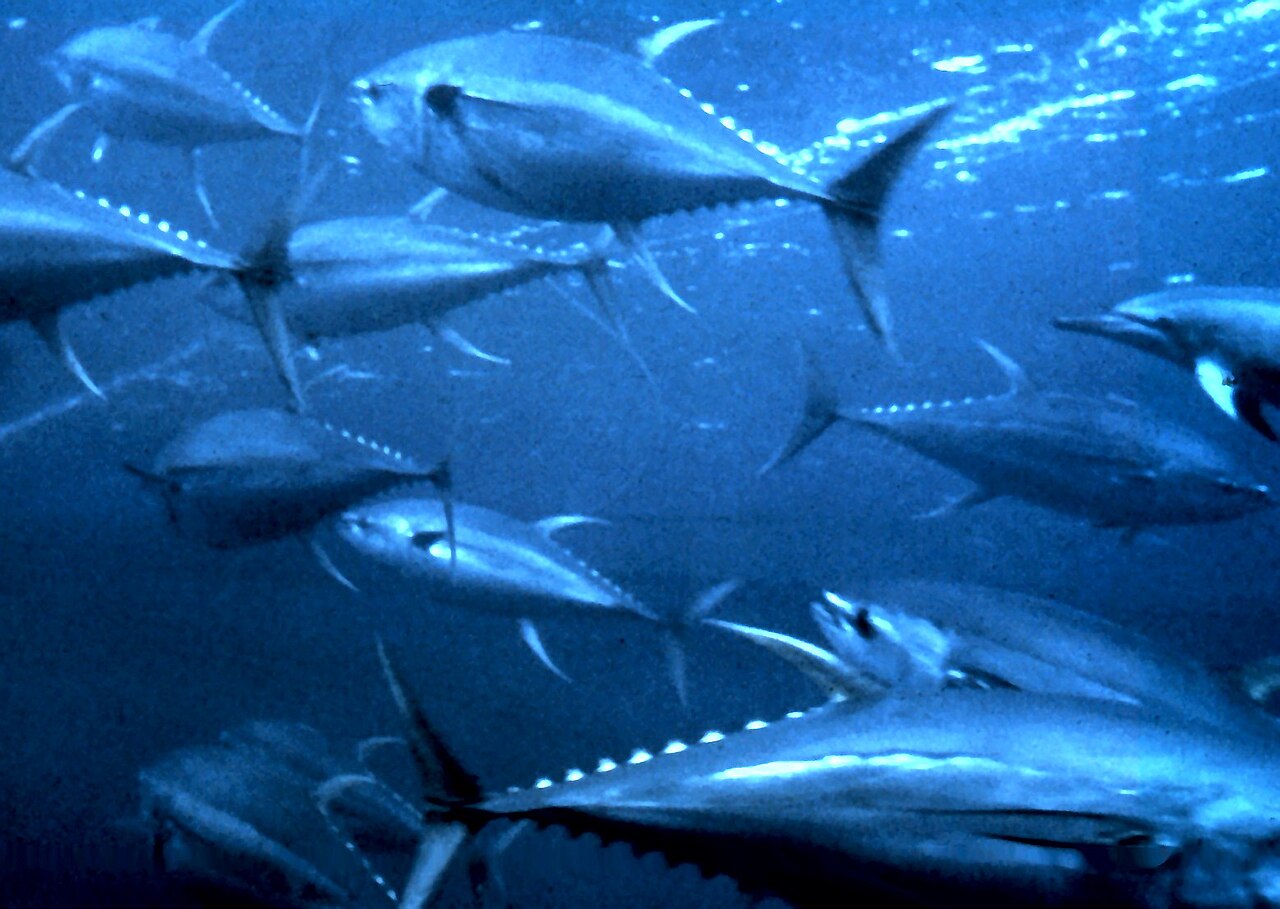
Why tuna is a kosher fish
The Torah gives one rule for sea creatures. In Leviticus 11:9 and Deuteronomy 14:9, a fish is kosher if it has both fins and scales. Tuna has both. Its scales are small, and they are the cycloid and ctenoid kind that kosher fish carry, according to OK Kosher. You can read the full rule in our guide on what makes a fish kosher.
Some readers wonder if a fast predator like tuna can be kosher. It can. The Torah test is fins and scales, not what the fish eats. Chabad.org puts it plainly: all fish with fins and scales are kosher, and the fish sold commercially as tuna fits that category.
Bluefin, yellowfin, bigeye, skipjack and albacore all count as tuna for this purpose. You can see the verdict for tuna and for albacore on their KosherFish pages.
Is tuna kosher in every form?
The species is kosher. Whether a particular package is kosher depends on the form. This table shows the common cases.
| Form of tuna | Kosher? | Why |
|---|---|---|
| Fresh whole tuna, skin and scales on | ✅ Yes | The scales prove the species. Chabad.org suggests having it cut on clean paper and rinsing the cut area |
| Fresh tuna steak with skin removed | ⚠️ Check | Nobody can confirm the species by sight. Buy from a kosher-supervised fish counter |
| Canned tuna | ⚠️ Needs certification | Chabad.org says all canned tuna must carry a reliable hechsher |
| Smoked, pickled or marinated tuna | ⚠️ Needs certification | Processed fish needs a hechsher per Chabad.org |
| Sushi or sashimi tuna | ⚠️ Needs supervision | Kosher only at a supervised restaurant or from a certified source |
Why canned tuna needs a hechsher
Canned tuna is a processed product, so the fish being kosher is only part of the question. Two concerns come up. One is whether a non-kosher fish ended up in the catch. The other is how the plant cooks and packs the fish.
The first concern is about identification. OK Kosher reports that Rabbi Moshe Feinstein, in 1977 and 1984, said a reliable supervisor should examine every fish before skinning. His reasoning was that industrial nets are certain to pull in non-kosher fish. A cannery works too fast for an occasional inspector to catch them.
There is a second view. The same OK Kosher article describes Rabbi Tzvi Schachter relying on the idea that fishermen and factories want the right species, so little non-kosher fish slips through. The article adds that this view assumes almost no non-kosher fish gets past quality control, and that supervision experience and documented incidents say otherwise.
The second concern is cooking by a non-Jew, called bishul akum. The Orthodox Union explains why canned tuna is usually permitted without full-time supervision of the cooking. Tuna steaks show up at elegant dinners, but canned tuna doesn’t, and that matters for this rule. Rabbi Feinstein held that bishul akum does not apply in a factory. And tuna is steamed in a chamber before it is packed, and it may be that steam cooking doesn’t count. Those doubts are why most OU canned tuna is certified without a mashgiach watching the steam.
The OU also runs special tuna productions with full-time supervision. Those cans carry a code on the label, MT for mashgiach temidi (full-time supervision) and BY for bishul yisrael. The OU calls this the exception. Most tuna plants sit in places like Puerto Rico, Alaska, Spain and Thailand, and stationing a full-time mashgiach there is expensive.
How to read a tuna can label
- Look for a kosher symbol on the can itself, such as the OU, Star-K, OK, Kof-K or cRc. Our guides explain the cRc and Star-K marks.
- Check the exact product. A brand can certify one can and not the next, because certification covers products, not brands.
- Look for MT and BY codes if your household wants the stricter standard on bishul yisrael.
- Treat each flavor as its own product. Tuna in broth, lemon pepper tuna and plain tuna in water can carry different symbols, so check the one in your hand.
- Skip a plain can with no symbol, even if the label says tuna in water.
Where your family draws the line on bishul yisrael is a question for your own rabbi. The agencies differ in how they supervise, and some communities are stricter than the OU standard.
Buying fresh tuna and tuna at a sushi counter
Fresh tuna is simpler than canned. The classic test is to buy it with skin and scales attached, which lets you confirm the species. Chabad.org gives two options: buy from a rabbinically supervised store, or buy fresh, unprocessed tuna with the scales still on. In the second case, ask the store to cut it on clean paper, then rinse the cut area in room-temperature water at home. Our guide on how to buy kosher fish covers the counter step by step.
A skinless loin or steak is harder. You can no longer see the scales, and tuna cuts resemble cuts of other red-fleshed fish. A supervised market solves this.
Sushi works the same way. Tuna rolls and sashimi are fine at a kosher-supervised restaurant or from a certified source. At a non-kosher sushi bar you cannot verify the fish or the shared knives and surfaces. See our kosher sushi guide for the rest.
Tuna salad, pouches and flavored tuna
The same rule covers every shelf-stable form. Foil pouches, tuna with added flavors and ready-made tuna salad kits are all processed fish. Chabad.org says processed tuna must be certified by a reliable agency, so each of these needs a symbol of its own. Pouches are not an exception just because they skip the can.
Homemade tuna salad adds its own questions. Mayonnaise, relish and seasonings each need to be kosher. If you start with a certified can, check the rest of the ingredients the same way. The tuna being kosher does not carry over to the other items in the bowl.
Fresh tuna at home, step by step
- Buy a whole piece with skin and scales on when you can, or buy from a kosher-supervised counter.
- Ask the seller for the species. Tuna sold as yellowfin, bigeye or bluefin is the same family of fish.
- Keep the skin on until you have seen the scales. Once it is gone, you cannot prove the species by looking.
- Keep the receipt and the label if your own rabbi might ask where it came from.
Common mistakes with tuna and kashrut
- Assuming a kosher fish makes a kosher can. The species is only the first test, and the processing is the second.
- Trusting the brand name instead of the symbol. Certification attaches to the specific product.
- Buying skinless fresh tuna from a general fish counter. You cannot identify it by sight, so the safe route is a supervised seller.
- Treating sushi as safe because the fish is tuna. The supervision of the restaurant is what makes it kosher.
If you keep these four points in mind, almost every tuna question has an easy answer. When one does not, a call to your own rabbi or the certifying agency named on the label settles it.
Check Any Fish with KosherFish
If you are standing in a store and want a quick answer, you can look up tuna and 290+ other species on the KosherFish lookup tool or browse the full kosher fish list. The iOS app and the Android app do the same check at the counter. KosherFish tells you what the recognized authorities say about the species. It does not replace a certification on a package or your own rabbi.
Frequently asked questions about tuna and kashrut
Is tuna kosher?
Yes. Tuna has fins and scales, which meets the Torah test in Leviticus 11:9 and Deuteronomy 14:9. Chabad.org says the fish sold commercially as tuna fits that category. The species isn’t in dispute. What varies is the form. Canned and processed tuna needs a reliable hechsher, and fresh tuna is easiest to trust with the skin and scales still on.
Is canned tuna kosher?
Only with a reliable kosher certification on the exact can. Chabad.org says all canned, smoked, pickled or otherwise processed tuna must be certified. The OU explains that most of its canned tuna is certified without full-time supervision of the cooking, and that the cans that do have it carry MT and BY codes on the label.
Does tuna have scales?
Yes. Tuna has small scales of the cycloid and ctenoid type, according to OK Kosher. Those are the two scale types found on kosher fish. They’re easy to miss, so a skinless cut of tuna can’t be identified by sight. That’s why fresh tuna is best bought with the skin on or from a supervised fish counter.
Is tuna in water kosher without a hechsher?
No. Chabad.org says all canned tuna needs certification, whatever it’s packed in. The packing liquid isn’t the main issue. The concerns are identifying the fish and how the plant cooks and cans it. Look for a kosher symbol printed on the can itself, not just the word tuna on the label.
What do MT and BY mean on a can of tuna?
They’re OU label codes. MT stands for mashgiach temidi, full-time supervision at the plant. BY stands for bishul yisrael, the stricter standard on who does the cooking. The OU calls these cans the exception, because most tuna plants are far away and a full-time mashgiach is expensive. Ask your own rabbi whether your household needs them.
Is tuna sushi kosher?
Tuna sushi is kosher when it’s made at a kosher-supervised restaurant or from certified fish. The fish itself is kosher, but at a non-kosher sushi bar nobody can verify the species, the knives or the surfaces. Ask to see the certificate, or ask your own rabbi if you’re unsure about a particular place.
Is tuna salad kosher?
Only if every ingredient is. The tuna needs a hechsher on the can or pouch, and so do the mayonnaise, relish and seasonings. A ready-made tuna salad kit is a processed product, so it needs a symbol of its own. Kosher tuna doesn’t make the rest of the bowl kosher, so check each item.
The Bottom Line
Is tuna kosher? The fish is, every time. Whether the tuna in your cart is kosher depends on the package. Fresh tuna with its scales is fine. Canned, smoked and other processed tuna needs a reliable hechsher on the exact product. Browse the kosher fish list, see the tuna page, or use the lookup tool and the apps. For more, read the complete guide to kosher fish.