
Is eel kosher? No. Eel has fins, which covers half of what the Torah requires, but its scales sit so deep in its skin that you can’t remove them without tearing the flesh, and that fails the second half of the test. If you’re checking a fish before you buy it, you can look up eel and 290 other species on the full kosher fish list in seconds.
Why Eel Isn’t Kosher: The Fins and Scales Rule
Kosher laws cover more than fish. The Torah sets rules for several categories of animals, including mammals, birds, and sea creatures, and each category has its own test. Fish are considered kosher only when they clear a simple, two-part rule known as the fins-and-scales test, and eel is a common example of a fish that looks like it should pass but doesn’t.
The Torah sets a two-part test for kosher fish in Leviticus 11:9-12 and Deuteronomy 14:9-10. A fish needs both fins and scales to be kosher. Eel clears the first bar. It has fins. It fails the second.
The word the Torah uses for scale is kaskeses, and halacha defines it more narrowly than biology does. Per the Ramban, a kaskeses has to be visible to the naked eye and removable by hand or with a knife without tearing the skin underneath it. That standard, not the scientific name for a scale type, is what decides a fish’s kosher status, and the Orthodox Union calls it the standard “universally accepted as the halacha.” Fish with ctenoid or cycloid scales, the loose, comb-edged or smooth-edged kind, usually pass. Fish with ganoid scales like sturgeon, or placoid scales like the tooth-like denticles on a shark’s skin, usually fail. Eel’s case is stranger than either of those, and that’s where the confusion starts.
Eel Actually Has Scales, But They Don’t Count
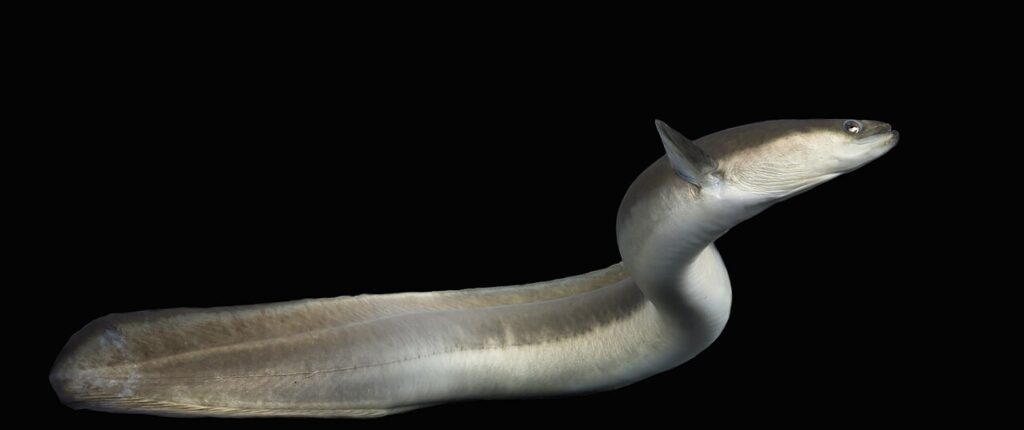
Here’s the twist that trips people up. Eel isn’t scaleless the way catfish is. Freshwater eel, the type most people actually eat, belongs to the family Anguillidae, and it carries real scales, tiny, cycloid, and buried deep in the skin. The Orthodox Union notes this directly, describing the eel as having scales “deeply embedded into the skin,” which is exactly the problem. A scale that’s the right shape but impossible to lift off without tearing the flesh underneath still fails the kaskeses test.
Most other eels, roughly 800 species across some 19 other families, have no scales at all, which fails the test the simpler way, the same way catfish does. Either way, the result for eel is identical. It’s not kosher, whether the reason is zero scales or scales you can’t halachically remove.
What the Kosher Certification Agencies Say
Is eel kosher according to every agency that certifies kosher food? No, and this isn’t a contested call. The Chicago Rabbinical Council (cRc) lists eel by name among its examples of non-kosher fish, grouped with catfish, shark, sturgeon, and shellfish. Chabad.org’s kosher fish list, reprinted with the Orthodox Union’s permission, names American eel (Anguilla rostrata), European eel (Anguilla anguilla), and conger eel by name as non-kosher. Aish.com reaches the identical conclusion through the identical reasoning: the scales are there, but they don’t qualify.
The certification system you see on kosher food doesn’t stop at fish. A kosher symbol like the OU on a package is one of the visible signs that a product has been certified, meaning a rabbi provided ongoing supervision over meat, dairy, and processed seafood alike, confirming every ingredient and piece of equipment meets the underlying rules. That system can’t rescue eel. Supervision only certifies foods that are already kosher at the species level, and eel never clears that bar to begin with.
Compare that to swordfish, where a genuine, decades-long rabbinic disagreement exists over whether its scales count. Eel doesn’t have that kind of live debate. The closest thing on record is a footnote from 1933, when a kosher fish list from the Agudat HaRabbonim briefly included eel before removing it in a 1934 reprint, reportedly over concern about confusing a kosher-sounding eel with a non-kosher one. That’s a 90-year-old editorial correction, not an open question. If you’re unsure about a specific product or preparation, a reliable certification or your own rabbi is still the right call, but the species-level ruling on eel itself is settled.
Moray Eel, Electric Eel, and Other Look-Alikes
Not everything called an “eel” is related, and not everything related to eel is non-kosher for the same reason.
Moray eel is a true eel. It sits in the same order, Anguilliformes, as freshwater and conger eels, so the same fins-and-scales ruling applies to it.
Electric eel isn’t a true eel at all, despite the name. It belongs to a completely different order, more closely related to catfish than to any real eel, and its skin has no scales whatsoever. That makes it non-kosher too, just for the simpler, catfish-style reason instead of the embedded-scale problem that applies to true eels.
Unagi, Anago, and Eel at the Sushi Counter
If you keep kosher and you’re at a sushi counter, the eel question comes up fast. Unagi, the freshwater eel used in sushi, belongs to the same family as the American and European eel that certifying agencies already rule non-kosher, so the same status applies to it. Anago, the saltwater eel used in sushi, is a conger eel, and Chabad’s non-kosher fish list names conger eel directly.
A kosher sushi restaurant that serves something called “eel” isn’t serving real eel. Kitchens that keep kosher typically substitute a kosher whitefish, often glazed to mimic the sweet, smoky flavor people expect from unagi. It’s a stand-in, the same trick that makes kosher imitation crab possible with a fish like pollock standing in for the real thing.
| Eel Type | Kosher? | Why |
|---|---|---|
| American eel (Anguilla rostrata) | ❌ No | Has embedded scales, but they can’t be removed without tearing the skin |
| European eel (Anguilla anguilla) | ❌ No | Same embedded-scale problem, named non-kosher on Chabad’s OU-licensed fish list |
| Unagi / Japanese eel (Anguilla japonica) | ❌ No | Same family, Anguillidae, as the other listed eels |
| Conger eel / anago | ❌ No | Named directly as non-kosher on Chabad’s fish list |
| Moray eel | ❌ No | A true eel (Anguilliformes), same ruling applies |
| Electric eel | ❌ No | Not a true eel, skin has no scales at all |
Check Any Fish with KosherFish
Eel isn’t alone. Shrimp, lobster, oysters, and the rest of the shellfish family are common seafood people also assume might sneak through, and they fail the same test for a simpler reason: no scales and no fins at all. Salmon and tuna, by contrast, have obvious, easily removable scales, which is exactly why they’re kosher and eel isn’t.
Kosher fish species carry another distinction worth knowing. They’re pareve, neither meat nor dairy, which is why a kosher fish can share a table with milk-based sauces without conflict. Eel never reaches that question, since it fails the species-level test first, but it’s a reminder that a kosher fish opens up meal-planning options that a non-kosher one, like eel, simply doesn’t.
Eel isn’t the only fish people second-guess at the market or the sushi counter. If you want a straight answer on a different species, the KosherFish lookup tool covers 291 fish, each with the same fins-and-scales reasoning and the same source citations behind the verdict. Search the full kosher fish list from your browser, or grab the iOS app or the Android app so you can check a fish while you’re standing at the counter.
Frequently Asked Questions
Is eel kosher under Jewish dietary law?
No. Eel fails the Torah’s kosher-fish test because its scales can’t be removed without tearing the skin, even though it technically has fins. The Orthodox Union, the Chicago Rabbinical Council, and Chabad.org’s kosher fish list all classify it as non-kosher.
Why do people think eel might be kosher?
Confusion happens because eel has fins, which is half the Torah’s test. Unlike catfish, which has no scales at all, freshwater eel actually carries tiny scales embedded in its skin. That resemblance to a real kosher scale is what causes the question, even though the halachic answer has been settled for a long time.
Does eel have scales at all?
Yes. Freshwater eel, the type most commonly eaten, has microscopic cycloid scales buried in its skin. The problem is halachic, not biological. Those scales are too deeply embedded to remove without tearing the skin, which is the standard the Torah’s fins-and-scales rule requires.
Is unagi kosher?
Unagi, the freshwater eel served in sushi, is not kosher. It belongs to the same family, Anguillidae, as the American and European eel that certifying agencies already classify as non-kosher, so the same ruling applies to it.
Is anago kosher for sushi?
No, anago is not kosher either. It’s a saltwater eel used in sushi, and it fails the same halachic test every other eel fails. None of the roughly 800 eel species meet the Torah’s standard for a valid, removable scale.
Does eel need a kosher certification if it’s already not kosher?
No hechsher can make a non-kosher fish kosher. Certification symbols like OU, cRc, and Star-K only ever apply to foods that already meet the underlying kosher standard. If you see a kosher claim on an eel product, verify it carefully, since that would contradict what every major kosher authority holds.
Do all kosher certification agencies agree that eel is not kosher?
Yes. This isn’t a contested ruling like swordfish, where authorities have historically disagreed. The OU, the cRc, and Chabad.org’s fish list, published with the OU’s permission, all treat eel’s non-kosher status as settled.
The Bottom Line
Is eel kosher? No. It has fins, but its scales, whether present in microscopic form or missing outright, don’t meet the Torah’s test for a valid, removable kaskeses. The Orthodox Union, the Chicago Rabbinical Council, and Chabad.org’s fish list all agree, and there’s no live rabbinic debate the way there is for swordfish.
If you’re checking a different fish, search the kosher fish list or look it up on the KosherFish homepage. You can read more on eel’s species profile, or check two other clear non-kosher rulings in Is Catfish Kosher? and Is Sturgeon Kosher?. For the rule behind every verdict on this site, read What Makes a Fish Kosher?, and if sushi is what brought you here, the kosher sushi guide covers what else to watch for. Download the iOS or Android app to check any fish on the go.