
Is milkfish kosher? Yes. Milkfish (Chanos chanos), the fish sold as bangus across the Philippines and as awa in Hawaii, has both fins and the small, smooth scales the Torah requires, so it clears the kosher test on its own biology. You can confirm milkfish and 290+ other species on the KosherFish lookup tool any time you’re unsure about a fish at the counter.
Why Milkfish Is Kosher
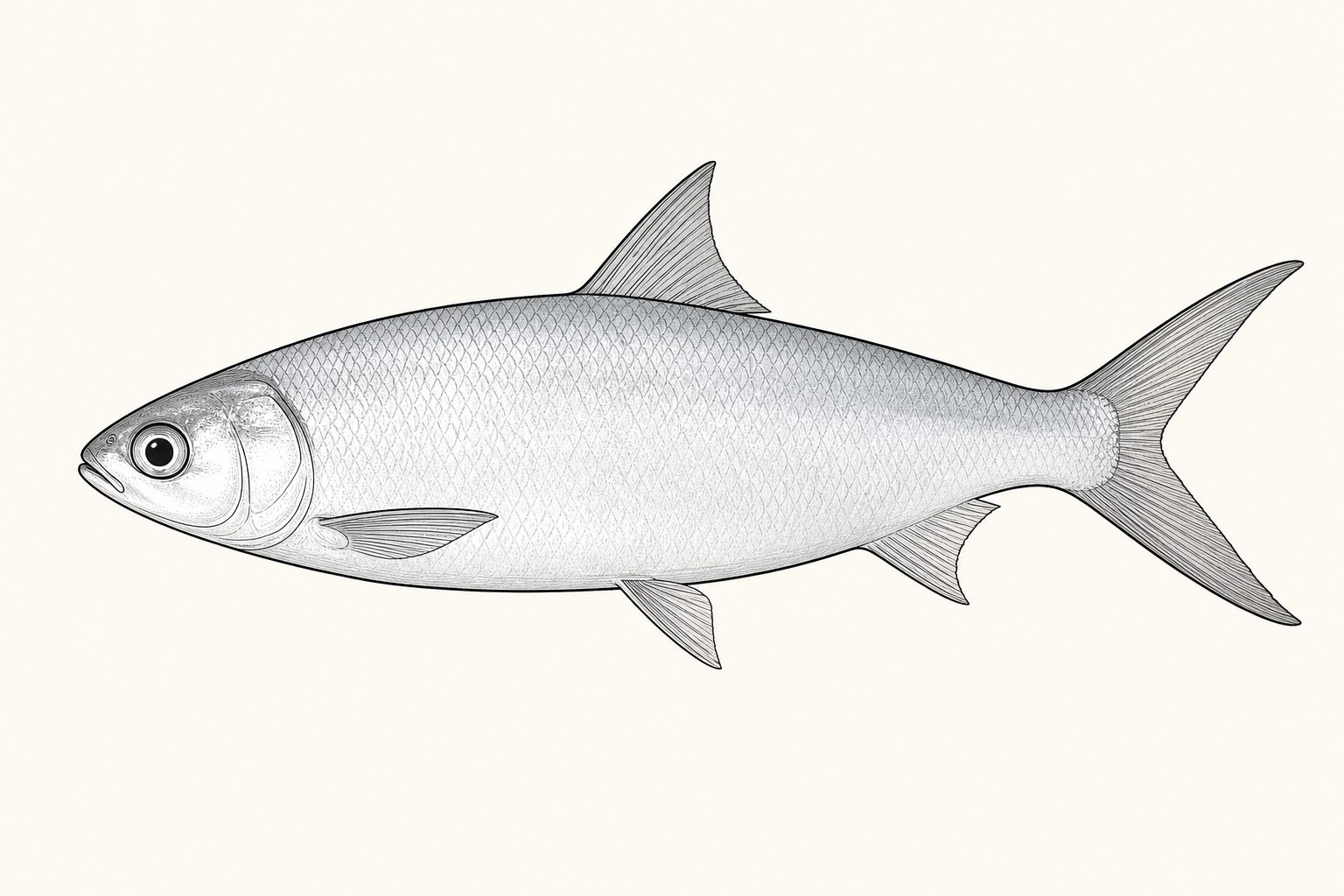
A kosher fish needs two things: fins, and scales you can peel off by hand or with the back of a knife without tearing the skin. That’s the rule the Torah sets out in Leviticus 11:9-12 and repeats in Deuteronomy 14:9-10. The UN Food and Agriculture Organization’s species profile for Chanos chanos describes “small scales, cycloid (smooth)” covering the body, plus a lateral line, a single dorsal fin at mid-body, sickle-shaped pectoral fins, and a large, deeply forked tail. Cycloid scales are exactly the kind that lift off cleanly, the same category found on salmon, tilapia, and herring. Milkfish is the only living member of its family, Chanidae, so there’s no closely related species to confuse it with taxonomically. Fins plus removable scales is the whole test, and milkfish passes both parts cleanly.
Milkfish sits alongside plenty of ordinary fish that clear the same fins-and-scales test under Jewish dietary law: bass, cod, halibut, herring, sardines, snapper, sole, trout, pike, pollock, mackerel, perch, bream, flounder, and turbot all carry the same kind of removable scales. Eel, lobster, shrimp, and oysters fail the test for different reasons. Eel has no scales at all, and lobster, shrimp, and oysters are shellfish with no fins or scales, so all of them sit on the non-kosher side of the list, the same side as sturgeon and catfish.
What the Kosher Authorities Say
An Orthodox Union-authored kosher fish list, reprinted with permission on Chabad.org, names “Milkfish or awa (Chanos chanos)” plainly among the kosher species, with no flag next to it the way the same page marks sturgeon “(non kosher).” Worth saying plainly: that list is an older OU document, and the OU’s current live pages don’t maintain a searchable consumer fish list at all, because the organization has said common names are an unreliable way to identify a species. So treat the Chabad reprint as OU-authored guidance, not a live, current OU ruling you can look up today.
Star-K gives the clearest current, named confirmation. Its Anisakis Fish Policy, the document that lists which species need a worm inspection before use, names “Bangus (Milkfish)” among the fish that may be used without any inspection at all, the same list that includes salmon and barramundi. An agency doesn’t put a species on a no-inspection-needed list unless it already treats that species as a kosher fish, so this stands as solid, current backing from a major certification agency. The Chicago Rabbinical Council’s own fish-purchasing policy doesn’t name milkfish or bangus specifically, in either its kosher or non-kosher examples, so cRc’s page simply doesn’t address it by name. That’s an omission, not a red flag. No published position from OK Kosher or Kof-K on milkfish turned up either. There’s no genuine dispute here, just a species that a few reference lists haven’t gotten around to naming individually.
Bangus, Awa, and Other Names
Milkfish carries more regional names than most fish on this list. It’s bangus (sometimes spelled bangos) throughout the Philippines, where it’s the national fish and a fixture of everyday cooking, and awa in Hawaii, where it’s long been part of traditional fishpond aquaculture. You may also see chanos, its genus name, on an import label. No reputable source turned up a specific non-kosher fish sold under the bangus or awa name to watch out for, and that gap is worth being honest about rather than papering over: it means the concern hasn’t been documented, not that it’s been ruled out. If you’re buying a whole fish and can see its fins and scales, you can verify the species yourself. Once it’s filleted or deboned, you’re relying on the label and the seller.
| Fish or product | Kosher? | Why |
|---|---|---|
| Milkfish / bangus, whole and fresh | ✅ Yes | Fins and small cycloid scales visible and verifiable (FAO species data, Star-K’s Anisakis list) |
| Canned, smoked, or deboned bangus | ✉️ Check | The raw fish is kosher, but processing removes the visible scales, so cRc requires a hechsher on the finished product |
| Sturgeon | ❌ No | Ganoid scales are embedded in the skin and don’t lift off, failing the removable-scale test |
| Catfish | ❌ No | No scales at all |
Do You Need a Hechsher for Milkfish?
A whole, fresh milkfish with its fins and scales intact doesn’t need a hechsher. You or the fishmonger can see both features and confirm the species yourselves, which is the entire point of the fins-and-scales rule. That changes once the fish is processed. The cRc states it directly on its fish-purchasing guidance: “Fish which is cooked, smoked, or otherwise processed requires proper kosher certification.” Bangus is very bony, so deboned and canned bangus are common in Filipino markets, and both count as processed. Buy those with a hechsher you trust, the same rule that applies to canned tuna or smoked salmon, not because the species itself is in question, but because you can no longer verify it, or the equipment that touched it, by looking. So is milkfish kosher in every form you’ll find it at the store? The species passes on its own biology every time. Whether a specific package does depends on whether it was processed, and if so, whether it carries a hechsher.
Buying and Cooking Milkfish
Milkfish is central to Filipino cooking, popular enough that it’s often called the country’s national fish, and it shows up grilled, smoked, or cured raw with vinegar and citrus. Its one real drawback is bones. Milkfish carries far more of them than most food fish, which is why deboned bangus, sold whole with the bone structure removed but the shape intact, is such a common product at Filipino markets. Kosher fish is pareve, meaning it’s neither meat nor dairy, though many kosher-observant households keep a custom of not eating fish and meat off the same plate. That makes a whole grilled milkfish an easy fit for a Shabbat table alongside a dairy spread, once you’ve confirmed a whole fish by its scales or a processed one by its hechsher.
Check Any Fish with KosherFish
An unfamiliar name like bangus or awa is exactly the kind of case where a quick check beats a guess. Milkfish is one of 291 species on the kosher fish list, so if a fish counter or menu uses a name you don’t recognize, search it on the homepage lookup tool instead of assuming. The iOS and Android apps carry the same lookup in your pocket, so you can check a fish before you buy it, not after.
Frequently Asked Questions
Is milkfish kosher?
Yes. Milkfish (Chanos chanos) has fins and small, smooth cycloid scales that lift off cleanly, meeting the Torah’s test in Leviticus 11:9-12. An OU-authored fish list reprinted on Chabad.org names it kosher, and Star-K’s current Anisakis policy lists bangus, milkfish’s Filipino market name, among approved species.
What is bangus?
Bangus is the Filipino name for milkfish, and it’s widely considered the national fish of the Philippines. It’s the same species as awa in Hawaii and Chanos chanos in scientific naming, just a regional market name rather than a different fish.
Does canned or smoked bangus need a hechsher?
Yes. The raw fish is kosher, but the cRc’s published guidance requires proper kosher certification on any fish that’s cooked, smoked, or otherwise processed, since you can no longer see the scales to confirm the species and can’t verify the equipment used. Whole, fresh milkfish with its scales visible doesn’t need one.
Why is deboned bangus so common?
Milkfish carries an unusually high number of small bones for a food fish. Deboning it into a whole, bone-free product is standard practice in Filipino markets, which makes deboned bangus one of the more common processed forms you’ll find, and one that needs a hechsher the same as any processed fish.
Is milkfish pareve?
Yes. Kosher fish, milkfish included, counts as pareve, neither meat nor dairy. Many kosher-observant households still keep a custom against eating fish and meat from the same plate, so check your own household’s practice before planning a menu around it.
Can I serve milkfish for Shabbat or a holiday meal?
Yes. Once you’ve confirmed a whole fish by its scales, or a processed one by its hechsher, grilled or smoked milkfish works for Shabbat or a holiday table the same way any other kosher whitefish would. It’s a mainstay of Filipino home cooking for a reason: firm flesh that holds up well to grilling and simple seasoning.
Are there non-kosher fish sold under the bangus or awa name?
No documented case turned up in kosher or ichthyology sources, but that’s an open gap in the record rather than a guarantee. If you’re buying a whole fish, check for fins and scales yourself. If it’s filleted, canned, or otherwise processed, rely on a hechsher rather than the label alone.
The Bottom Line
Is milkfish kosher? Sold as bangus in the Philippines and awa in Hawaii, yes. It has fins and the small, removable cycloid scales the Torah requires, an OU-authored list names it directly, and Star-K’s current policy backs it up. The one thing to watch for is processing. Canned, smoked, or deboned bangus needs a hechsher, the same as any processed fish, even though the whole raw species clears the test on its own. Check milkfish, or any fish you’re unsure about, on the kosher fish list, the lookup tool, or the iOS and Android apps. For more on when a fish needs certification, see Does Fish Need a Hechsher?, and for more affordable everyday options, see the most common kosher fish and how to buy kosher fish.