Rosh Hashanah kosher foods follow the exact same laws as any other day on the Jewish calendar. Leviticus 11 and Deuteronomy 14 don’t add new rules for the Jewish New Year. What changes is custom, not law: an apple slice dipped in honey, a round challah, and often a whole fish (its head included) show up on the table because of centuries of tradition, not because the holiday relaxes or tightens what’s kosher. If you’re planning a Rosh Hashanah meal and want to check a specific fish before you buy it, you can look it up on KosherFish in a few seconds.
Rosh Hashanah Doesn’t Change the Kosher Rules
Every ingredient on a Rosh Hashanah table has to meet the same standard it would meet on a Tuesday in March. Meat needs to come from a kosher species and be slaughtered and processed correctly. Fish needs fins and scales that can be removed without tearing the skin, the test set out in Leviticus 11:9-12 and Deuteronomy 14:9-10. Dairy and meat still don’t mix. A processed food still needs a reliable hechsher if its kosher status can’t be verified by looking at it. Rosh Hashanah adds meaning to the meal, not new dietary law.
One real legal difference does apply: Rosh Hashanah is a Yom Tov, a festival day, not Shabbat, so cooking is treated differently. Jewish law permits certain melacha (categories of work) for the sake of preparing food for the holiday itself, a principle called ochel nefesh, which Shabbat doesn’t allow at all. That means you can light a stove from an existing flame and cook a hot meal on Rosh Hashanah in a way you couldn’t on Shabbat, though plenty of restrictions still apply (you can’t cook for the day after, for instance). The Orthodox Union’s guide to Hilchos Yom Tov lays out the details. If you’re not sure what’s permitted in your kitchen, ask your rabbi before the holiday starts.
The Simanim: Why Jews Eat Symbolic Foods on Rosh Hashanah
The custom of eating symbolic foods, called simanim, goes back to the Talmud. In Tractate Kritot 6a, Abaye teaches that since omens matter, a person should make a habit of eating gourd, fenugreek, leek, beet, and dates at the start of the year. Each food’s Aramaic name plays on a Hebrew word: kra (gourd) echoes “tear up” (bad decrees), rubia (fenugreek or black-eyed peas) echoes “increase,” karti (leek) echoes “cut off” (enemies), silka (beet or spinach) echoes “removed,” and tamrei (dates) echoes “finished” (in the sense of enemies being finished, not us). None of this is about the food being more or less kosher. It’s a custom of hopeful wordplay, and centuries of communities have added their own version of it.
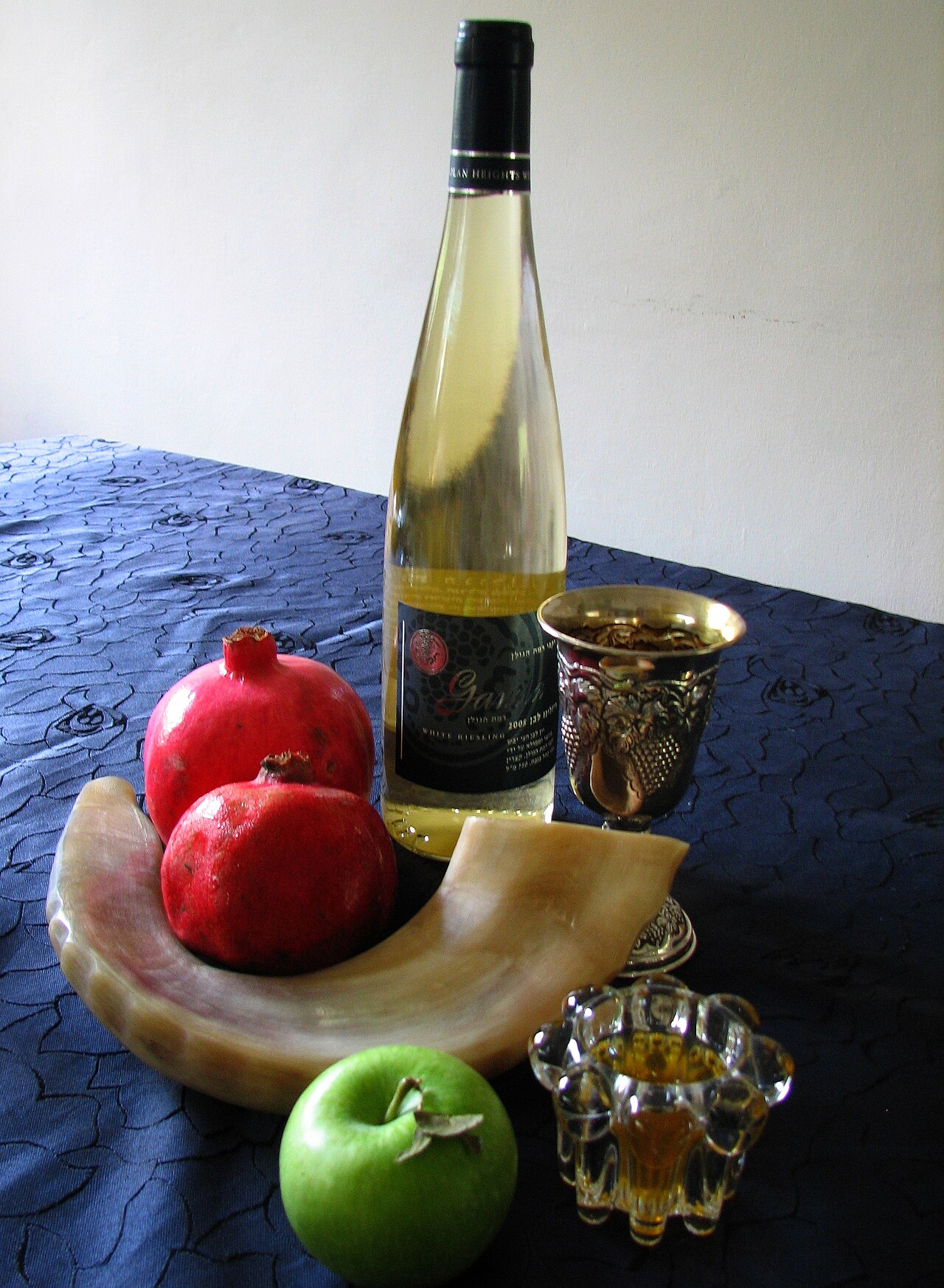
Apples dipped in honey are the best-known addition, a small blessing for a sweet year that isn’t in the Talmud’s original list but is documented in medieval sources and is close to universal today. A round challah, instead of the usual braid, is a traditional touch. A circle has no beginning or end, a picture of a year that keeps turning, and some tie the shape to a crown for God’s kingship on the day tradition holds the world was created. Pomegranates show up because a pomegranate is traditionally said to hold many seeds, read as a hope for many merits in the coming year. The OU’s roundup of Rosh Hashanah customs covers these and more. Two traditional practices show up in many homes: skipping nuts, because the Hebrew word for nut (egoz) has the same gematria as the word for sin, and skipping sour or bitter foods in favor of sweet ones, a custom traced back to the Geonim of Babylonia.
The Head of the Fish: “May We Be the Head and Not the Tail”
Serving a whole fish, often with the head left on, is a widespread Rosh Hashanah custom tied to Deuteronomy 28:13, where the Torah’s blessing says God will place you “at the head and not the tail” for keeping the commandments. Some families use a ram’s head instead, which also recalls the ram offered in place of Isaac at the binding (the akeidah), a story tied to Rosh Hashanah’s Torah and shofar readings. Either way, the custom is old. Sources trace it to Rav Netronai Gaon and it’s recorded by the Maharil (Rabbi Jacob Moelin), with the fish-head version documented later in the Chayei Adam. While eating it, the custom is to say, “Let it be Your will that we be the head and not the tail,” a wish to lead rather than follow in the year ahead.
Any kosher fish works for this custom. Salmon, tilapia, and carp (the traditional base for gefilte fish in many Ashkenazi homes) are common choices because they’re widely available and easy to source with a clear hechsher when needed. What matters halachically isn’t the species you pick, it’s that the fish itself is kosher, fins and removable scales, confirmed by a recognized authority. When you’re not sure about a fish you’re considering for the table, check it against the full kosher fish list before you buy.
Which Rosh Hashanah Kosher Foods Need Certification?
Some do, and it comes down to the same rule that applies year-round: the less you can verify by looking, the more a hechsher matters. A whole fresh fish with its skin and scales intact doesn’t need certification, you can see the fins and scales yourself. Honey is a single-ingredient product from a kosher source (bees) and is generally not an issue, though a flavored or processed honey blend can be. Kiddush wine and grape juice need a hechsher too, since wine has specific kosher-production requirements tied to who handles it. Packaged gefilte fish, honey cakes, and other processed holiday foods need a reliable hechsher too, since you can’t verify the ingredients or the equipment once the fish is ground or the batter is baked. When in doubt, look for a certification from the Orthodox Union, the cRc, Star-K, OK Kosher, or Kof-K, or ask your rabbi about a specific product.
| Food | Custom or Law? | What to Know |
|---|---|---|
| Apples and honey | Custom | A wish for a sweet year. Plain honey rarely needs certification, flavored blends might. |
| Round challah | Custom | Same kashrut as any bread. Check the bakery’s hechsher if it’s not homemade. |
| Whole fish or fish head | Custom | The species must still be kosher (fins and removable scales). ⚠️ Check the species before you buy. |
| Pomegranate | Custom | No certification needed for the whole fruit. |
| Wine or grape juice | Law (kiddush requirement) | ✅ Needs a hechsher. Kosher wine production has specific handling rules. |
| Nuts | Custom (many skip them) | Not a kashrut issue, an Ashkenazi custom tied to wordplay and shofar-hearing concerns. |
Check Any Fish with KosherFish
Rosh Hashanah kosher foods usually come down to one honest question at the fish counter: is this actually the species it’s labeled as? A whole fish or a fish head on your table this year is worth double-checking before you buy, especially since fish counters don’t always label things precisely and one name can cover several different fish. You can look up any species on the KosherFish list, which covers 291 species with the fins-and-scales reasoning and the authority behind each verdict, or search it straight from the homepage tool. The iOS app and the Android app put the same lookup in your pocket at the fish counter, so you can check a species right there instead of guessing.
Frequently Asked Questions
Do Rosh Hashanah meals follow special kosher rules?
No. Rosh Hashanah food follows the same kashrut laws that apply every day of the year, fins-and-scales for fish, kosher slaughter for meat, no mixing meat and dairy, and a hechsher for processed foods you can’t verify by sight. The holiday adds symbolic customs, like apples and honey or a round challah, but none of them change what counts as kosher.
What are simanim?
Simanim are the symbolic foods eaten on Rosh Hashanah for a good omen in the year ahead, a custom sourced to the Talmud in Kritot 6a. The original list is gourd, fenugreek, leek, beet, and dates, each chosen for a Hebrew or Aramaic wordplay on hopes like increase or the removal of bad decrees. Communities have since added apples and honey, pomegranates, and other foods to the tradition.
Why do some people eat a fish head on Rosh Hashanah?
Eating a fish head (or a ram’s head) comes from Deuteronomy 28:13, where the Torah describes being “the head and not the tail” as a blessing. Sources trace the custom to Rav Netronai Gaon, and it’s recorded by the Maharil, with a fish-head version noted later in the Chayei Adam. Any kosher species works for this custom, all 291 on the KosherFish list qualify.
Can you cook on Rosh Hashanah?
Yes, within limits. Rosh Hashanah is a Yom Tov, and Jewish law allows cooking for the holiday meal itself under the principle of ochel nefesh, a leniency Shabbat doesn’t have. You can transfer an existing flame to cook, for example, but you can’t create a new fire, and you can’t cook on the first day for the second day. The OU’s Hilchos Yom Tov guide covers the specifics, and it’s worth checking with your rabbi if you’re unsure.
Do you need a hechsher for Rosh Hashanah food?
It depends on the food. A whole fresh fish or fruit you can visually inspect generally doesn’t need one. Kiddush wine does, since kosher wine production carries specific handling rules. Packaged or processed items, like a boxed honey cake mix or jarred gefilte fish, need a reliable certification from an agency like the OU, cRc, Star-K, OK, or Kof-K, since you can’t verify the ingredients or equipment once the food is processed.
Why do some Jews avoid nuts on Rosh Hashanah?
Skipping nuts on Rosh Hashanah is a custom, not a kosher law. The Hebrew word for nut, egoz, adds up to the same gematria value as the word for sin, so many Ashkenazi communities avoid nuts as a good omen. There’s also a practical reason cited alongside it: nut particles can trigger coughing, which risks interrupting the shofar blowing, a central mitzvah of the day.
Is honey kosher?
Yes, honey from bees is kosher, and it’s the one major exception to the rule that a product from a non-kosher creature isn’t kosher, since halacha treats bee honey as a plant product the bees process rather than a bodily secretion. Plain honey generally needs no certification. See our full is honey kosher guide for the sourcing and the rare exceptions.
The Bottom Line
Rosh Hashanah kosher foods don’t loosen or tighten the law, they add meaning to a meal that already has to meet the same standard as any other day. The simanim, the round challah, and the fish head are all custom (minhag), sourced to the Talmud and centuries of later tradition, not new halacha. The one real legal wrinkle is that Yom Tov permits some cooking Shabbat doesn’t. Serving a whole fish or a fish head this year? Confirm the species on the full kosher fish list, look up an individual fish on the KosherFish homepage, or check one at the store with the iOS or Android app. For more on the holidays, see our guides to kosher fish for Jewish holidays, kosher for Shabbat, and why gefilte fish is kosher. Ask your own rabbi or a reliable certification agency about anything on your table you’re genuinely unsure of.