Is amberjack kosher? Yes. Amberjack has fins and small scales that you can scrape off without tearing the skin, which meets the test in Leviticus 11:9-12. The Orthodox Union’s kosher fish list, which Chabad.org reprints with permission, includes amberjack under the jack family. The ruling is easy. The menu name is where people slip. Below you’ll find the reasoning, the yellowtail mix-up, and a lookup tool for any other fish.
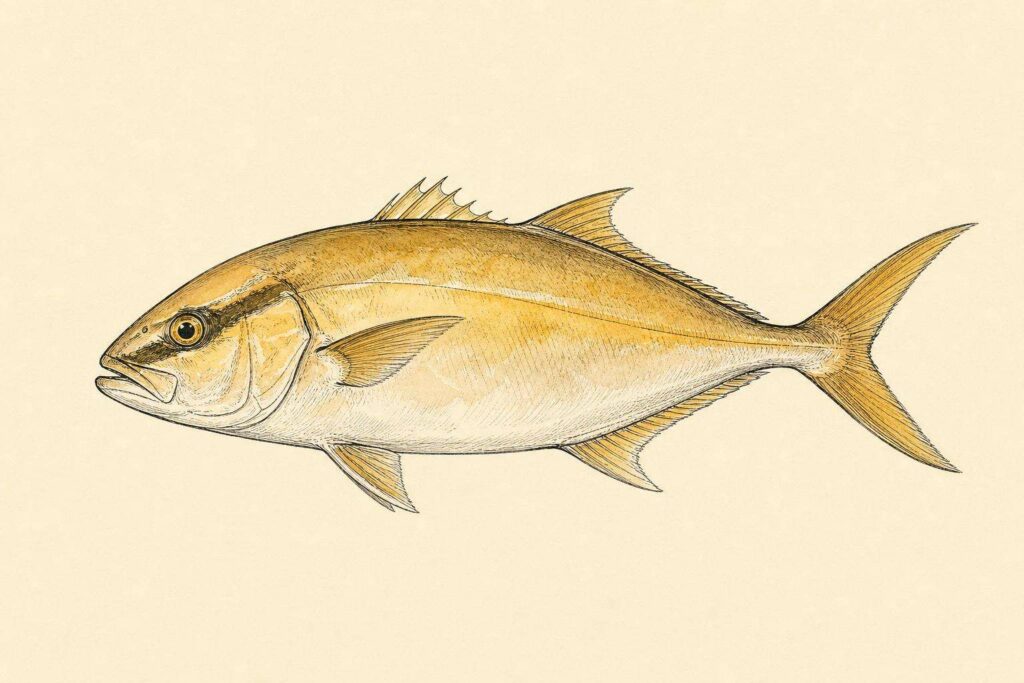
Why Amberjack Is Kosher
The Torah gives one test for fish, twice. Leviticus 11:9-12 and Deuteronomy 14:9-10 both require fins and scales, and kosher authorities read “scales” as the kind you can remove without tearing the skin. Amberjack passes on both counts. Look at any whole fish and you can see each fin.
Greater amberjack (Seriola dumerili) is a jack, a cousin of the pompano in the family Carangidae. Small cycloid scales cover its body, and you can remove them with a scaler or the back of a knife. Sturgeon is a different story. A sturgeon has ganoid plates embedded in the skin, and a shark carries placoid denticles that feel like sandpaper. You can’t scrape either kind off cleanly, so both fish fail the test that amberjack passes.
No major agency disputes amberjack. Swordfish is the famous contested case, with a documented machloket among poskim. Nobody has recorded a dispute over amberjack.
Where Amberjack Fits Among Kosher Fish
The OU list counts the jacks as kosher, from pompano and permit to blue runner and rainbow runner. The OU carves out one exception by name, the leatherjacket (Oligoplites saurus). That means “jack” on a label isn’t a free pass, but amberjack sits squarely inside the family entry.
You’ll find plenty of other saltwater fish on the same list. Snapper, mackerel, the porgy family, striped bass and other temperate bass, and drum family fish like croaker all pass. Flounder and sole pass too, even though they lie flat on the sea floor with both eyes on one side.
Freshwater fish follow the identical rule. Carp, the traditional base of gefilte fish, is kosher. So are trout and salmon, which share a family on the list. Cod and herring round out the everyday names.
On the other side of the line you’ll find sturgeon, shark, catfish, and every kind of shellfish. Fins plus scales that lift off cleanly is the whole test, and amberjack shows the rule working exactly as written.
What the Kosher Authorities Say
The Orthodox Union published the species list that Chabad.org now reprints with permission. Its jack family entry names “amberjacks and yellowtails (Seriola species)” as kosher. We give the same verdict on our own amberjack species page.
Biology explains why the ruling makes sense, but a recognized agency or posek issues the ruling. The copy of the list on kashrut.com opens with a warning in capital letters: it isn’t a list of OU-certified fish. Before you count a particular fillet as kosher, see the skin yourself or buy under a hechsher.
Amberjack’s Other Names, and the Sushi Mix-Up
Anglers call greater amberjack the reef donkey for the stubborn fight it puts up on the line. Menus use yellowtail and hamachi for close cousins in the same genus. Hamachi is Japanese amberjack, Seriola quinqueradiata. California yellowtail is Seriola dorsalis.
Greater amberjacks grow large. The biggest fish on record measured 190 cm (75 inches), and the heaviest published weight is 80.6 kg (178 pounds), though most run closer to 100 cm (39 inches). Adults live around reefs, deep offshore caves, drop-offs, and rocky outcrops, in waters that include the Gulf of Mexico and the Caribbean Sea. Size and habitat don’t matter for kashrut. A small lesser amberjack (Seriola fasciata) and a trophy-size greater amberjack fall under the same OU entry for jacks, because the list covers every Seriola species.
For kashrut, a swapped name changes nothing. The OU list covers every Seriola species, so amberjack, hamachi, and yellowtail all pass. Sashimi is the catch. Once a chef slices away the skin, you can’t see the scales, and you can’t confirm the species yourself. Any “kosher sushi” claim needs real supervision in the kitchen, not a reassuring name on the menu.
Does Amberjack Need Kosher Certification?
That depends on the form you buy. Buy a whole fresh amberjack with skin and scales attached and you need no hechsher, because you can see the fins and scales yourself. Skin-on fillets work the same way when some scale patches remain and you trust the seller’s species label.
- Whole fish or skin-on fillets: you can check the scales yourself, so you don’t need certification
- Smoked or canned amberjack: buy it with a hechsher, because the processor removes the skin you’d check and may run shared equipment
- Sashimi, poke, or restaurant dishes: look for supervision, since the scales are gone and cooks can pick up non-kosher ingredients from shared knives, boards, and sauces
Here’s amberjack next to its most common look-alikes and mix-ups.
| Fish | Kosher? | Why |
|---|---|---|
| Amberjack (Seriola dumerili) | ✅ Yes | Fins and removable cycloid scales, on the OU kosher fish list |
| Yellowtail / Hamachi (Seriola spp.) | ✅ Yes | Same jack family, same removable scale type |
| Mahi-Mahi | ✅ Yes | Fins and visible scales, on the OU list under Coryphaena |
| Leatherjacket (Oligoplites saurus) | ❌ No | The OU list excludes it from the jack family by name |
| Sturgeon | ❌ No | Ganoid scales sit embedded, and you can’t remove them without tearing the skin |
| Imitation crab | ⚠️ Check | Makers usually start with pollock, but you need a hechsher to confirm the other ingredients |
Buying and Preparing Amberjack
Buy whole fish or skin-on cuts when you can, so you check the scales yourself instead of trusting a label. Cooks like amberjack on the grill or in a hot pan, because the flesh is firm and meaty.
One buying note has nothing to do with kashrut. The FDA lists amberjack with grouper, snapper, and barracuda among reef fish that can carry ciguatera toxin, and the agency has told seafood processors who buy those fish to take steps that lower the risk. Buy from a seller you trust. None of that changes the kosher verdict.
Amberjack for Sushi and Kosher Meals
Amberjack is pareve, neither meat nor dairy, so you can serve it at a dairy meal under the basic rules. Many communities keep a custom against eating fish and meat together on one plate or with the same utensils. If you’re serving amberjack at a meat meal, plan the menu with that custom in mind.
Sushi adds a second question. Every kosher sushi meal needs a supervised kitchen, because a cook can pick up non-kosher ingredients from rice vinegar, soy sauce, or a shared cutting board even when every fish on the platter passes. We explain what to look for in our kosher sushi guide.
Check Any Fish with KosherFish
You’ll meet a new name at the next fish counter or sushi menu. Look up amberjack and 290+ other species on the KosherFish homepage, or scan the full kosher fish list before you buy. You can run the same lookup from your phone, at the market or the restaurant table, with the KosherFish app for iOS and Android.
Frequently Asked Questions
Is amberjack kosher?
Yes. Amberjack has fins and small cycloid scales that come off without tearing the skin, which is what Leviticus 11:9-12 requires. The Orthodox Union’s kosher fish list, which Chabad.org reprints with permission, includes amberjacks and yellowtails under the jack family. No major kosher agency disputes the species, so you only need to confirm that the fish in front of you really is amberjack.
Is amberjack the same fish as yellowtail or hamachi?
Not exactly, but they’re close cousins in the same genus. Greater amberjack is Seriola dumerili, hamachi is Japanese amberjack (Seriola quinqueradiata), and California yellowtail is Seriola dorsalis. The OU’s kosher fish list covers every Seriola species, so all three pass. A mixed-up name on a menu won’t change the kosher answer, though you still can’t trust that label to tell you the species.
Does amberjack sushi need kosher certification?
Yes, if you want to be sure the sushi is kosher. Once a chef slices amberjack for sashimi or sushi, the scales are gone, and you can’t verify the species by sight. Cooks in an unsupervised kitchen can also add non-kosher ingredients through shared cutting boards, soy sauce, or rice vinegar. Look for a restaurant under a recognized hechsher, not just a fish with a kosher-sounding name.
What kind of scales does amberjack have?
Amberjack has small cycloid scales spread across its body. They lie flat, and you can lift them off with a scaler without damaging the skin underneath. That’s the removable kind of scale Jewish law requires. Amberjack therefore sits in a different category from sturgeon, whose ganoid scales sit embedded in the skin and won’t come off cleanly.
Is amberjack safe to eat?
Generally, yes. Amberjack is a common food fish, but the FDA lists it with grouper, snapper, and barracuda among reef fish that can carry ciguatera toxin. The agency has told seafood processors who buy those fish to take steps that lower the risk. Buy from a seller you trust. Ciguatera is a food-safety question, and it has no bearing on kosher status.
Is amberjack pareve?
Yes. Like every kosher fish, amberjack is pareve, neither meat nor dairy, so you can serve it with a dairy meal under the basic kosher rules. Many communities keep a custom against eating fish and meat on the same plate. Ask about your own family or community practice before you plan a meat meal around amberjack.
The Bottom Line
Is amberjack kosher? Yes, and the case is simple: fins, removable scales, and a place on the OU’s kosher fish list. Watch the label more than the fish. You’ll see amberjack’s cousins sold as “yellowtail” or “hamachi,” and once a chef cuts the fish for sushi, you can’t check the scales, so certification matters more than the name. Ask your own rabbi or a reliable hechsher about any doubtful case.
Check amberjack or any of the other 290+ species on the full kosher fish list, visit the amberjack species page, or use the homepage lookup tool for your next question. We explain the rule behind every verdict in what makes a fish kosher, and you can browse the most common kosher fish too. To keep the answer with you at the store, download the KosherFish app on iOS or Android.