Pollock is kosher. It’s a true bony fish with fins and small, easily removable scales, exactly what Leviticus 11:9-12 requires, and it belongs to the same family as cod and haddock, both kosher staples. You can look up pollock and 290+ other species in seconds on the KosherFish homepage. The confusion around pollock is rarely about the ruling. It’s about what pollock actually is once it turns up as a fish stick, a fast-food sandwich, or the imitation crab in a sushi roll.
Why Pollock Is Kosher: The Fins and Scales Rule
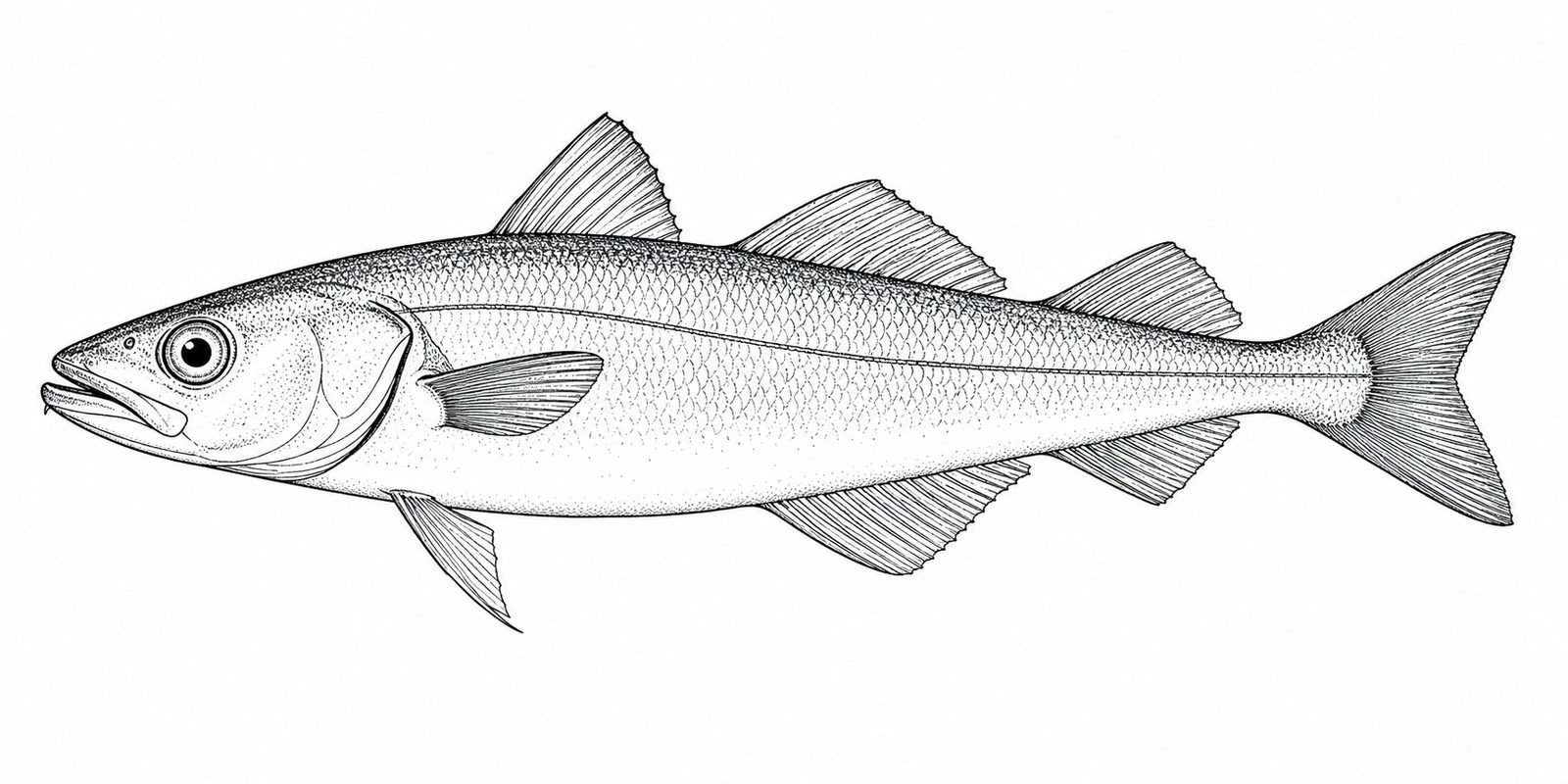
A fish only counts as kosher if it has fins and scales of the kind that lift off without tearing the skin underneath. That’s the entire test, set out in Leviticus 11:9-12 and repeated in Deuteronomy 14:9-10, and nothing about a fish’s size, color, or where it swims changes the outcome. Pollock, scientific name Gadus chalcogrammus for the Alaska pollock that dominates the market, carries small cycloid scales that sit flat against the body and come off cleanly with a scaler or the dull edge of a knife.
That’s the valid, removable kind of scale Jewish law recognizes. It’s nothing like the embedded ganoid plates on a sturgeon or the sandpaper-rough placoid denticles on a shark, both of which fail the test no matter how you try to remove them. Pollock sits in the Gadidae family, the same family as cod and haddock, and every member of that family shares the identical fins-and-scales profile. There’s no documented dispute among the major kosher authorities on pollock the way there is on swordfish. Ask is pollock kosher and you get the same clean yes every member of the cod family gets. Fins, removable scales, case closed.
What the Kosher Authorities Say About Pollock
Chabad.org’s Kosher Fish List, a widely used reference for keeping-kosher households, includes pollock among the species that pass the fins-and-scales test. The Orthodox Union backs that up from the commercial side. Walk down the frozen aisle of a kosher supermarket and you’ll find OU-certified pollock fillets, fish sticks, and breaded portions from major kosher-market suppliers, real evidence that the certifying agencies treat the base species as settled.
KosherFish.co’s own pollock species page, built on NOAA-sourced biology, agrees with that ruling. None of this replaces your own hechsher’s judgment on a specific packaged product. Is pollock kosher on the species question alone? Settled, the same way cod and haddock are settled.
Alaska Pollock, Market Names, and the “Scrod” Mix-Up
Most of the pollock sold in the United States is Alaska pollock, caught mainly in the Bering Sea in one of the largest fisheries on earth. A separate, smaller species from the North Atlantic, Pollachius pollachius, goes by a similar common name in parts of Europe, sometimes spelled with an “a” instead of an “o.” Both are members of the cod family, and both pass the identical fins-and-scales test, so the species split doesn’t change the kosher answer either way.
Where it gets genuinely confusing is at the fish counter. New England restaurants have long sold “scrod” as a catch-all name for young whitefish, traditionally cod or haddock but sometimes pollock depending on what came off the boat that day. Fish and chips shops substitute pollock for cod constantly, since the flavor and texture are close enough that most diners can’t tell. None of that swapping matters for the kosher status. Cod, haddock, and pollock are all Gadidae, all kosher, and the label mix-up is a menu-accuracy issue, not a kashrut one.
Where Pollock Fits Among Kosher Fish
Pollock isn’t an outlier on the kosher list, it’s the rule. Tuna, salmon, halibut, herring, sardines, trout, tilapia, bass, snapper, perch, and pike are all widely considered kosher for the same reason pollock is, real fins and scales that can be removed without tearing the skin underneath. Jewish dietary law doesn’t care whether the animal swims in the Atlantic, the Bering Sea, or a freshwater lake. It only asks one question about fins and scales, and every one of those common fish gives the same yes-shaped answer pollock does.
Shellfish never get that pass. Shrimp and lobster have no fins and no scales at all, so they’re non-kosher no matter how they’re cooked or served, a completely different category of animal from a whitefish like pollock. That’s also why the fins-and-scales rule catches out a fish like catfish, which has no scales despite clearly having fins.
| Fish or Product | Kosher? | Why |
|---|---|---|
| Alaska Pollock (Gadus chalcogrammus) | ✅ Yes | Fins and removable cycloid scales, Gadidae family, on Chabad.org’s Kosher Fish List |
| Cod and Haddock | ✅ Yes | Same Gadidae family, identical scale type |
| Surimi (pollock-based seafood) | ✅ Yes, when certified | Base fish is kosher, but processing needs a hechsher to confirm ingredients and equipment |
| Catfish | ❌ No | Has no scales at all |
| Sturgeon | ❌ No | Ganoid scales are embedded and cannot be removed without tearing the skin |
| Eel | ❌ No | Lacks the kind of scale Jewish law recognizes |
Does Pollock Need a Kosher Certification?
Is pollock kosher without any certification at all? For the whole fresh fish, skin and scales attached, yes, you can see the fins and the scales yourself, and that visual check is enough under Jewish law. The moment pollock gets processed, the answer changes.
Pollock is the workhorse behind a huge share of processed seafood. It’s the base fish in most surimi, the processed whitefish paste behind imitation crab, and it fills most of the fish sticks, breaded fillets, and fast-food fish sandwiches sold in the United States, including McDonald’s Filet-O-Fish. The species itself passes the kosher test every time. The finished product doesn’t automatically inherit that status. McDonald’s Filet-O-Fish, for example, is not kosher, not because pollock is the wrong fish, but because it’s fried in shared equipment without any kosher supervision. The lesson holds for any processed pollock product: check for a real hechsher, don’t assume the fish being kosher means the box is too.
If you want the fish itself with none of the processing questions, buy pollock whole or as a skin-on fillet and check the scales yourself. For fish sticks, surimi, or a fast-food sandwich, look for an OU, OK, Star-K, or other recognized symbol on the package instead of guessing from the ingredient list.
Buying and Cooking Kosher Pollock
Pollock is mild, flaky, and inexpensive, which is exactly why it shows up in so many processed products in the first place. Buy it fresh or frozen as a skin-on fillet when you want to confirm the species yourself, or reach for an OU-certified frozen or breaded option when convenience matters more.
In the kitchen, pollock takes well to baking, pan-searing, and frying, and it holds together better than a delicate fish like flounder. It’s a solid stand-in anywhere a recipe calls for cod or haddock, including a Friday night fish fry or a quick Shabbat side dish. Because it’s pareve, like all kosher fish, it sits comfortably next to dairy sides at a dairy meal, though many households still keep the custom of not serving fish and meat on the same plate.
Check Any Fish with KosherFish
Pollock settles cleanly, but the next unfamiliar name on a fish stick box or a sushi menu will raise the same question again. Look up pollock and 290+ other species on the KosherFish homepage, or scan the full kosher fish list before you buy. Download the KosherFish app for the same lookup from your phone, at the market or the drive-through line, on iOS and Android.
Frequently Asked Questions
Is pollock kosher?
Yes. Pollock has fins and small cycloid scales that lift off cleanly without tearing the skin, which is what Leviticus 11:9-12 requires. Chabad.org’s Kosher Fish List includes pollock, and the Orthodox Union certifies numerous pollock products, from fish sticks to breaded fillets, sold in kosher supermarkets.
Is Alaska pollock the same as regular pollock?
Alaska pollock is the species behind almost all pollock sold in the United States, caught mainly in the Bering Sea. A separate North Atlantic species, Pollachius pollachius, goes by a similar name in parts of Europe. Both belong to the cod family and pass the same fins-and-scales test, so both are kosher.
Does pollock need a hechsher?
Whole fresh pollock with skin and scales attached doesn’t need one, since you can check the fins and scales yourself. Processed pollock, like fish sticks, breaded fillets, or surimi, does need a hechsher, because processing removes the visible scales and can introduce non-kosher ingredients or shared equipment you can’t verify on your own.
Is surimi made from pollock kosher?
Usually, yes, when it carries a real hechsher. Surimi is a processed whitefish paste made mostly from Alaska pollock, and it’s the base of most imitation crab products. That’s why an ersatz seafood product can be kosher even though the real shellfish it imitates is never kosher. Check the package for an OU, OK, or other recognized kosher symbol rather than assuming from the ingredient list.
Can you use pollock instead of cod for gefilte fish or a fish fry?
Yes. Pollock, cod, and haddock are all in the same kosher family and cook up similarly, so pollock is a common, budget-friendly substitute in gefilte fish, fish and chips, or any recipe written for cod. The swap changes the flavor and price, not the kosher status.
Is pollock pareve?
Yes. Like all kosher fish, pollock is pareve, neither meat nor dairy, and it can be served alongside dairy dishes under the basic kosher rules. Many communities still keep a custom of not eating fish and meat on the same plate, so plan your courses accordingly at a meat meal.
Is McDonald’s Filet-O-Fish kosher because it’s made from pollock?
No. Alaska pollock is a kosher fish, but the Filet-O-Fish itself is not kosher, since McDonald’s prepares and fries it in shared, unsupervised equipment with no kosher certification. A fish being a kosher species is only step one. The finished product still needs its own hechsher to actually be kosher.
The Bottom Line
For anyone asking is pollock kosher, the answer is yes. Chabad.org’s Kosher Fish List and the Orthodox Union’s own certification program both back the fins-and-scales ruling, on the whole fish and on plenty of processed pollock products carrying a real hechsher. Watch the packaging more than the fish itself. Once pollock turns into a fish stick, a surimi log, or a fast-food sandwich, the species stops being the question and the supervision starts being the question.
Check pollock or any of the other 290+ species on the full kosher fish list, visit the pollock species page directly, or use the homepage lookup tool for your next question. For the rule behind every one of these verdicts, see what makes a fish kosher, or browse the most common kosher fish. To keep the answer with you at the store, download the KosherFish app on iOS or Android.