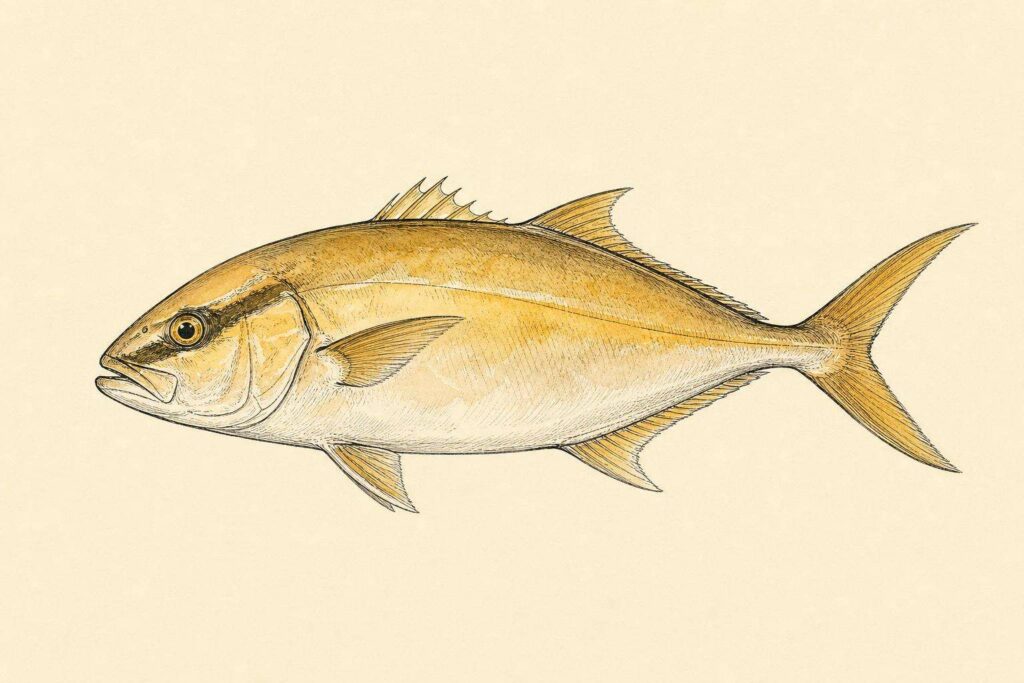
Amberjack is kosher. It has fins and small, tightly packed scales that lift off cleanly without tearing the skin, meeting the test the Torah sets in Leviticus 11:9-12. The Orthodox Union and the Chicago Rabbinical Council both list amberjack as kosher, which settles the amberjack kosher question with a clear yes. What trips people up is the name on the menu, not the ruling itself. Here is the full amberjack kosher picture, plus a way to look up any other fish in seconds.
Why Amberjack Is Kosher
A fish passes the kosher test only if it has fins and scales of the kind that come off without tearing the skin. That rule traces back to Leviticus 11:9-12 and Deuteronomy 14:9-10. Scientifically, amberjack goes by Seriola dumerili and belongs to Carangidae, the jack and pompano family. Small cycloid scales cover its body, lying flat and lifting cleanly with a scaler or the back of a knife. This is the valid, removable kind of scale Jewish law requires, not the embedded ganoid plates on a sturgeon or the sandpaper-like placoid denticles on a shark. Those two fail the same test for the opposite reason: their scales cannot be lifted at all. Fins plus removable scales is the entire amberjack kosher test in one sentence.
No serious dispute exists among the major agencies on whether amberjack is kosher, unlike swordfish, which carries a documented historical machloket. Both boxes check out cleanly, and every kosher fish list treats the amberjack kosher status as settled.
Where Amberjack Fits Among Kosher Fish
Carangidae is one branch on a much bigger tree of kosher fish species, and the family tree runs wide. Most saltwater species built the way amberjack is, fins plus lift-off scales, pass the same test. Striped bass and temperate bass share the reef with amberjack and check out the same way, part of a bass family that covers dozens of related species. Red snapper, mackerel, and the porgy family all pass too, each name covering several closely related species from the same sea. Flounder and sole pass as well, even lying flat on the sea floor and looking nothing like a jack. Both belong to flatfish families that trade the usual body shape for two eyes on one side.
Freshwater kosher species follow the identical rule under different family trees. Carp, the traditional base for gefilte fish in Ashkenazi kitchens, is kosher, and so is trout, a freshwater cousin of salmon that shows up on the same kosher fish lists. Salmon itself is kosher whether it swims wild in the Pacific, the Atlantic, or gets farmed off the California coast. Herring and cod round out the list of everyday saltwater species, alongside drum family fish like croaker, another species people ask about often.
Sturgeon, shark, catfish, and every kind of shellfish sit on the other side of the line, the fish that fail the physical test outright. Visible fins plus scales that lift off cleanly is usually a strong sign a species is kosher. The amberjack kosher case shows the rule working exactly as written.
What the Kosher Authorities Say
Two major certifying agencies confirm the amberjack kosher status. Oukosher.org, the Orthodox Union’s own site, and the Chicago Rabbinical Council both include amberjack on their published kosher fish lists. KosherFish.co’s own amberjack species page reflects that same status. Naming the authority matters, because the ruling on a specific species always comes from a recognized agency or posek, not from biology alone. Biology explains why the ruling makes sense, and the OU and cRc lists are the real amberjack kosher source, settling it for amberjack by name. Checking your own hechsher’s list is still worthwhile, since the presentation can vary slightly agency to agency even when the underlying ruling agrees.
Amberjack’s Other Names, and the Sushi Mix-Up
Market names for amberjack include greater amberjack, reef donkey, and simply “AJ” among cooks. Restaurants frequently sell or menu-list it as yellowtail or hamachi, names that technically belong to close relatives in the same Seriola genus: Japanese amberjack (Seriola quinqueradiata) and California yellowtail (Seriola lalandi). Seafood-labeling studies have repeatedly found greater amberjack substituted for true yellowtail or hamachi at sushi counters, often without the restaurant realizing the difference itself.
None of that substitution creates a kashrut problem for the amberjack kosher status. Every fish in that group, amberjack included, is a Seriola with fins and the same kind of removable scales, so the fins-and-scales ruling holds across the family. Slice a fish into sashimi, though, and the scales disappear, so you can no longer verify the species yourself. A “kosher sushi” claim needs real supervision behind the kitchen and ingredients, not just a reassuring name on the menu.
Does Amberjack Need Kosher Certification?
The amberjack kosher status does not change with how the fish is sold, but certification requirements do. Whole fresh amberjack, skin and scales attached, does not need a hechsher. You can see the fins and scales yourself, and that visual check is enough under Jewish law. Skin-on fillets work the same way, as long as some scale patches remain visible and you trust the seller’s species label.
- Whole fish or skin-on fillets: no certification needed, the scales confirm the species
- Smoked or canned amberjack: needs certification, since the species and equipment can no longer be verified once it is processed
- Sashimi, poke, or restaurant preparations: needs certification, because the scales are gone and shared knives, boards, or sauces can introduce non-kosher ingredients
The table below lays out the amberjack kosher verdict next to its most common look-alikes and mix-ups.
| Fish | Kosher? | Why |
|---|---|---|
| Amberjack (Seriola dumerili) | ✅ Yes | Fins and removable cycloid scales, confirmed kosher by the OU and cRc |
| Yellowtail / Hamachi (Seriola spp.) | ✅ Yes | Same jack family, same removable scale type |
| Mahi-Mahi | ✅ Yes | Fins and visible scales confirmed by the OU and cRc |
| Sturgeon | ❌ No | Ganoid scales are embedded and cannot be removed without tearing the skin |
| Imitation crab | ⚠️ Check | Usually made from kosher fish like pollock, but needs a hechsher to confirm the ingredients |
Buying and Preparing Amberjack
Whole fish or skin-on cuts are the easiest way to confirm the scales yourself instead of relying on a label. Firm and meaty, amberjack holds up well on the grill or in a hot pan, and marinade soaks in nicely because the flesh is denser than a delicate white fish.
One buying note has nothing to do with kashrut: larger, older amberjack caught around reefs in the Caribbean, the Gulf of Mexico, and the South Atlantic carry a documented risk of ciguatera fish poisoning, a toxin that builds up in reef predators and survives cooking. Buy from a reputable source and, where possible, choose smaller fish, which is what the FDA and NOAA both recommend. None of it changes the amberjack kosher verdict, but it’s worth knowing before you buy.
Amberjack for Sushi and Kosher Meals
Neither meat nor dairy, amberjack is pareve, so it fits alongside a dairy meal under the basic kosher rules. Many communities still keep a custom of not eating fish and meat on the same plate or with the same utensils, so plan the courses and dishware accordingly if you are serving it at a meat meal. Sushi raises a separate issue: the fish itself being kosher is only half the picture. A genuinely kosher sushi meal needs a kitchen under real supervision, since rice vinegar, soy sauce, and shared prep surfaces can introduce non-kosher ingredients even when every fish on the platter is a kosher species. Our kosher sushi guide walks through what to look for.
Check Any Fish with KosherFish
The amberjack kosher answer settles one question, but the fish counter and the sushi menu keep raising new ones. Look up amberjack and 290+ other species on the KosherFish homepage, or scan the full kosher fish list before you buy. Download the KosherFish app for the same lookup from your phone, at the market or the restaurant table, on iOS and Android.
Frequently Asked Questions
Is amberjack kosher?
Yes, because it has fins and small cycloid scales that lift off without tearing the skin, which is what Leviticus 11:9-12 requires. Both the Orthodox Union and the Chicago Rabbinical Council list amberjack as kosher, and there is no real dispute on this species.
Is amberjack the same fish as yellowtail or hamachi?
Not exactly, though they are close relatives. Yellowtail and hamachi usually refer to other Seriola species such as Seriola lalandi or Seriola quinqueradiata, while amberjack itself is Seriola dumerili. Restaurants and markets substitute one for the other often. All of them share the same fins and removable scales, so all are kosher, but the species label on a menu is not reliable.
Does amberjack sushi need a kosher certification?
Yes, if you want it to be reliably kosher. Once amberjack is sliced for sashimi or sushi, the scales are gone, and you can no longer verify the species by sight. Shared cutting boards, soy sauce, and other ingredients in a non-supervised kitchen can also introduce non-kosher elements, so restaurant sushi needs real certification, not just a kosher-sounding fish.
What kind of scales does amberjack have?
Small, cycloid scales spread across its body, lying flat and lifting off cleanly without damaging the skin underneath. That is exactly the removable scale type Jewish law requires, and it puts amberjack in a different category from sturgeon, whose embedded ganoid scales cannot be removed the same way.
Is amberjack safe to eat?
Generally, yes, and it is a popular, widely eaten fish. Larger fish caught around reefs in warm Atlantic and Caribbean waters do carry a known risk of ciguatera fish poisoning, though. Buy from a reputable source and, where possible, choose smaller amberjack, per FDA guidance. This is a food-safety consideration with no bearing on kosher status.
Is amberjack pareve?
Like all kosher fish, amberjack is pareve, counting as neither meat nor dairy and fitting alongside dairy dishes under the basic kosher rules. Many communities still keep a custom against eating fish and meat on the same plate, so check your own family or community practice before planning a meat meal around it.
The Bottom Line
The amberjack kosher verdict is yes. The Orthodox Union and the Chicago Rabbinical Council both confirm the fins and removable scales that make it so. Watch the label more than the fish itself: amberjack often shows up as “yellowtail” or “hamachi,” and once it is cut for sushi, verifying the species by sight is no longer possible, so certification matters more than the name. Your own rabbi or a reliable hechsher has the final word on anything genuinely in doubt.
Check amberjack or any of the other 290+ species on the full kosher fish list, visit the amberjack species page directly, or use the homepage lookup tool for your next question. For the rule behind every one of these verdicts, see what makes a fish kosher, or browse the most common kosher fish. To keep the answer with you at the store, download the KosherFish app on iOS or Android.