
Is wahoo kosher? Yes. Wahoo is a member of the mackerel and tuna family, and it has the fins and removable scales the Torah requires. You can check wahoo and 290+ other species with the KosherFish lookup tool, and the same answer applies when the menu calls it ono.
Is Wahoo Kosher? The Short Answer
Wahoo (Acanthocybium solandri) is kosher. Chabad.org states it plainly: “Wahoo is a fish that has fins and scales, which means that it is a kosher species.” The kosher fish list by Dr. James W. Atz of the American Museum of Natural History, which the Orthodox Union published in 1991 and Kashrut.com reprints with the OU’s permission, files wahoo in its mackerel and tuna entry (family Scombridae). Bonito, albacore, and the tunas sit in the same entry.
The one caution is identification. Chabad.org warns that fish are often mislabeled and that “just because a package says ‘wahoo’ doesn’t mean that’s what you’re getting.” That matters more than the verdict, because wahoo usually reaches you as steaks or fillets with the skin and scales long gone.
The Fins-and-Scales Rule Applied to Wahoo
The Torah sets the test in Leviticus 11:9-12 and Deuteronomy 14:9-10. A fish is kosher if it has both fins and scales. In practice the halachic definition of scales is narrower than the biology one. They have to be the kind that can be removed without tearing the skin. That rules out the armored scales of sturgeon and gar. It also rules out the bare skin of catfish.
Wahoo passes the fins half easily. It has a long dorsal fin that runs most of its body. It also has pectoral, pelvic, and anal fins and a crescent tail. It’s a scombrid, the same family as mackerel and tuna, and that’s where the kosher lists file it. The KosherFish entry for wahoo records the same status: fins yes, scales yes, kosher.
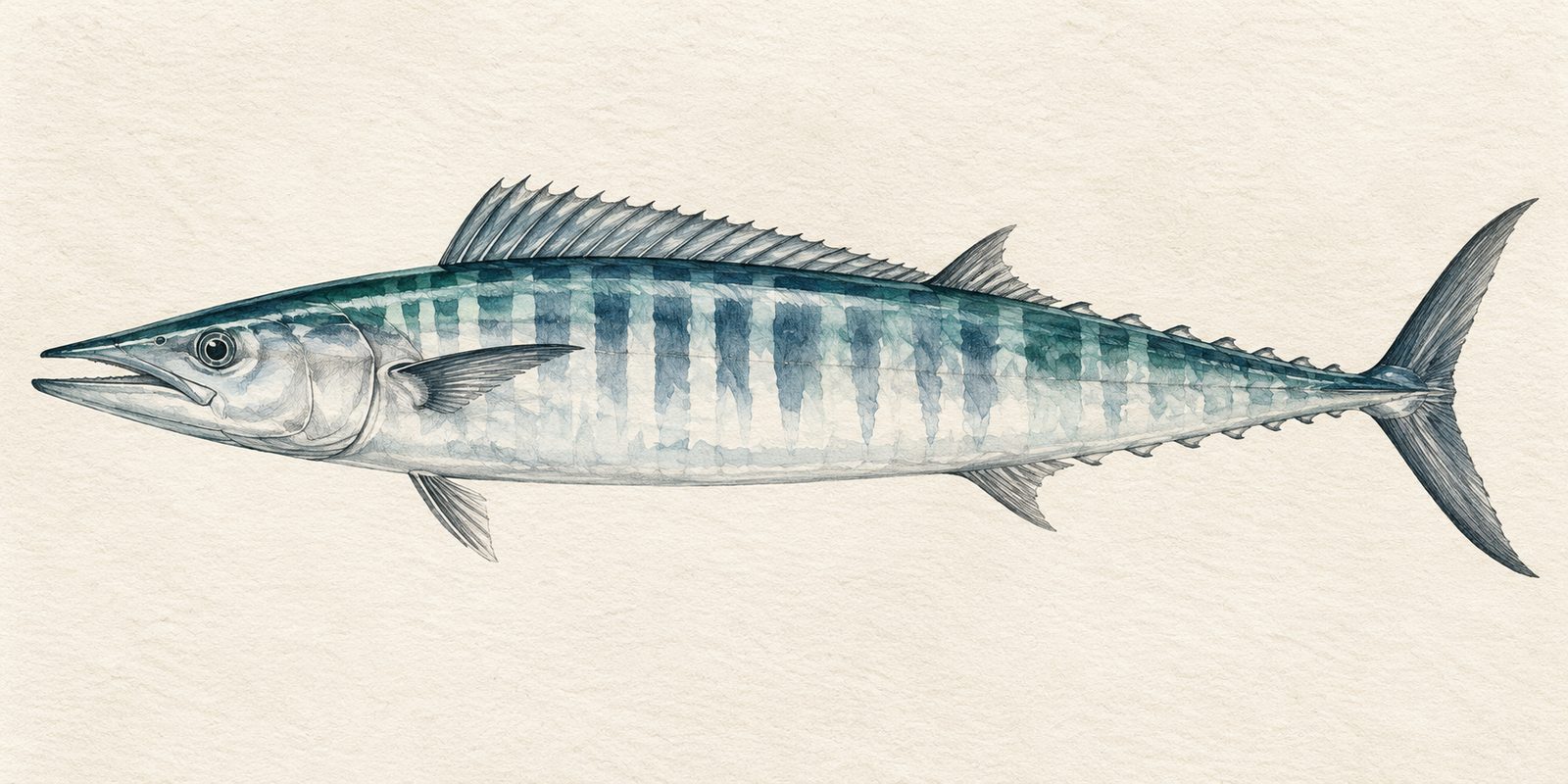
Scales are the half readers ask about, since a wahoo looks smooth and almost naked next to a salmon. It isn’t bare. NOAA Fisheries describes wahoo as “covered with small scales,” and they’re fine enough that you can miss them at a glance. That’s why Chabad.org tells buyers at a non-kosher store to ask to see the skin still on the fish, so you can confirm there are scales. If you’re unsure about a specific fish, ask your own rabbi or rely on a reliable certification.
Is Wahoo Kosher on the Published Fish Lists?
Two published sources name wahoo directly. The first is Dr. Atz’s kosher fish list, the one the OU published and Kashrut.com posts in full. Its mackerel and tuna entry includes “Wahoo (Acanthocybius solanderi),” and a separate line reads “Wahoo See: Mackerels.” The list carries its own warning that it is not a list of OU-certified fish. It tells you which species have fins and scales, not which fillet in a case is kosher. The second is Chabad.org’s explainer, “Is Wahoo (Ono Fish) Kosher?”, which reaches the same verdict.
Notice the exception in that same entry. The mackerel and tuna listing says “but not including: Snake mackerels.” So the word “mackerel” on a label does not settle anything on its own. Wahoo is on the list by name, and that is a stronger footing than a family guess.
Wahoo isn’t a contested species the way swordfish is. I found no authority that disputes it, so there’s no machloket to explain here. I also didn’t find a wahoo line on the cRc or OU consumer pages, so if your community follows a specific agency, check with that agency directly.
Wahoo vs Its Look-Alikes
Wahoo is easy to mix up with other long, silvery, toothy fish. The North Carolina Division of Marine Fisheries says wahoo is sometimes confused with king mackerel. Here is how the main fish people compare it to line up:
| Fish | Kosher? | Why |
|---|---|---|
| Wahoo (ono) | ✅ Yes | Mackerel and tuna family, listed by name on the Atz list and by Chabad.org |
| King mackerel | ✅ Yes | Listed under the mackerels, the family wahoo belongs to |
| Tuna | ✅ Yes | Same Scombridae family, but canned and processed tuna needs certification |
| Snake mackerel | ❌ No | Excluded by name from the mackerel entry on the Atz list |
| Shark | ❌ No | Placoid scales (denticles) are not halachically valid scales |
| Unlabeled steak | ⚠️ Check | With no skin or scales left, you cannot confirm the species by sight |
You can read more on the closest relatives in our guides to whether mackerel is kosher and whether tuna is kosher.
Ono, Wahoo, and Other Names to Watch For
In Hawaii, wahoo is called ono. The Hawaii Seafood Council says the word means “good to eat.” Menus on the islands, and sushi and poke counters on the mainland, often use ono instead of wahoo. The KosherFish entry also lists Pacific kingfish and peto as other names. If you see any of those, you are looking at the same species.
The reverse problem is the real risk. A market name that sounds close is not the same as a species match. “Kingfish” alone, for instance, is used for several different fish. When a menu or a label gives only a vague name, ask what the species is, or look the name up before you order.
Wahoo is a big fish. The North Carolina Division of Marine Fisheries says it grows to about 6 feet and 100 pounds. It has a long snout, a steel-blue back, and 25 to 30 dark vertical bands down its sides. It lives offshore in warm water, usually alone or in small groups, and anglers catch it by trolling at high speed. Because it is so large, most wahoo reaches buyers as steaks cut from a bigger fish. You rarely get a whole fish to inspect.
Does Wahoo Need a Hechsher?
A whole wahoo with its skin on is easy to identify, and a knowledgeable buyer can verify it. But nearly all wahoo is sold cut up. Once the skin and scales are removed, you cannot confirm the species by sight. A fish counter can also mix species or prepare them on shared equipment.
The Atz list spells out the usual guidance: buy fish only from a reliable kosher fish store, or only fish with the skin on that you can identify yourself. For steaks and fillets, that means a source you trust or a reliable certification. Then ask your own rabbi what your community requires. We cover the details in does fish need a hechsher. Smoked, canned, marinated, or breaded wahoo adds another layer, because the added ingredients and the processing line both matter.
Buying and Serving Kosher Wahoo
Ask the fishmonger for the fish by its species name, and ask to see the label or the case card from the supplier. If you keep kosher at home, the safest route is a counter that sells skin-on pieces of kosher fish. Ask them to slice it in front of you with a clean knife. If you are cooking for Shabbat or a holiday, plan for wahoo as you would for other firm, lean, white-fleshed fish. It grills and sears well and dries out if overcooked.
Kosher fish is pareve, meaning neither meat nor dairy, so wahoo can be served with either type of meal. Many communities have a custom not to eat fish and meat together on the same plate, which we explain in our guide to eating fish and meat together. Sushi counters raise their own questions about rolls and sauces, and our kosher sushi guide covers them.
Check Any Fish with KosherFish
If a fish has an unfamiliar name, you don’t have to work out the answer alone. The same goes for a fillet that has lost its scales. You can look up wahoo and 290+ other species on the full kosher fish list, or check on the go with the iOS app or on Android. Search any common name, including ono, and the app returns the species and its status.
Frequently Asked Questions
Is wahoo kosher?
Yes. Wahoo is kosher because it is a mackerel-family fish with fins and scales, which meets the Torah’s test in Leviticus 11:9-12. Chabad.org says wahoo has fins and scales and is kosher, and the OU-published Atz fish list names it in the mackerel and tuna entry. Confirm the species is really wahoo before you buy.
Is ono fish kosher?
Yes. Ono is the Hawaiian name for wahoo, so ono is kosher for the same reason: it is a mackerel-family fish with fins and scales. Chabad.org’s explainer is titled “Is Wahoo (Ono Fish) Kosher?” and answers yes. Ask the seller to confirm the fish is true wahoo and not a different species sold under a similar name.
Does wahoo have scales?
Yes. NOAA Fisheries describes wahoo as covered with small scales, and Chabad.org and the Atz kosher fish list both treat it as a fish with fins and scales. The scales are fine, so the skin looks smooth at a glance. When you buy wahoo from a non-kosher store, ask to see the skin still on the fish.
Is wahoo the same as king mackerel?
No. They are different species, though the North Carolina Division of Marine Fisheries notes wahoo is sometimes confused with king mackerel. Both belong to the mackerel and tuna family and both are on the kosher list. Wahoo has 25 to 30 dark vertical bands on its sides and a long snout.
Does wahoo need a kosher certification?
Whole wahoo with skin on can be identified without a hechsher. Steaks, fillets, smoked, canned, or marinated wahoo are different, because the skin is gone or other ingredients are added. For those, buy from a source you trust or under a reliable certification, and ask your own rabbi what your community requires.
Is wahoo pareve?
Yes. Kosher fish is pareve, which means it is neither meat nor dairy. You can serve wahoo at a dairy or a meat meal. Many communities have a custom not to eat fish and meat together on the same plate, so check what your family or community follows.
What fish are not kosher but look like wahoo?
Snake mackerel is the clearest case. The Atz list’s mackerel entry excludes snake mackerels by name. Sharks are also long and torpedo-shaped, and they are not kosher because their placoid scales are not valid. If a fish has no clear species name, look it up before buying.
The Bottom Line
Wahoo is kosher. It is a mackerel and tuna family fish with fins and scales, and both Chabad.org and the OU-published Atz list say so. The thing to watch is the cut, since a steak with no skin can’t be identified by sight. Buy from a source you trust, and ask your own rabbi about anything you’re unsure of.
Keep the full kosher fish list handy, read the wahoo page, or look up any fish in seconds. You can also download the iOS app or get it on Android. For more, see our guides on barracuda and whether fish is pareve.