Is hogfish kosher? Yes. Hogfish is a wrasse, a family of bony reef fish with fins and the kind of ordinary, removable scales the Torah requires, and the standard kosher fish list names hogfish directly under the Wrasses. You can look up hogfish and 290+ other species on the KosherFish lookup tool to confirm any fish in seconds.
Why Hogfish Is Kosher
A fish is kosher only if it has fins and scales. The scales have to be the kind you can peel off by hand, or with the back of a knife, without tearing the skin. That’s the test the Torah sets out in Leviticus 11:9-12 and repeats in Deuteronomy 14:9-10. Hogfish (Lachnolaimus maximus) is a wrasse, the same broad family as tautog and California sheephead, and wrasses carry ordinary cycloid scales that come off cleanly. Add the fins every bony fish has, and hogfish clears both parts of the test.
Plenty of ordinary market fish clear the same test. Bass, sole, cod, halibut, herring, sardines, pike, turbot, bream, tilapia, whiting, and pollock all carry the same kind of removable scales, which is why they sit right next to hogfish on the kosher fish list. Catfish and sturgeon fail the same test for the opposite reason: catfish has no scales at all, and sturgeon’s embedded scales don’t come off cleanly either.
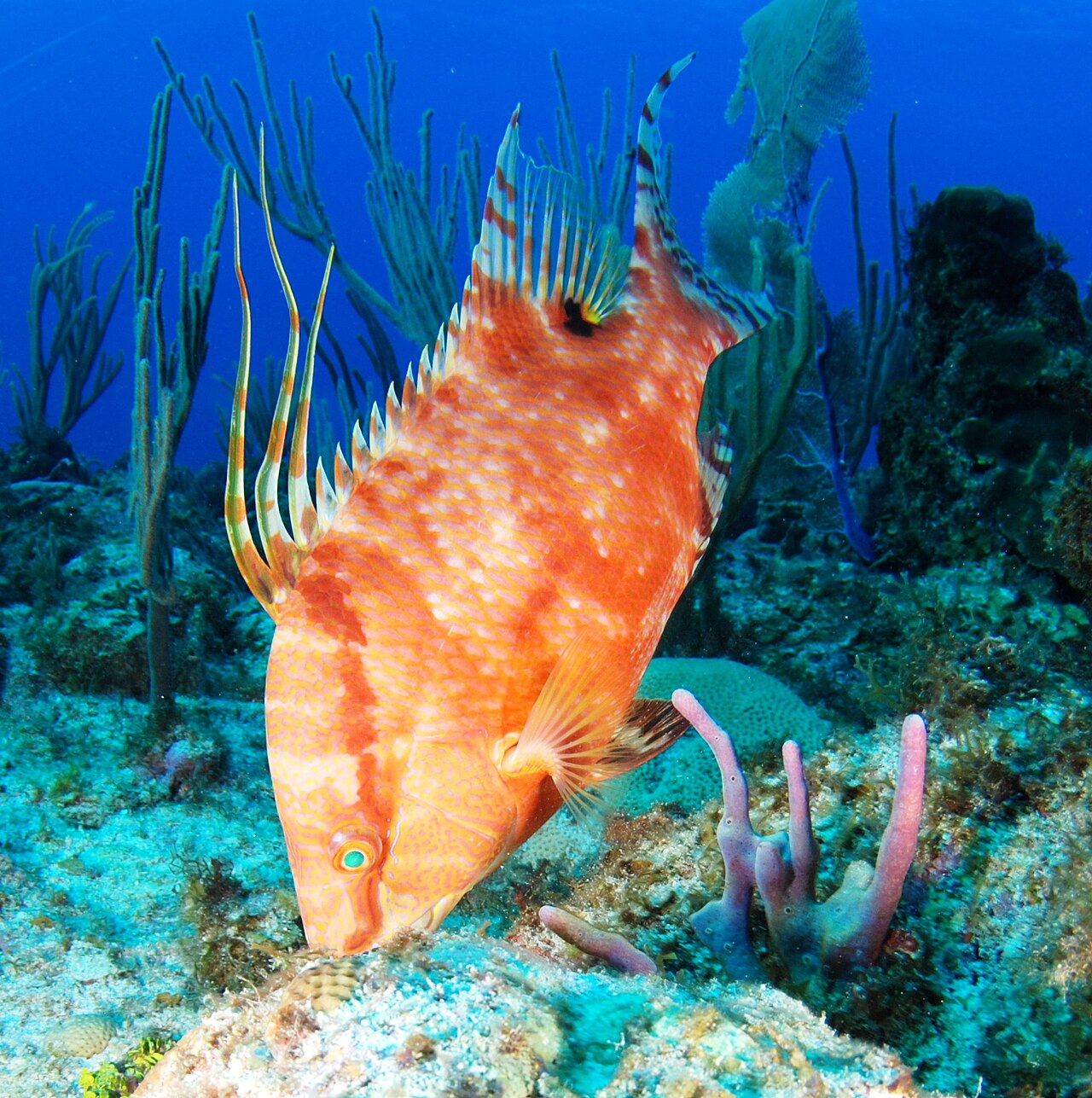
Hogfish looks nothing like the smooth pink fillet most people picture when they hear “kosher fish.” It’s a deep-bodied reef fish with a long, pig-like snout (that’s where the name comes from), and it even changes color and sex as it grows. None of that matters to the ruling. Kashrut asks two questions only, fins and scales, and hogfish answers yes to both.
What the Kosher Authorities Say
The Orthodox Union states the rule plainly: a kosher fish needs fins and scales, and the scales must come off without tearing the skin. Hogfish meets that test on its own biology, and it isn’t left to guesswork. The standard kosher fish list republished by Chabad.org and other kashrut references lists hogfish by name (Lachnolaimus maximus) under the Wrasses (family Labridae). Its close relatives on that same list include the Spanish hogfish and other Bodianus species, tautog, and California sheephead. When a kosher fish list names a species directly, that’s the authority settling the question, not a biology class doing it alone.
There’s no genuine dispute among the major agencies here. Hogfish isn’t a contested species like swordfish, where historical authorities split. It’s an ordinary scaled reef fish that happens to have an unusual name and an unusual face.
The Hogfish-for-Grouper Switch (and Why It Doesn’t Change the Answer)
Hogfish is a prized Florida catch, line-caught and expensive enough that it’s become a target for the opposite kind of seafood fraud. Florida investigators have documented restaurants selling imported, sometimes farmed grouper to customers who paid for and expected local hogfish. It’s a real consumer-protection problem, tracked by state regulators, and it’s worth knowing about if you care where your fish actually came from.
For the kosher question, though, it’s a non-issue either way. Hogfish is kosher. Grouper is also kosher, a scaled, finned bony fish in its own right. Getting swapped from one to the other is a fraud and freshness problem, not a kashrut one. The mix-ups that actually matter for kashrut are the ones where a kosher fish gets confused with a non-kosher one. That’s exactly why a hechsher matters once you can’t see the scales for yourself.
| Fish | Kosher? | Why |
|---|---|---|
| Hogfish (Lachnolaimus maximus) | ✅ Yes | Wrasse family (Labridae), fins and removable cycloid scales, named on the standard kosher fish list |
| Spanish hogfish and other Bodianus wrasses | ✅ Yes | Same wrasse family, same fins-and-scales test |
| Grouper | ✅ Yes | Different family (Serranidae), still has fins and ordinary removable scales |
| Tautog (blackfish) | ✅ Yes | A close hogfish relative in the wrasse family, same verdict |
| Monkfish | ❌ No | Has fins but no scales at all, a common bottom-dweller mix-up at the market |
| Shark | ❌ No | Placoid scales (denticles) are embedded and don’t count as kosher scales |
Do You Need a Hechsher for Hogfish?
A whole fresh hogfish, with its fins and scales still on, doesn’t need a hechsher. You or the fishmonger can see the scales yourselves, and that visual check is the entire point of the fins-and-scales rule. Once the fish is filleted, skinned, smoked, or turned into a prepared dish, the scales are gone, and you’re trusting the seller’s word on the species and the equipment that touched it. That’s when certification starts to matter, the same rule that applies to salmon, tuna, or any other fish once it leaves the whole, scaled state.
If you’re buying whole hogfish at a real fish counter, look for the scales. If you’re buying a fillet, a prepared dish, or anything from a restaurant, ask about certification or stick to a hechsher you trust. Does Fish Need a Hechsher? walks through the fresh-versus-processed rule in more detail.
Buying and Cooking Hogfish
You’ll mostly find hogfish at Florida and Gulf Coast markets, sold whole or as a fillet. It’s popular there for a simple reason: it’s a firm, mild, sweet fish that holds up to grilling, pan-searing, or ceviche. Kosher fish is pareve, meaning it’s neither meat nor dairy, though many households still keep a custom of not eating fish and meat off the same plate. That makes hogfish an easy fit for a Shabbat or holiday table alongside either a dairy or a meat spread, once you’ve confirmed the certification on anything beyond a whole, scaled fish.
Check Any Fish with KosherFish
Its odd name and even odder look make hogfish exactly the kind of case where a quick check beats a guess. It’s one of 291 species on the kosher fish list, so if an unfamiliar name shows up at the fish counter or on a menu, search it on the homepage lookup tool instead of assuming. The iOS and Android apps carry the same lookup in your pocket, so you can check a fish before you order it, not after.
Frequently Asked Questions
Is hogfish kosher?
Yes. Hogfish (Lachnolaimus maximus) is a wrasse with fins and the kind of removable scales the Torah requires in Leviticus 11:9-12, and the standard kosher fish list names hogfish directly under the Wrasses. There’s no dispute among the major kosher authorities on this one.
Why is hogfish kosher if it looks so unusual?
Kashrut judges a fish on fins and scales only, not on how normal it looks. Hogfish has an odd pig-like snout and changes color and sex as it grows, but underneath that it’s an ordinary scaled bony fish. Fins and removable scales are the whole test, and hogfish passes both.
Is Spanish hogfish kosher too?
Yes. Spanish hogfish and the other Bodianus wrasses share the same family, Labridae, and the same fins-and-scales biology as hogfish. The kosher status follows the family, so the whole wrasse group clears the test together.
I heard restaurants sell fake hogfish. Does that change the kosher status?
No. Florida regulators have documented restaurants substituting imported grouper for the hogfish customers ordered and paid for. That’s a consumer-fraud and freshness problem, not a kashrut one, since grouper is also a kosher, finned, scaled fish. The species swap that would actually matter for kashrut is one that lands you a non-kosher fish, which is why a hechsher matters on anything you can’t check yourself.
Does hogfish need a kosher certification?
Only a whole fresh hogfish with its scales visible skips the hechsher, since you can confirm the species and the scales by looking. A fillet, a restaurant dish, or anything processed does need certification, because the scales are gone and you can’t verify the species or the equipment on sight.
Is hogfish pareve?
Yes. Kosher fish, hogfish included, is pareve, meaning it counts as neither meat nor dairy. Many kosher-observant households still keep a custom of not eating fish and meat from the same plate, so check your own household’s practice before you plan the menu.
Can I serve hogfish for Shabbat or a holiday meal?
Yes. Once you’ve confirmed the species and certification, hogfish grills, sears, or bakes well and works for Shabbat or a holiday table the same way grouper or snapper would. Its firm, sweet flesh holds up to simple preparation, which is part of why it’s prized in Florida kitchens.
Where can I buy kosher hogfish?
Hogfish is mostly a Florida and Gulf Coast market fish, sold whole or filleted. Check for visible fins and scales on a whole fish, or a trusted hechsher on a fillet or a restaurant dish. You can confirm hogfish, or any fish you’re unsure about, on the KosherFish list or the app before you buy.
The Bottom Line
The verdict holds up: hogfish is kosher, thanks to fins and the removable scales the Torah requires in Leviticus 11:9-12, with the standard kosher fish list naming hogfish by name under the wrasses. The restaurant-fraud stories about imported grouper standing in for hogfish are a freshness and honesty problem, not a kashrut one, since both fish clear the same test. What actually matters is confirming the species and the certification once the scales are gone, whether that’s a fillet at the counter or a dish on a menu.
Look up hogfish or any of its wrasse relatives on the kosher fish list. Check the hogfish page for the species verdict, or search the homepage tool the next time an unfamiliar name shows up at the counter. Grab the iOS or Android app to carry the same lookup with you. See What Makes a Fish Kosher and The Most Common Kosher Fish for the fuller rules behind this one.