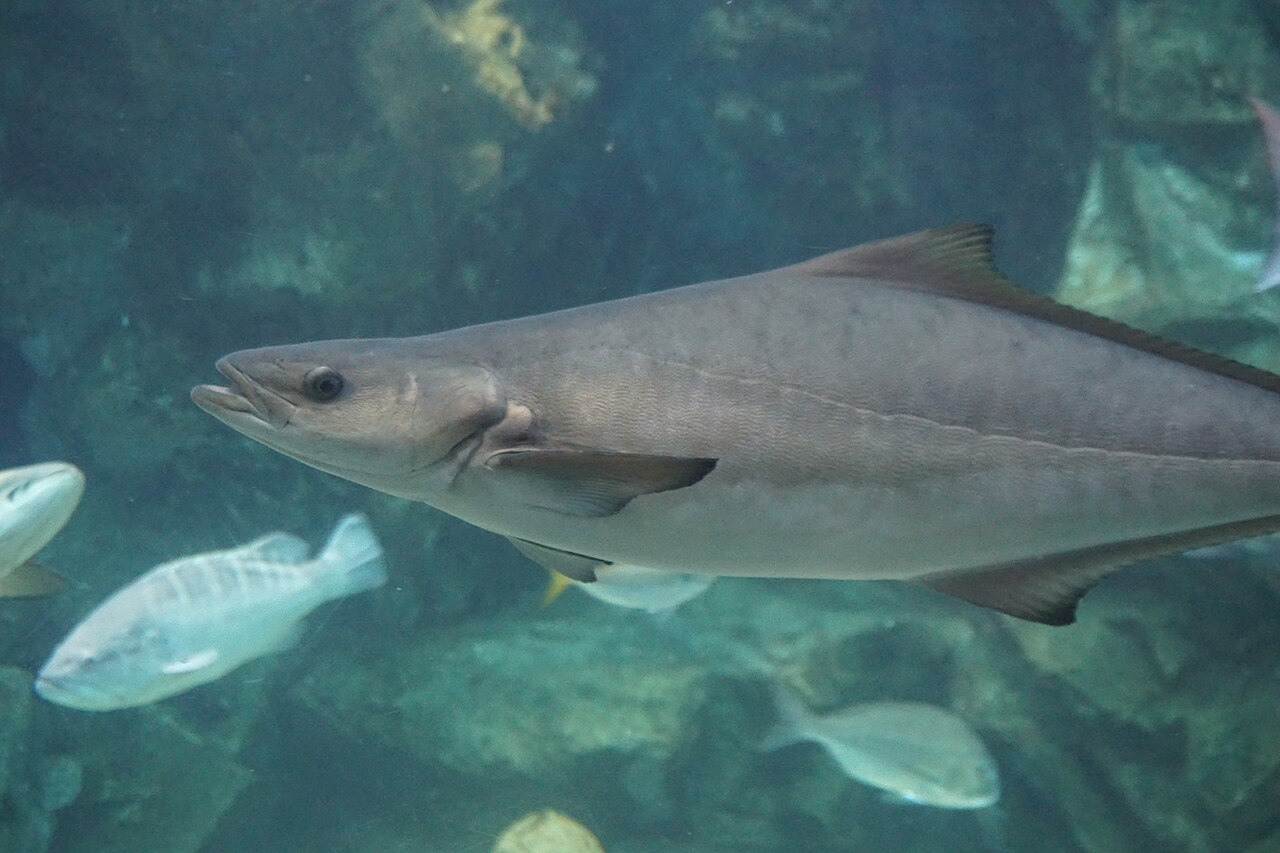
Cobia is kosher. It has fins and small, tightly packed scales that lift off cleanly without tearing the skin, which is the test Leviticus 11:9-12 sets for a kosher fish. Chabad.org’s Kosher Fish List includes cobia by name, and you can look up cobia and 290+ other species in seconds on the KosherFish homepage. The confusion around this fish comes from its long list of market names, not from the ruling itself. Cobia kosher status hasn’t changed under any of those names.
Cobia Kosher Status: The Fins-and-Scales Rule
The short version of is cobia kosher: a fish clears the kosher bar only if it has fins and scales of the kind that come off without tearing the skin underneath. That rule comes from Leviticus 11:9-12 and Deuteronomy 14:9-10, and it’s the entire test that settles cobia kosher status, nothing more subjective than that. Cobia, scientific name Rachycentron canadum, is the lone member of its own family, Rachycentridae, inside the larger order Carangiformes. Its body carries small cycloid scales that sit close together and lie flat against the skin, and they lift off cleanly with a scaler or the back of a knife.
That’s the valid, removable kind of scale Jewish law requires. It’s not the same as the embedded ganoid plates on a sturgeon or the sandpaper-like placoid denticles on a shark, both of which fail the test because their “scales” won’t lift off at all without tearing skin. Cobia doesn’t carry any documented dispute among the major kosher authorities the way swordfish does. Fins and removable scales, case closed.
What the Kosher Authorities Say
Chabad.org’s Kosher Fish List, a widely used consolidated reference for keeping-kosher households, includes cobia among the fish that meet the fins-and-scales standard. That matters, because the ruling on any specific species has to come from a recognized authority, not from a reader working out the biology alone. Real-world kosher fish processors back this up too. JAVA Kosher Fish, a seafood importer that supplies certified species to the kosher market, sells cobia under certification from OK-P and the posek Chasam Sofer, right alongside snapper and grouper.
KosherFish.co’s own cobia species page, built on NOAA-sourced biology, agrees: fins, small removable scales, kosher. None of that replaces your own hechsher’s judgment on a packaged or processed product, but on the species question itself, cobia is settled.
Where Cobia Fits Among Kosher Fish
Plenty of familiar reef and open-water fish pass the same fins-and-scales test. Grouper and the wider bass family share habitat with cobia and check out the same way. The porgy family does too, along with red snapper, mackerel, rockfish, and whiting. So do the countless species inside the sole, turbot, and halibut families, flatfish that trade the usual body shape for two eyes on one side but still carry fins and lift-off scales. Perch, pike, and chub clear the same bar in freshwater.
Cold-water and freshwater species follow the identical rule under different family trees. Herring, cod, trout, tuna, walleye, and pollock (the whitefish behind most surimi) round out the everyday list. So does tilapia, a freshwater staple in many kosher kitchens, pomfret, common on Indian and Southeast Asian tables, and bluefish, a common catch along the Atlantic coast. The Orthodox Union and the Chicago Rabbinical Council apply this same fins-and-scales standard to every one of those species, the identical test cobia passes on its own merits.
Not every fish clears the bar. Catfish has no scales at all. Eel lacks the kind of scale Jewish law recognizes. Squid, an unrelated cephalopod sold near cobia at many fish counters, has no fins or scales whatsoever. Sturgeon and shark, covered above, fail for the same embedded-scale reason. That leaves cobia clearly on the kosher side of the line, right alongside the whitefish, salmon, and carp that fill out most kosher fish counters. Ask is cobia kosher and you get the same clean yes every one of those familiar fish gets.
Cobia’s Many Names, and the Market Mix-Up
Cobia goes by more aliases than almost any other fish on a menu: black kingfish, black salmon, ling, lemonfish, crabeater, even “prodigal son” in some regions, and plain old codfish in others, despite having nothing to do with true cod. None of that is a kosher problem. Every one of those names points to the same fish, Rachycentron canadum, and the kosher status travels with the species, not the label.
Some of those names overlap with other, unrelated fish, and that’s where it gets confusing. “Ling” also refers to Molva molva, a true member of the cod family that’s a completely different species and, as it happens, also kosher on its own fins-and-scales merits. People also use “black salmon” loosely for a few dark-fleshed fish in different regions. None of this makes cobia less kosher. A name on a fish counter label or a restaurant menu is not proof of species, so when the specific species matters (for certification on a processed product, say), ask what fish is actually in the package.
| Fish | Kosher? | Why |
|---|---|---|
| Cobia (Rachycentron canadum) | ✅ Yes | Fins and removable cycloid scales, listed kosher on Chabad.org’s Kosher Fish List |
| Cobia sold as “black kingfish,” “lemonfish,” or “ling” | ✅ Yes | Same fish, different regional market name |
| True ling (Molva molva, cod family) | ✅ Yes | A different species that happens to share the “ling” name, also passes the fins-and-scales test |
| Sturgeon | ❌ No | Ganoid scales are embedded and cannot be removed without tearing the skin |
| Shark | ❌ No | Placoid scales (denticles) are not halachically valid scales |
Does Cobia Need a Kosher Certification?
Answering is cobia kosher for a whole fish is simple. Whole fresh cobia, skin and scales attached, doesn’t need a hechsher. The fins and scales are right there to check yourself, and that visual confirmation is enough under Jewish law. Skin-on fillets work the same way, as long as scale patches are still visible and you trust the seller’s species label.
- Whole fish or skin-on fillets: no certification needed, the scales confirm the species
- Smoked, canned, or breaded cobia: needs certification, since you can no longer verify the species or the processing equipment once the scales are gone
- Sushi, sashimi, or crudo preparations: needs certification, because removing the scales erases your own check, and shared knives, boards, or sauces can introduce non-kosher ingredients
Buying and Cooking Cobia
Farms raise most of the cobia on the market today, in offshore pens in the Gulf of Mexico and increasingly in aquaculture operations across Asia and Latin America, alongside wild-caught fish from the warm Atlantic, Gulf, and Caribbean waters where cobia naturally range. Farmed or wild doesn’t change the kosher status. Fins and scales are what count, and cobia carries both either way.
In the kitchen, cobia has a firm, meaty texture that holds up to grilling, searing, and roasting without falling apart, closer to swordfish or mahi-mahi than a delicate white fish. Buy skin-on cuts when you can, both because the scales let you confirm the species yourself and because the skin crisps up nicely in a hot pan.
Cobia for Sushi and Kosher Meals
Like all kosher fish, cobia is pareve, neither meat nor dairy, so it sits comfortably alongside dairy dishes under the basic kosher rules. Many communities still keep a custom of not eating fish and meat on the same plate or with the same utensils, so plan your courses accordingly if cobia is going on the table at a meat meal.
Its rich, buttery flavor has made cobia popular raw, as crudo or sashimi, at higher-end restaurants. The fish itself passing the kosher test is only half the story there. Once you slice it for sashimi, the scales are gone and you can’t verify the species by sight anymore. A kitchen without supervision can also introduce non-kosher soy sauce or shared boards, no matter how the fish itself checks out. Our kosher sushi guide walks through what a real kosher sushi setup requires.
Check Any Fish with KosherFish
Cobia settles cleanly, but the next unfamiliar name on a menu or a fish counter sign will raise the same question again. Look up cobia and 290+ other species on the KosherFish homepage, or scan the full kosher fish list before you buy. Download the KosherFish app for the same lookup from your phone, at the market or the restaurant table, on iOS and Android.
Frequently Asked Questions
Is cobia kosher?
Yes. Cobia has fins and small cycloid scales that lift off cleanly without tearing the skin, which is what Leviticus 11:9-12 requires. Chabad.org’s Kosher Fish List includes cobia, and JAVA Kosher Fish, a certified seafood supplier, sells cobia under kosher certification from OK-P and the posek Chasam Sofer. Cobia kosher status is settled and uncontested among the major kosher fish authorities.
Why is cobia kosher under Jewish law?
Jewish law sets one physical test for fish: fins, plus scales that come off without tearing the skin. Cobia’s small, tightly packed cycloid scales pass that test cleanly, the same standard that rules out sturgeon and shark, whose scale-like structures sit embedded in the skin and won’t come off the same way.
Is cobia the same fish as “black salmon” or “black kingfish”?
Yes. Black kingfish, black salmon, ling, lemonfish, and crabeater are all regional market names for the same species, Rachycentron canadum. The kosher status stays the same no matter which name is on the label, since it’s the fish that matters, not what it’s called. One exception: “ling” is also the name of a separate cod-family fish, Molva molva, which happens to be kosher too but is a different species.
Does cobia need a kosher certification?
Whole fresh cobia with skin and scales attached doesn’t need one, since you can see the fins and scales yourself. Smoked, canned, or breaded cobia does need certification, because processing removes the visible scales and can introduce non-kosher ingredients or shared equipment you can’t verify on your own.
Is cobia sushi or sashimi kosher?
The fish itself passes the kosher test, but sliced sashimi or crudo needs real rabbinic supervision to be reliably kosher. Once the scales are gone you can’t confirm the species by sight, and non-supervised kitchens often use soy sauce, shared boards, or other ingredients that aren’t kosher, regardless of how the fish itself checks out.
Is cobia pareve?
Yes. Like all kosher fish, cobia counts as neither meat nor dairy and can be served alongside dairy dishes under the basic kosher rules. Many communities keep a custom against eating fish and meat on the same plate, so check your own family or community practice before planning a meat meal around it.
The Bottom Line
For anyone asking is cobia kosher, the answer is yes. Chabad.org’s Kosher Fish List confirms the fins and removable scales, and OK-P and Chasam Sofer back that with real-world certification on commercially sold cobia. Watch the label more than the fish itself. This one turns up as black kingfish, lemonfish, ling, or crabeater depending on where you’re buying it. And once you slice it for sushi, you can no longer verify the species by sight, so certification matters more than the name on the menu.
Check cobia or any of the other 290+ species on the full kosher fish list, visit the cobia species page directly, or use the homepage lookup tool for your next question. For the rule behind every one of these verdicts, see what makes a fish kosher, or browse the most common kosher fish. To keep the answer with you at the store, download the KosherFish app on iOS or Android.